Why Football Trivia Is the Sport's Most Underrated Addiction
World Cup guess-the-player games reveal how football's statistical memory shapes modern fandom into an obsessive data-driven culture.
The Beautiful Game's Beautiful Obsession
Football doesn't just create memories. It catalogues them, hoards them, weaponises them. Every four years, the World Cup serves as football's grand archive, depositing fresh layers of statistical sediment onto an already overwhelming pile of human achievement. And somewhere between the goals and the glory, a peculiar phenomenon takes hold: the irresistible urge to prove you know more than everyone else.
The "Who Am I?" format is not new. It is, however, perfectly calibrated for the modern football fan's psychology. You get a clue. You guess a player. You refine. You agonise. You either celebrate like you've just scored a stoppage-time winner or you mutter about how you knew it was Thomas Müller all along.
This format taps into something deeper than casual entertainment. It exploits football's unique relationship with nostalgia and data.
The Cognitive Architecture of Football Fandom
Here's the bold claim: football fandom is, at its core, an exercise in memory retrieval. The sport's unhurried pacing, its 90 minutes of interrupted action, gives spectators time to process, catalogue, and cross-reference. Unlike basketball's relentless tempo or tennis's point-by-point urgency, football provides space for contemplation.
That space breeds obsession. The fan watching a World Cup quarter-final isn't just absorbing the spectacle. They're mentally filing away contributions: which midfielder covered the most ground, which forward missed a sitter, which goalkeeper made that reflex save at 38 minutes. The trivia game simply asks them to retrieve the file.
When a clue references a player who scored in a World Cup final, the brain doesn't search linearly. It pattern-matches through decades of stored match reports, highlight reels, pub debates, and FIFA video game ratings.
What the Numbers Reveal About Modern Fandom
- 32 nations compete in each World Cup, generating roughly 736 player stories per tournament
- Current World Cup broadcasting reaches an estimated 5 billion cumulative viewers globally
- FIFA's official portal logs over 100 million unique users during tournament windows
- Social media engagement during World Cup months spikes by roughly 400% compared to standard international windows
These figures matter. They explain why trivia formats succeed. The audience has been given voluminous raw data and feels compelled to demonstrate mastery.
Why the Guessing Game Specifically Works
The brilliance of the format lies in its progressive disclosure. Each clue narrows the universe of possibilities. Start with nationality and you've already eliminated 700+ players from the current tournament alone, let alone historical iterations. Add position, and the field contracts further. Include a club team or a specific milestone, and the answer crystallises.
This mirrors detective work. The fan becomes investigator, assembling evidence, discarding leads.
The best football trivia doesn't reward memorisation. It rewards synthesis, the ability to connect a Moroccan right-back's 87th-minute clearance against Belgium with his subsequent transfer to Paris Saint-Germain.
That synthesis is where casual viewers become aficionados. The trivia format separates those who watch football from those who absorb it.
The Social Dimension: Bragging Rights in the Digital Age
The competitive layer matters enormously. Football fandom has always carried a status hierarchy. There are those who watch matches and those who can tell you why Croatia's 2018 midfield trio of Modric, Rakitic, and Kovacic functioned as a unit despite never playing together at club level. Trivia quantifies that hierarchy.
Social media turned what was once pub ammunition into leaderboard currency. Getting the answer in three guesses rather than seven becomes a meaningful performance metric. It proves hours invested. It validates the accumulated watching.
The psychological reward loop here is identical to what drives Fantasy Premier League managers to check their points at 6:30 AM on a Sunday. Validation through data.
The Hierarchy of Football Knowledge
- Knowing the tournament's star names and their headline statistics
- Recognising key contributors from eliminated nations
- Recalling squad players who made decisive contributions as substitutes
- Identifying bench options who toured with the squad but never kicked a competitive ball
- Remembering the kit numbers, positional data, and club affiliations of all 736 players
Most fans reach level two. The truly committed, the ones who win trivia games in three attempts, operate at level four.
Material I vs Material II: What Trivia Actually Measures
Here's where it gets analytically interesting. Football trivia doesn't measure intelligence. It measures exposure. Repeated exposure. The fan who correctly identifies a player from a single clue about a 2010 World Cup quarter-final isn't smarter. They simply watched that match live, revisited the highlights, and now recall it instinctively.
This means trivia engagement correlates tightly with age and viewing history. Older fans bring deeper archives. Younger fans, raised on YouTube compilations and FIFA career modes, possess different kinds of pattern recognition.
The generational divide manifests in the types of clues that resonate. A clue referencing Roberto Baggio's missed penalty in the 1994 final prompts instant recognition from anyone over 35. A clue about Kylian Mbappe's hat-trick in the 2022 final triggers younger demographics.
The Bottom Line
Football's trivia obsession is a symptom, not a curiosity. Modern fandom increasingly defines itself through data fluency. Expected goals, progressive passing, defensive actions in the final third. These metrics have entered mainstream football conversation. The trivia game predates that analytical revolution but operates on the same principle: knowledge is currency.
The World Cup amplifies this because the tournament's four-year cadence ensures each edition carries weight. Players aren't just performing in matches. They're being recorded for posterity.
Why the Format Endures
The guess-the-player format will outlast every tactical trend. Individual competitions and eras fade. Tactical systems evolve. The desire to demonstrate football knowledge persists.
It endures because football itself is fundamentally a game of patterns, and the human brain, once trained to spot those patterns, cannot stop. Every World Cup produces roughly 736 new stories. The archive never stops growing.
Every guess in a trivia game is a small act of connection. A thread drawn between two decades of football history.
Verdict
The World Cup trivia format succeeds because it captures football's most important quality: the sport's ability to create memories worth testing. And in an era of overwhelming football content, proving you remember the obscure left-back from Senegal's 2002 run to the quarter-finals is a small declaration of identity.
You are a football fan. You were there. You remember.
And you'll keep guessing.
Editorial Integrity
This is an original SportPulse article written by our editorial team. All content is independently researched, written, and reviewed by our writers and editors before publication. We do not publish copied, aggregated, or syndicated content.
SportPulse is committed to original sports journalism. Read our editorial policy or contact us with any questions.
More Like This
All football
Birmingham Turn to Startup in Goal as WSL Return Takes Shape
Katie Startup's arrival from Manchester City signals Birmingham's intent to build a competitive WSL squad from scratch.
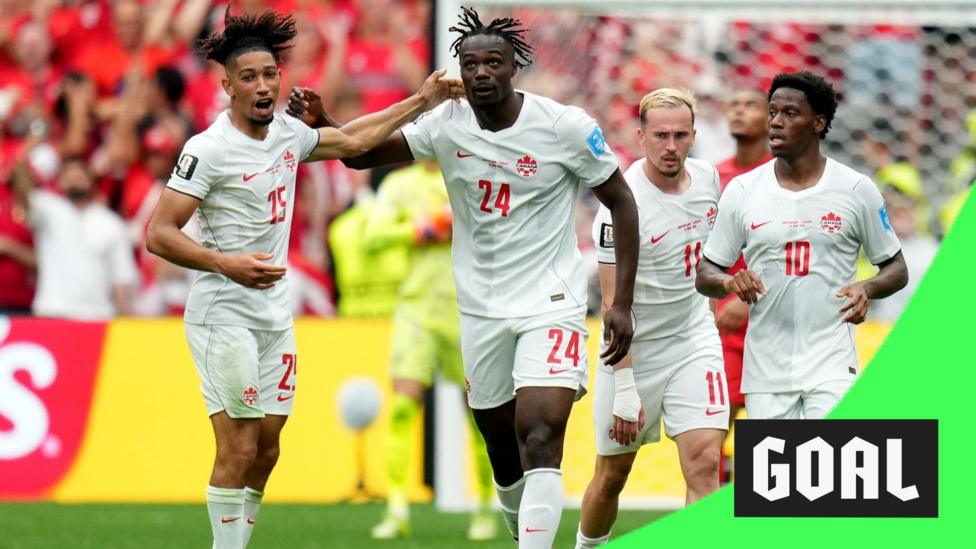
David's First-Touch Strike Redefines Canada's Tactical Identity
Promise David's immediate impact off the bench redefined Canada's pressing geometry and shifted the tactical balance against Switzerland.

From Pizzas to Futures: Iyiola Adebayo’s Second Chance
Iyiola Adebayo, once released by West Ham at 16, finds new direction through Premier League’s Futures programme.