WSL Clubs Get Green Light for In-Stand Alcohol: A Calculated Pour
WSL clears clubs to sell alcohol in seats, merging fan experience with a long-standing cultural battleground.
The Women’s Super League just uncorked a decision that will reshape matchday more profoundly than any single transfer. Starting next season, all WSL clubs can sell alcohol for consumption in the stands.
This isn’t a leak or a rumor. It’s a confirmed, league-wide policy shift following pilot trials. The move aligns the top tier of English women’s football with a practice banned in the men’s professional game since the 1980s, detonating a debate that pits commercial growth against hard-won fan culture.
The Final Whistle on a Decades-Old Barrier
The announcement ends a bizarre asymmetry in English football. Under the Sporting Events (Control of Alcohol etc.) Act 1985, drinking within sight of the pitch is a criminal offense in the men’s game — a legislative scar from an era of rampant hooliganism. The WSL, operating under a different safety certificate framework and without that specific history of crowd violence, has never been legally bound by that act. The restriction was a cultural hangover, not a legal handcuff.
Clubs and the league have now decided the time is right to move past that legacy. Trials at select grounds provided the evidence. No significant spike in disorder. No unraveling of the family-friendly atmosphere the WSL has carefully curated. The data, according to league stakeholders, pointed to a manageable evolution rather than a risky leap.
Why Now? The Commercial Calculus
The math is stark. Matchday revenue in women’s football trails the men’s game by a chasm, and every line item counts. Alcohol sales are a high-margin revenue driver. For context, a well-run concession stand can see profit margins on drinks dwarf those on food. For a league still building its financial independence, unlocking this stream is less about partying and more about business sustainability.
- Stadium-wide implementation begins with the 2025-26 season kickoff.
- The move follows successful pilot events that demonstrated operational feasibility.
- Clubs will control their own specific policies within a general league framework.
The WSL is navigating a unique tension. It wants to preserve a matchday environment that is demonstrably different from the men’s game — one that families, young girls, and diverse communities have embraced. Yet, it must also cater to a growing demographic of adult fans who see a pre-match pint or a goal-celebration drink as a fundamental part of the live sport experience.
"This is about offering a full hospitality experience that adult fans expect, while trusting our security infrastructure and the character of our supporters to maintain respect." — A sentiment echoed by multiple club commercial leads during the trial phase.
Pouring Through the Noise: The Real Risk
The risk profile is entirely cultural. The physical safety risk is low. The WSL doesn’t grapple with organized firms or a history of terrace violence. The danger is to the league’s unique atmospherics. Will the communal, often cross-club, standing areas become sticky-floored exclusion zones for those who don’t drink? Will a tight late-game thriller be interrupted by a cascade of plastic cups launched in joy or fury?
The league’s bet is on self-regulation and smart execution. Expect clubs to roll this out strategically.
- Dedicated Zones: Not every seat will be a drinking seat. Family sections will remain bone-dry.
- Pour Limits: Two-drink-per-transaction rules are almost certain to be the norm.
- Premium Products: Don't expect cheap lager. Clubs will likely push craft beers, ciders, and high-end spirits to curate a more discerning, slower-paced consumption.
A Generational and Cultural Shift
The WSL fanbase is not a monolith. The new policy illuminates a fascinating fissure between the league’s original core and its new wave. A section of the pre-boom crowd, who built the culture on supporter-run clubhouses and community ethos, views alcohol in stands with deep skepticism. They see it as an import of the worst excesses of the men’s game.
Conversely, for the 20,000-plus crowds flocking to the Emirates, Old Trafford, and Stamford Bridge for marquee fixtures, this is catch-up. These fans, many of whom attend both men’s and women’s fixtures, already find the current restriction anachronistic. They argue that treating adults like adults is a sign of respect and normalization, not degradation.
This fault line is the real challenge. Managing a cohesive, inclusive identity while segmenting the stadium experience requires surgical precision. If executed poorly, clubs risk alienating the very vocal, grassroots supporters who provide the drumbeats and chants, in favor of a more passive, consumerist crowd.
What This Means for the Men’s Game
It’s impossible to uncork this bottle without spilling into the Premier League debate. The Women’s Super League has now become a live laboratory. If a season passes without significant incident in a league with sizable traveling support and growing local rivalries, the argument for maintaining the 1985 ban in the men’s game weakens drastically.
The counter-argument will remain the sheer scale difference. A WSL sell-out of 40,000 is a headline; a Premier League relegation six-pointer with 60,000 fans is a volatile crucible. But the moral authority of "it will cause chaos" evaporates if the WSL proves otherwise for 10 months. The WSL is not just changing its own rules; it’s quietly applying pressure on an outdated parliamentary framework.
The Global Context
Zoom out, and the WSL is simply joining the global mainstream. Fans enjoy beers in their seats across the Bundesliga. In the NWSL, in-seat drinking is a non-issue, blending seamlessly into the supporter culture at Providence Park or Snapdragon Stadium without defining it. The WSL’s previous stance was the global outlier, an artifact of a uniquely English pathology. This move strips away one more layer of "otherness" from the women’s game, framing it not as a special cause requiring sanitized protection, but as a professional sport with consumer choice.
The Season-Long Hangover Test
The success of this policy won’t be measured in revenue alone. It will be measured in YouTube clips of late kick-offs and social media sentiment. A viral moment of disorder would be catastrophic, handing a stick to every cultural warrior who wants to patronize the women’s game. The league is betting its pristine reputation against the maturity of its audience. It’s a calculated risk, and for a league built on breaking barriers, it’s one worth observing through sober eyes.
Clubs now face a summer of logistical planning: redesigning concourse flow, training stewards on a new nuance of enforcement, and communicating a policy that satisfies the dad with a lager and the teenage fan club whose experience must remain sacred. The WSL matchday is about to look, smell, and sound different. Whether it smells like progress depends entirely on the execution.
Editorial Integrity
This is an original SportPulse article written by our editorial team. All content is independently researched, written, and reviewed by our writers and editors before publication. We do not publish copied, aggregated, or syndicated content.
SportPulse is committed to original sports journalism. Read our editorial policy or contact us with any questions.
More Like This
All Football
Guess the World Cup Star: Can You Identify Mystery Player No 4?
Test your football knowledge with today's World Cup player guessing challenge and see how few attempts you need.

BBC Sport Brings World Cup 2026 to Your Lock Screen
BBC Sport launches live match updates for World Cup 2026, delivering your team's score directly to your phone lock screen.
South Africa 2026 World Cup Profile: What to Expect
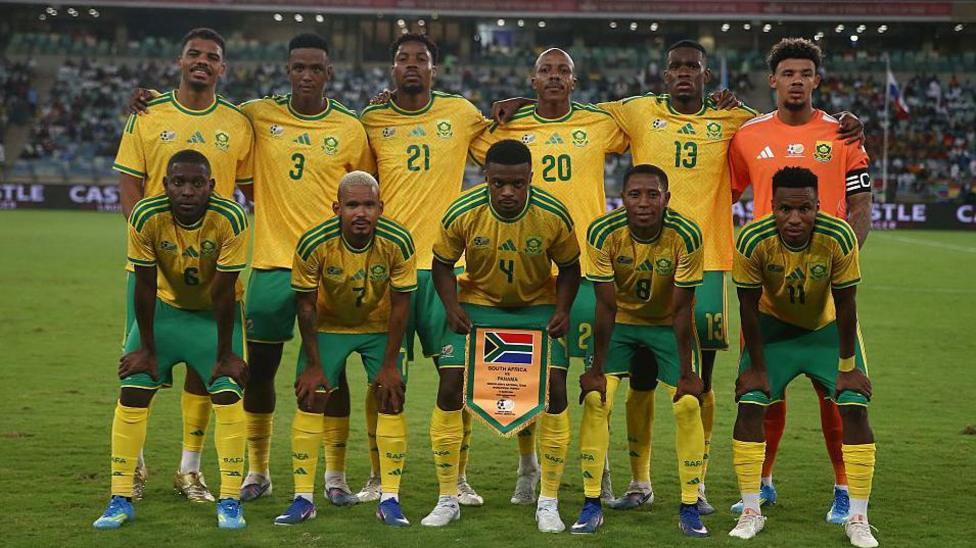
A deep dive into South Africa's prospects, key players, and tactical identity ahead of the 2026 World Cup.