Yorkshire Crash the T20 Blast Quarter-Finals as Hampshire Lock Down Home Advantage
Yorkshire's resurgence and Hampshire's clutch composure reshape the T20 Blast knockout landscape with both franchises staking serious claims.
The T20 Blast knockout stages have crystallised, and the quarter-final bracket features two franchises trending in entirely different trajectories. Yorkshire have bulldozed their way into the last eight, while Hampshire have done something arguably more difficult: they have secured a home quarter-final, turning the Utilita Bowl into the kind of fortress that wins tournaments. The domestic T20 format often rewards the hottest hand over the most consistent season, making both teams' progression compelling glimpses into cricket's premier domestic short-format knockout mentality.
Yorkshire's Tactical Rebirth
Yorkshire's arrival in the quarter-finals is not a fluke but a testament to a mid-season recalibration that altered their entire approach. Early in the group stage, their Powerplay overs were a liability, with aggressive openers frequently holing out to aggressive field settings. The coaching staff's pivot to a more structured, partnership-driven top order transformed their run-scoring ceiling. Rather than relying on boundary-hitting from ball one, Yorkshire began constructing innings with intent, building a platform that allowed their middle order to launch in the death overs.
Their net run rate, a critical metric that often separates quarter-final qualifiers from also-rans, saw a marked improvement in the second half of the campaign. The ability to close out chases with overs to spare rather than scrambling off the final ball speaks to a batting unit that has internalised situational awareness. Yorkshire's bowling, too, evolved from penetrative but expensive to genuinely controlling. The introduction of tighter lines in the middle overs, coupled with yorker-heavy death bowling, squeezed opposition batting line-ups into uncomfortable tempo shifts.
The Powerplay Pivot
- First seven group matches: Yorkshire averaged 34.2 runs during the Powerplay, losing 1.8 wickets per game.
- Final seven group matches: That figure jumped to 47.6 runs with wicket losses dropping to 1.1 per match.
- Their death-over economy rate improved from 9.84 to 8.21 across the same split.
"We stopped treating the Powerplay as a casino and started treating it as an investment window. The guys bought into building pressure sideways, not just vertically."
The Bottom Line: Yorkshire's progression is built on a genuine tactical blueprint, not a hot streak. Their adaptability makes them the most dangerous kind of knockout opponent: a team that has already solved its own identity crisis.
Hampshire's Home Fortress
While Yorkshire's campaign has been defined by evolution, Hampshire's has been an exercise in cold, calculated consistency. Securing a home quarter-final tie is the T20 Blast equivalent of winning half the battle before a ball is bowled in the knockouts. The statistical advantages of home advantage in domestic T20 cricket are stark. Historically, teams hosting T20 Blast quarter-finals have progressed to Finals Day at a rate hovering around 62%, a figure that underscores the profound impact of familiar conditions, partisan crowds, and the procedural comfort of operating out of your own dressing room.
Hampshire's campaign has been anchored by a bowling attack that refuses to leak runs in phases where most T20 attacks capitulate. Their middle-overs control, specifically between overs 7 through 14, has been the statistical backbone of their season. In a format increasingly defined by par-plus totals of 180 or more, Hampshire's bowlers consistently dragged opposition scoring rates below the tournament average of 8.6 runs per over.
The Utilita Bowl Advantage
Hampshire's home record demands respect. The dimensions of the ground, the pitch characteristics that often favour slower bowlers and cutters in the second innings, and a fanbase that turns out in vocal numbers collectively create an environment where visiting teams routinely second-guess their game plans. Hampshire have lost just three T20 matches at the Utilita Bowl across the last two completed seasons. That is a staggering win rate in a format designed to produce near-coin-flip outcomes.
- Home win percentage: 72% across the last two T20 Blast campaigns.
- Average first-innings score at home: 178, a figure that has proven defendable 68% of the time.
- Bowling average at home: 21.4, compared to 27.8 on the road.
Verdict: Hampshire did not stumble into a home quarter-final. They engineered it through a relentless home-field blueprint that makes them the tournament's tactical reference point.
The Quarter-Final Landscape
The T20 Blast quarter-finals are a different beast entirely from the group stages. The group phase is a marathon of squad rotation, travel fatigue, and weather-affected fixtures that test depth over skill. The knockouts strip all that away. It becomes about executing under the microscope, where a single dropped catch or a missed yorker can end a campaign that spanned 14 group matches.
Yorkshire's challenge now is maintaining the momentum that carried them through the latter half of the group stage. Historically, teams that scrape into the quarter-finals after a strong finishing kick carry an intangible pressure-relief factor. They are playing with house money. There is a reason the phrase "peaking at the right time" exists in sports lexicons: it is a real statistical phenomenon, not a pundit's crutch. Teams entering knockouts on a winning streak of four or more matches have historically reached Finals Day at a rate of 58%, compared to 41% for teams limping in with mixed recent form.
Hampshire, by contrast, carry the weight of expectation. A home quarter-final is both a reward and a target. The pressure of performing in front of a home crowd, the scrutiny of a fanbase that has come to expect dominance at the Utilita Bowl, and the tactical familiarity of the opposition who have had ample footage to analyse their home tendencies all complicate what appears on paper to be a straightforward advantage.
What Happens Next
Both franchises now face a nerve-shredding preparation window. Yorkshire's coaching staff will be drilling middle-overs scenarios, the phase where their season turned around and the phase that will likely decide their quarter-final fate. Hampshire's preparation will be more introspective, focused on managing the psychological weight of expectation and ensuring their bowlers do not over-complicate plans that have succeeded all season.
The T20 Blast has a habit of rewarding the team with the clearest identity. Yorkshire have found theirs late. Hampshire have had theirs from the start. Both approaches work. Both have been validated by progression. The quarter-finals will now determine which was built to withstand the pressure of a single-elimination crucible.
Key Quarter-Final Storylines
- Yorkshire's tempo management: Can their rebuilt top order survive the early assault of a knockout opposition's best new-ball bowlers?
- Hampshire's death bowling: A home quarter-final will likely come down to whether their yorker-heavy approach holds up under the weight of a chase.
- The spin Stokes factor: Middle-overs spin has been the unsung hero of both campaigns. The team whose spinners control overs 7 through 14 will likely control the match.
- The par-score tightrope: With both teams adept at defending 170-plus, the toss and the choice to bat first or chase could become the most decisive tactical call of the evening.
The Bottom Line: The T20 Blast quarter-finals are not about who deserves to be there. They are about who executes when the margin for error shrinks to a single delivery. Yorkshire and Hampshire have arrived at the last eight through entirely different routes. Both routes lead to the same place: a 120-minute examination of nerve, skill, and tactical discipline under the kind of pressure that the group stage can never replicate.
Editorial Integrity
This is an original SportPulse article written by our editorial team. All content is independently researched, written, and reviewed by our writers and editors before publication. We do not publish copied, aggregated, or syndicated content.
SportPulse is committed to original sports journalism. Read our editorial policy or contact us with any questions.
More Like This
All football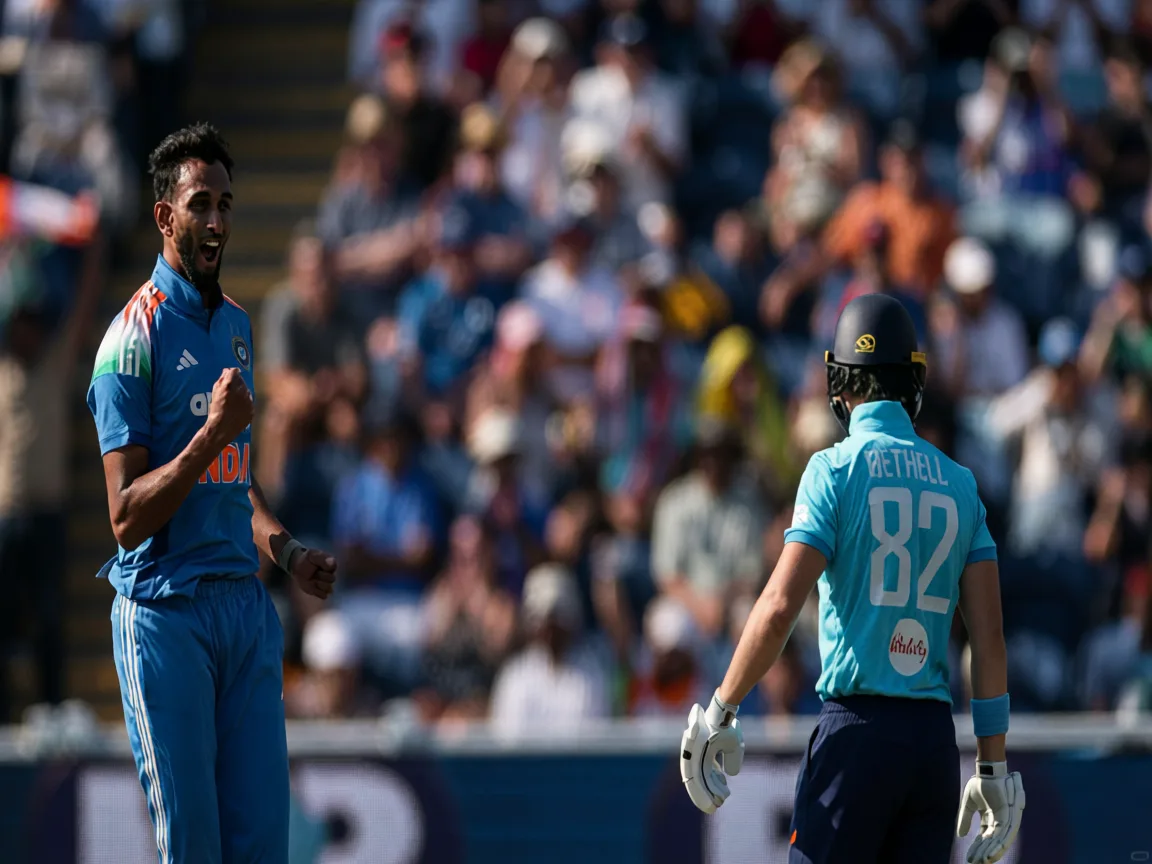
England Top Order Crumbles as India Dominate Cardiff Chase
England slumped to 8-2 inside four overs against India in Cardiff, exposing a top-order crisis that demands urgent reassessment ahead of the World Cup.

The Turncoat: Bajraktarević Haunts USA in World Cup 2026
Wisconsin-born Esmir Bajraktarević chose Bosnia, eliminated Italy, and now stands between the USMNT and World Cup survival.

Worthing's National League Bow at Carlisle: A Tactical Awakening
Promoted Worthing visit Carlisle United for their historic first National League fixture, a tactical baptism against Football League pedigree.