Zverev Breaks the Fritz Curse to Reach His First Wimbledon Semi-Final
A dominant Zverev ended his losing streak against an injured Fritz to reach his first Wimbledon semi-final, reshaping his Grand Slam legacy.
There is a particular kind of silence that swallows Centre Court when a player realises the psychological architecture of his career is about to shift. It is not the silence of shock, nor the silence of deference. It is the sound of a man exhaling a ghost.
Alexander Zverev has carried many ghosts. The towering German with the destructive baseline game has spent years haunted by the gap between his undeniable talent and his Grand Slam trophy cabinet, which remains bare. Among those spectral obstacles was a具体 opponent: Taylor Fritz, the American who had inexplicably become his kryptonite. But on the manicured lawns of the All England Club, Zverev finally performed the exorcism, producing a performance of clinical, ruthless geometry to defeat Fritz and advance to his first Wimbledon semi-final.
The Demolition of a Hex
To understand the magnitude of this triumph, one must first appreciate the weight of the history it erased. Zverev arrived at this quarter-final carrying a dismal losing streak against the American. Fritz had owned their recent matchups, imposing his flat, aggressive ball-striking and exploiting the German's lingering tendency to falter when victory is within sight.
For Zverev, tennis has frequently been a contest against himself before it is a contest against the man across the net. The challenge against Fritz was never merely tactical; it was profoundly visceral. Spectators and analysts have long marveled at Zverev's peak level, a brand of tennis characterized by brutal first serves and devastating double-handed backhands. Yet, assembling that level under pressure has historically been his fatal flaw.
For years, Zverev has been in conversation with his own demons. He has reached the semi-finals of every other major. He has won the ATP Finals. He has climbed to the absolute summit of the rankings. But the prism of Grand Slam glory has always distorted his talent into something fractured. Against Fritz, the narrative demanded a rewrite.
A Symphony of Clinical Control
What unfolded was not a battle of attrition but a systematic disassembly. Zverev did not merely defeat Taylor Fritz; he dismantled the narrative that Fritz had constructed around him. The German's serve, a weapon that has occasionally abandoned him in his darkest competitive hours functioned as an absolute impenetrable wall. He offered no rhythm, no breath, and no opportunity for the American to establish his typically imposing court position.
Fritz, to his profound credit, is not a player who folds quietly. He fights with the stubbornness of a player who has clawed his way up the rankings through sheer belief and an unyielding work ethic. But on this afternoon, resistance required a physical capacity he simply did not possess.
The Cruel Mathematics of Injury
The hiding truth beneath the triumph is that Fritz was compromised. As the match progressed, the American's movement became increasingly restricted. An injured player on grass is a tragic figure, a contestant compelled to execute explosive, directional changes on a surface that demands them with merciless insistence.
Fritz's injury reduced the contest's competitive equilibrium. It forced him to abbreviate his service motion and stripped him of the baseline mobility that allows him to dictate play. A compromised Taylor Fritz is a diminished predator, and Zverev showed no mercy.
The German's performance was defined by a cold, calculated intelligence. He targeted the American's movement, exploiting the injury with the professional detachment of a surgeon. This is not a moral indictment; it is the cruel mathematics of professional sport. Zverev did what champions do: he recognised vulnerability and pressed his boot firmly against it until the resistance ceased.
There is a peculiar, dark poetry in watching an athlete labour against the inevitable. Fritz refused to retire, a testament to his combative spirit, but his movement betrayed him. Every被迫 tortured step was a reminder that tennis, for all its aesthetic grace, is a sport of physical attrition. The Centre Court crowd, usually eager for a contest, shifted into a respectful hush, acknowledging the sport's harsh, unforgiving theatre.
The Historical Resonance of the Last Four
By securing his place in the semi-finals, Zverev completes a personal Grand Slam continuum. He has now reached the final weekend at the Australian Open, the French Open, and Wimbledon, asserting his presence across three distinct surfaces.
This achievement carries profound historical weight. In the modern era, only a select echelon of players have demonstrated the versatility and endurance to contend on the slow, high-bouncing clay of Paris and the slick, low-bouncing grass of Wimbledon within consecutive months. The likes of Roger Federer, Rafael Nadal, and Novak Djokovic have made this transition appear routine. For everyone else, it remains a formidable alchemy.
Grass demands a specific kind of improvisational genius. It surfaces quickly, neutralising topspin and rewarding reaction speed and flat trajectory. Zverev's deep court position and massive Western topspin forehand are theoretically ill-suited to the surface. Yet he has adapted, demonstrating a tactical evolution that speaks volumes of his maturity.
The Mental Threshold Subtracted
The immediate consequence of this victory extends beyond the trivial pursuit of a trophy. The psychological barrier has been shattered. For a player as analytically tormented as Zverev, breaking a losing streak against a specific opponent is akin to| removing a cognitive splinter that has festered for months.
The only hex that mattered was the one I placed on myself.
In past eras, Zverev might have tightened, allowed the injury of his opponent to disrupt his rhythm, or felt the suffocating pressure of expectation. This Zverev was different. He maintained a merciless focus, a quality forged in the fires of previous, painful collapses.
What Awaits in the Tall Grass
As Zverev prepares for his semi-final, the landscape of Wimbledon has shifted immeasurably. The tournament draw has been dissected by upsets and injuries. He faces a field where experience and physical resilience are at a premium.
The road ahead is fraught with danger, but the most significant obstacle has always been the reflection in the mirror. Zverev has spent his entire career armed with the weaponry of a multi-Slam champion but lacking the psychological ammunition to survive the sport's most intense moments. By defeating his personal bogeyman on the most traditional stage in tennis, he has earned the most vital currency a player can possess: belief.
The ghost has been exorcised. The silence on Centre Court has been filled. What remains is a man, a racquet, and the beginning of a legacy he has spent a lifetime chasing.
Editorial Integrity
This is an original SportPulse article written by our editorial team. All content is independently researched, written, and reviewed by our writers and editors before publication. We do not publish copied, aggregated, or syndicated content.
SportPulse is committed to original sports journalism. Read our editorial policy or contact us with any questions.
More Like This
All tennis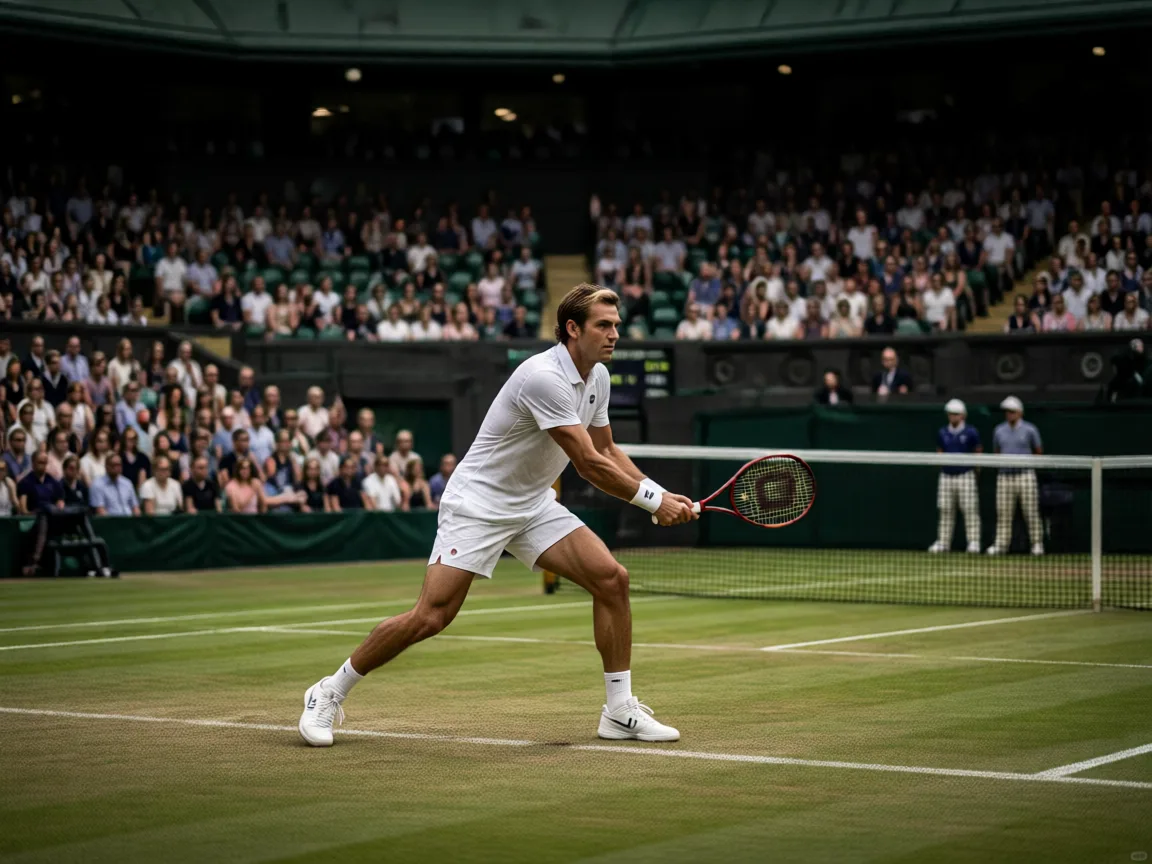
Noskova's First Crown, Sinner Defends, Djokovic's Stubborn Hunt
Wimbledon 2026 delivered a new women's champion, a defending king, and an ageless legend still chasing history.
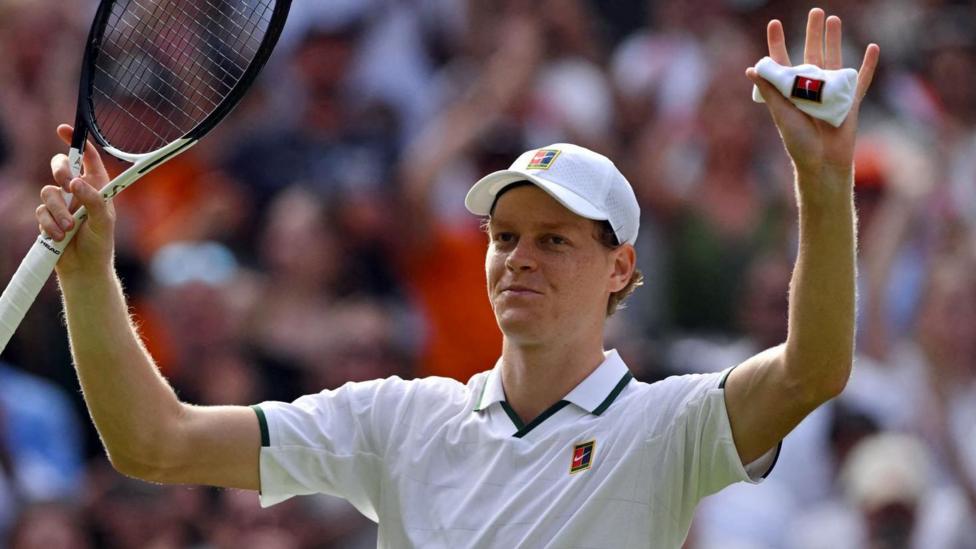
Sinner Stares Down the Abyss Before Surviving Five-Set Wimbledon Scare
The defending champion's title defence nearly ended before it began as Kecmanovic pushed him to five brutal sets on Centre Court.
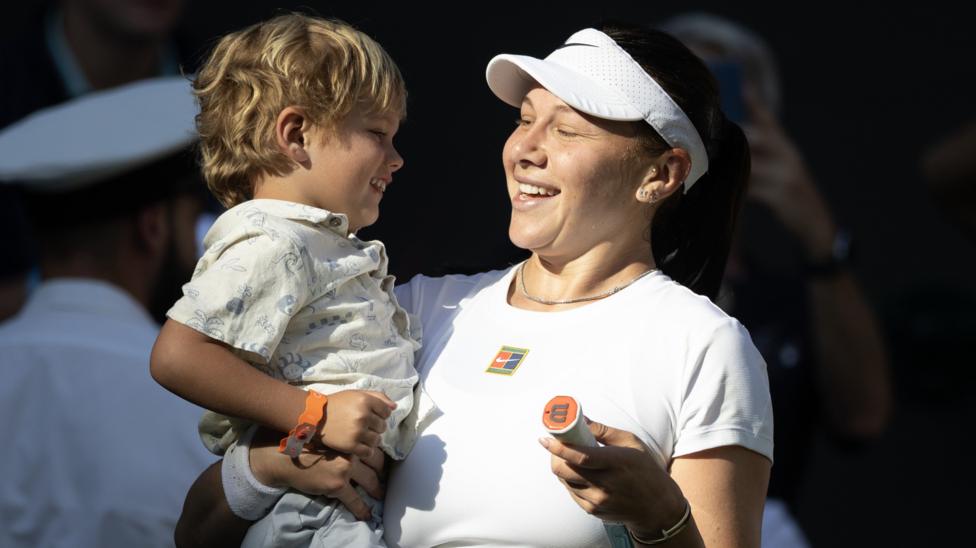
Anisimova Eyes Wimbledon Redemption After Swift Emotional Recovery
Amanda Anisimova lost last year's Wimbledon final but recovered in six weeks — now she's plotting a triumphant return to grass.