2026 F1 Season Start Date Sets Stage for Formula 1's New Era
The 2026 F1 season kicks off a revolutionary regulatory overhaul, reshaping chassis aerodynamics and power unit landscapes.
The Dawn of a New Formula
Cool autumn air sweeps through the paddock as the final races of the current regulatory cycle wind down, but the sport's engineering corridors are already ablaze with activity. Formula 1 has officially circled its calendar: the 2026 F1 season is set to begin, marking the most profound technical reset since the hybrid era dawned in 2014. This is not merely a fresh coat of paint on existing machinery. It is a total paradigm shift in how downforce is generated, how power units breathe, and how strategic battles unfold from lights out to the checkered flag.
The current generation of ground-effect cars, introduced in 2022, will have run its course. Those machines, characterized by their sculpted floor tunnels and rigid aerodynamic profiles,桜ush immense aero loads but suffer heavily in dirty air. The 2026 regulations tear up that philosophy entirely. We are moving toward an era of active aerodynamics, where downforce levels will dynamically adjust based on the circuit's demands rather than remaining statically mapped to a single wing configuration.
Chassis Revolution and the Active Aerodynamics Mandate
切忌 understating the magnitude of the 2026 chassis regulations. The FIA has mandated a shift to active aerodynamics to combat the dreaded dirty air problem that has plagued the sport for decades. Under the current rules, DRS provides a crude rear-wing flap opening to reduce drag. In 2026, DRS as we know it faces a fundamental redesign.
Drivers will manage an active aerodynamic system via steering wheel controls, switching the car between low-drag, high-speed configurations and high-downforce cornering modes. This transforms car setup from a static garage exercise into a dynamic, in-lap driving skill. Expect to see straight-line speeds spike dramatically as teams exploit low-drag modes on the straights before the car automatically reverts to high-downforce settings for braking zones.
The implications for tire strategy are immense. Lower sustained downforce means the cars will slide more through the corners. Sliding generates heat. Heat degrades tires. Pirelli will supply completely new compounds tailored to these lighter, less aerodynamically glued machines. The traditional one-stop versus two-stop strategic binary will be shattered as engineers grapple with entirely new thermal degradation curves.
Power Unit Shake-Up
While the chassis changes are radical, the power unit regulations represent the true geopolitical shift of 2026. The internal combustion engine displacement remains at 1.6 liters, but the electrical component undergoes a massive rerating. The MGU-K (Motor Generator Unit - Kinetic) power output doubles from 120 kW to 350 kW. The MGU-H (Motor Generator Unit - Heat) is completely banned.
This shifts the burden of energy recovery entirely to the brakes. Removing the MGU-H simplifies the engine architecture, which is precisely the FIA's intention. The goal is to reduce development costs and lure new manufacturers into the sport. The strategy has already worked spectacularly.
Audi arrives as a full works team, taking over the Sauber operation. Ford returns to the pinnacle of motorsport, slapping its badge on the Red Bull Powertrains project for the first time since 2004. These two giants dramatically alter the power unit landscape. Ferrari and Mercedes must defend decades of hybrid supremacy against freshly funded, aggressively ambitious programs. Honda, shedding its former Red Bull exclusivity, will supply Aston Martin.
Strategy Breakdown: Fuel Flow and Energy Management
Forget the simple fuel-saving lifts and coast phases of the current era. In 2026, the power unit's reliance on electrical deployment forces teams to rethink energy management from the ground up. With the MGU-H gone, turbo lag becomes a real engineering headache again, and exhaust gas energy is no longer harvested for the battery.
Teams face a critical strategic decision on the pit wall. Do they deploy the full 350 kW of electrical power aggressively at the start of each lap, risking battery depletion and forcing the driver into recovery mode through the final sector? Or do they meter out the electrical deployment evenly, sacrificing raw corner-exit performance for consistent lap times?
Fuel flow rates will be strictly capped, forcing drivers to maximize mechanical grip and aerodynamic switching rather than relying on pure combustion power. A low fuel load at the end of a stint won't just provide extra straight-line speed; it will shift the car's balance as the aero rake changes, forcing real-time setup adjustments over team radio.
"Box, box. Switch to Mode B, we are sacrificing Sector 3 for straight-line position. Defend the inside."
Expect that kind of terse, highly technical radio traffic to become the norm. The strategy wall will constantly juggle battery state-of-charge versus track position, calculating energy recovery deficits in real time.
The 2026 Grid Order
The confirmed power unit alignments for the 2026 season reshape the paddock hierarchy:
- Red Bull Racing / RBVC: Ford-branded Red Bull Powertrains
- Mercedes: Mercedes-AMG High Performance Powertrains
- Ferrari: Ferrari Power Unit
- McLaren / Williams: Mercedes customer units
- Aston Martin / AlphaTauri: Honda power
- Alpine / Sauber/Audi: Audi works power
- Haas: Ferrari customer units
This alignment guarantees a three-way manufacturer battle among Ferrari, Mercedes, and Red Bull-Ford, while Audi and Honda represent dangerous, well-funded wildcard entries. The inter-team data sharing between engine suppliers and customer outfits will be heavily scrutinized under the new cost cap rules, as even minor software mapping advantages could yield tenths of a second on track.
Technical Concepts Decoded
To understand the 2026 cars, you must grasp the new terminology that will dominate paddock chatter.
Active Aero Mode refers to the driver-controlled switch between high-downforce and low-drag configurations. Unlike the current DRS flap, the 2026 system will adjust both the front and rear wings simultaneously. This ensures aerodynamic balance is maintained when the rear wing flattens out, preventing the terrifying oversteer snaps drivers currently endure when opening DRS in turbulent air.
Electrical Deployment Profile maps how the 350 kW battery power is released over a single lap. Teams will design unique profiles for each circuit. A track like Monza prioritizes long, high-speed bursts, while Monaco demands rapid, repeated bursts of acceleration out of slow corners.
Turbo Lag Compensation becomes a critical engineering battleground. Without the MGU-H to spin the turbocharger using exhaust gases, spool-up time increases. Engine manufacturers must design innovative anti-lag systems. Expect aggressive ignition cut strategies and hybrid torque fills to mask the throttle lag, particularly in low-speed, low-fuel configurations.
Implications for the Drivers' Championship
The transition to new regulations always reshuffles the competitive deck. Drivers who excel at car setup and adaptability will thrive. Those who rely purely on the stability of a dominant platform may struggle. The active aerodynamics require immense cognitive load during high-speed sections. A driver must hit his marks on the track while simultaneously managing wing modes, electrical deployment, and brake recovery settings.
Oversteer-happy talents will relish the lighter, slide-prone rear ends. The cars will demand a return to raw car control as the artificial aerodynamic stickiness of the ground-effect era fades. Expect the championship battle to hinge on who masters the tire management nuances first, as the new compounds punish any driver who overheats the rear tires through aggressive throttle application.
Points Standings and the Season Outlook
While the official 2026 calendar and point structures are still being finalized by the F1 Commission, the fundamental scoring system is expected to remain consistent. The real impact on the points standings will come from reliability. History shows that new power unit regulations inevitably trigger a wave of grid penalties and mechanical retirements.
Teams that survive the early flyaway races without exhausting their allocated power unit components will build an insurmountable points cushion. A 25-point swing in the championship can easily come from a rival's engine failure rather than on-track overtaking. The constructors' championship, deeply tied to prize money distribution, will be decided by which team's power unit supplier delivers the most robust, durable package across the longest calendar in F1 history.
The 2026 season start date is more than a calendar entry. It is the opening salvo in a technical revolution that rewrites the rules of grip, power, and strategy. The vpaddock is preparing for a cold, harsh winter of discovery. The cars that emerge from the garages next year will look, sound, and behave unlike anything the sport has seen in a generation.
Editorial Integrity
This is an original SportPulse article written by our editorial team. All content is independently researched, written, and reviewed by our writers and editors before publication. We do not publish copied, aggregated, or syndicated content.
SportPulse is committed to original sports journalism. Read our editorial policy or contact us with any questions.
More Like This
All f1
Silverstone Delivers a Classic as Title Fight Intensifies
The British Grand Prix served up high drama at Silverstone, reshaping the championship picture with a race full of twists.
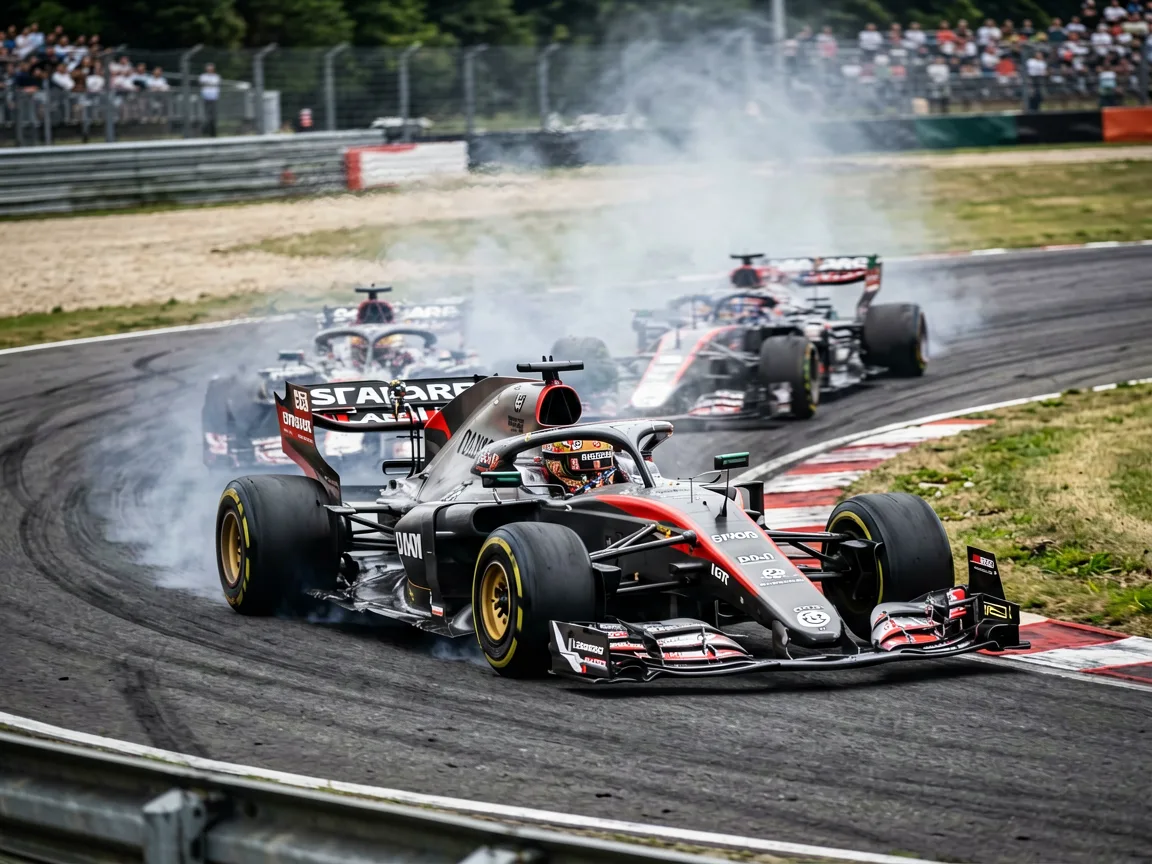
Spa 2026: How Active Aero Geometry Reshaped F1's Most Demanding Circuit
The 2026 Belgian GP showcased active aerodynamics, movable flaps, and hybrid deployment under new regulations at Spa-Francorchamps.

How 27 Seconds of Qualifying Engineered Russell's Austrian GP Win
George Russell's Austrian GP victory was forged 24 hours earlier in a 27-second track evolution window during qualifying.