6,500 Miles for 13 Minutes: The Elliot Family's World Cup Gamble
Callan Elliot's family crossed 6,500 miles from Annan to watch him play 13 minutes for New Zealand at the World Cup.
The distance between Annan, a modest market town in Dumfries and Galloway, and wherever New Zealand happen to be playing at any given FIFA youth tournament is not measured in mere geography. It is measured in sacrifice, in sleepless flights, in the quiet arithmetic of a family whose investment dwarfs what most professional footballers ever contribute to a badge.
6,500 miles. That is the distance Callan Elliot's family travelled to watch their son represent New Zealand at a World Cup. Their reward? 13 minutes of football. Thirteen minutes to justify the airfare, the jet lag, the rearranged lives. It would be easy to frame that as a raw deal. It would also be entirely wrong.
The Economics of Devotion
Modern football has a deeply uncomfortable relationship with the concept of loyalty. Players are branded mercenaries for forcing transfers. Fans are mocked for armchair devotion. But the Elliot family represent something the sport's industrial complex cannot commodify: unconditional commitment to an individual.
Consider the financial maths. A round-trip from the UK to New Zealand, even booked months in advance, typically runs between £900 and £1,400 per person during tournament windows, when airlines predictably hike fares. Add accommodation, internal transit, match tickets, and subsistence for even a minimal two-week stay, and a family of four is staring at a bill north of £6,000. For 13 minutes of pitch time, that works out to roughly £461 per minute of watching your son play.
No agent would accept those terms. No club would sanction that expenditure. But families are not agents, and this was not a negotiation.
What Fifteen Minutes Actually Means
Here is what 13 minutes represents in the context of a World Cup: it is the difference between being a tournament participant and a tournament memory. Elliot was not a spectator. He was not an unused substitute holding a clipboard. He entered the pitch wearing New Zealand's colours, in a FIFA-sanctioned World Cup, with his name printed on a global roster. That distinction is permanent. It cannot be inflated by a poor club season. It cannot be devalued by a transfer to a lower division.
It is entirely possible, even probable, that those 13 minutes represent the peak of Elliot's footballing career. And there is absolutely nothing tragic about that.
The Annan-To-Aotearoa Pipeline
The story of Callan Elliot is, in microcosm, the story of how modern football talent scatters across the globe. Born in Annan, a town of roughly 8,000 people in southwest Scotland, Elliot's path to international football did not run through the Scottish FA's youth development belts. His eligibility for New Zealand reflects the increasingly fluid nature of international player registration, where heritage, residency, and birthplace intersect in ways that would have been unthinkable two decades ago.
Annan Athletic, the town's senior club, plies its trade in the Scottish League Two, the fourth tier of the Scottish pyramid. The average attendance at Galabank hovers around 500. The idea that a player from this background could reach a World Cup, any World Cup, through the traditional British system is statistically remote. The Scottish game produces elite talent, but the funnel is narrow and heavily weighted toward the Old Firm academies.
Elliot's route, via New Zealand, represents an alternative geography of opportunity. It is a path increasingly trodden by players from smaller footballing nations who recognsie that the conventional route through the British system is not the only one.
The International Football Market Reality
FIFA's eligibility rules, relaxed significantly over the past decade, have created a secondary market for international caps. Players with even tenuous connections to nations outside the traditional European and South American powerhouses can find themselves fast-tracked to tournament football.
- 68 teams participated across FIFA's various men's World Cup tournaments in 2023, including youth editions.
- New Zealand's OFU confederation guarantees guaranteed qualification slots that European nations can only dream of.
- Players from the British Isles with Oceanic heritage are increasingly scouted by federations looking to strengthen squads.
This is not a loophole. It is a legitimate career strategy in a sport where the margin between anonymity and recognition is measured in single-digit international appearances.
The Value of Thirteen Minutes
The instinctive reaction to 13 minutes is to see it as insufficient reward for 6,500 miles of travel. This misunderstands what international football means at the margins of the global game.
For players from elite nations, a World Cup appearance is a line on a CV. For players from smaller federations, it is the CV. Elliot's 13 minutes will appear in databases, on statistical aggregators, in the historical record of New Zealand's tournament involvement. When his career ends, whenever that may be, those minutes will be the entry that outlasts every club transfer, every domestic result, every managerial change.
There is a reason families remortgage for this. The capitalist impulse is to measure value in minutes played. The human impulse is to measure it in witnessing.
The Elliot family did not travel 6,500 miles to analyse pitch time. They travelled to see their son walk out as a World Cup footballer. He did. For 13 minutes, the distance between Annan and the pinnacle of global football was closed entirely.
What Comes Next
Elliot's 13 minutes do not guarantee a professional career. They do not guarantee a second cap. What they guarantee is a memory that no future result can erase, and a story that will outlive any highlight reel.
The uncomfortable truth of football at this level is that most participants are not stars. They are functionaries in a tournament structure that uses them to fill rosters, to complete brackets, to make up the numbers that allow the sport's industrial machine to function. The extraordinary thing about the Elliots is that they understood this and made the journey anyway.
That is not naivety. That is the purest expression of what football, at its most stripped-down, is supposed to be about.
The Bottom Line
The Elliot family's 6,500-mile journey is not a story about football's cruelty. It is a story about football's enduring capacity to inspire devotion that defies economic logic. In a sport increasingly consumed by commercial calculation, that is worth more than any performance bonus.
Editorial Integrity
This is an original SportPulse article written by our editorial team. All content is independently researched, written, and reviewed by our writers and editors before publication. We do not publish copied, aggregated, or syndicated content.
SportPulse is committed to original sports journalism. Read our editorial policy or contact us with any questions.
More Like This
All long-reads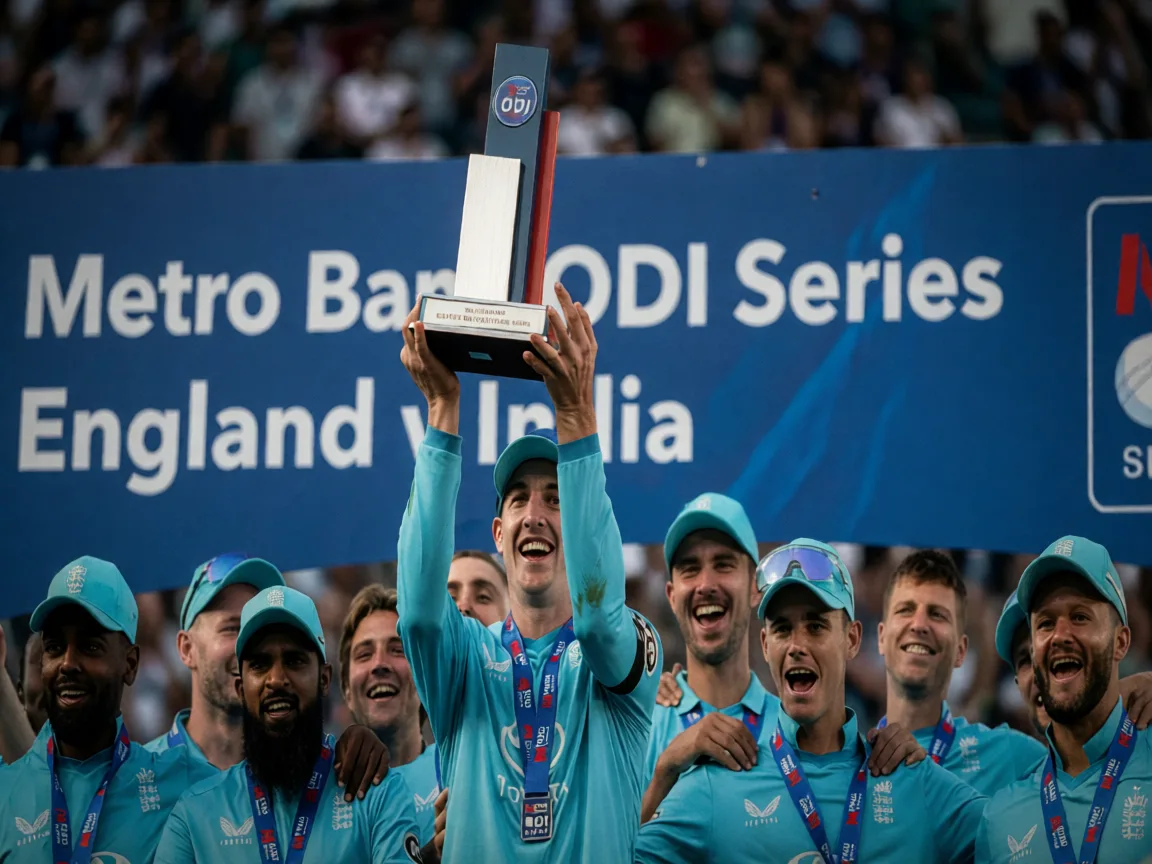
England's ODI Revival Is Real — But One Series Won't Win a World Cup
England beat India 2-1 in ODI cricket, signaling revival one year out from the World Cup — but deeper issues remain.

Evenepoel Chips Away at Pogacar With Stage 16 Time-Trial Masterclass
Remco Evenepoel slashes 28 seconds off Tadej Pogacar's Tour de France lead with a commanding time-trial victory.

The Geography of Glory: Every Men's World Cup Final Host City Ranked
From Montevideo's inaugural stage to Moscow's modern coliseum, the 20 cities that hosted football's ultimate match tell a geopolitical story.