Akhmetov, Shakhtar, and the Unconquerable Identity of Ukrainian Football
Thirty years into his presidency, Rinat Akhmetov reflects on Shakhtar Donetsk's extraordinary resilience amid war, displacement, and existential threat.
The morning after Russia unleashed its heaviest aerial raid on Kyiv in several months, a quiet figure stood at the end of a paved driveway half an hour from the city centre. At least 25 people had been killed in the overnight bombardment. As always in a nation under siege, those emerging from a sleepless night are the lucky ones. Rinat Akhmetov is here, a physical rebuke to the conjecture about his whereabouts during the war. Ukraine's richest man rarely gives interviews, but his presence now is a statement in itself.
He is here to mark the 90th anniversary of Shakhtar Donetsk, a club whose tribulations over the past dozen years have been unmatched in European football. It has also been 30 years since Akhmetov assumed the presidency of the club, transforming it from a regional outfit into a Champions League staple. The club has been a labour of love, the straightforward face of a career whose complexities beyond football have been widely documented.
The Footballing Philosophy as Structural Lifeline
To understand Shakhtar's survival, one must examine the tactical and structural philosophy that predates the current conflict. Long before the war escalated, Shakhtar operated with a distinctly South American flavour, a conscious recruitment strategy designed to exploit the European market's inefficiencies. The club scoured Brazil for technical, progressive ball-carrying midfielders and fluid, positional-rotation forwards. This was not mere sporting preference; it was economic survival under the shadow of a corrupt regional system and, later, an aggressive neighbour.
The 4-2-3-1 shape that defined Shakhtar's European campaigns under Mircea Lucescu and later Igor Jovičević was built on the premise of territorial dominance through individual technical superiority. When the Donbas region fell under occupation in 2014, Shakhtar lost its home. The club became nomadic, exiled from the Donbas Arena, a stadium that once stood as the opulent manifestation of Akhmetov's ambition.
That displacement forced a tactical resilience. A club stripped of its physical infrastructure had to lean entirely on its systemic infrastructure. The cohesive midfield progression and counter-pressing triggers became the only constants. Players and coaches adapted to playing in empty stadiums across the country, relying on the muscle memory of their tactical identity to compensate for the loss of home advantage.
The Azovstal Echo: Steel and Resilience
Akhmetov's influence spreads across Ukraine most visibly through entities like Azovstal, the iron and steelworks that became the ultimate symbol of a country's resilience during the siege of Mariupol in 2022. The parallel between the steelworks and the football club is not coincidental. Both represent the industrial, unyielding identity of the Donbas region. Akhmetov's own reflection on the conflict, acknowledging he was "five seconds from death," underscores the existential stakes that have repeatedly threatened to consume his enterprises.
When Shakhtar's training complexes in the east were targeted and occupied, the club's operational hub shifted west. Yet the philosophy remained eastern. The Brazilian contingent, once the lifeblood of the squad, was drastically reduced as players fled the escalating war. This necessitated a profound tactical shift. Jovičević, and subsequently Marino Pušić, had to reconstruct a side capable of competing in the Champions League using predominantly domestic and Eastern European talent, supplemented by a skeleton crew of remaining South Americans.
The tactical fallout was significant. Without the pure technical superiority that characterised the Lucescu era, Shakhtar shifted towards a more transitional model. The emphasis moved from prolonged possession phases to a mid-block pressing structure, designed to absorb pressure and exploit spaces left by superior European opponents on the counter-attack.
Tactical Shift: From Displacement to Domestic Dominance
The critical tactical inflection point came during the 2022-23 season. Forced to play home matches in Warsaw and Lviv, Shakhtar could no longer impose the suffocating possession game that had won them domestic titles. Instead, Pušić implemented a dual-ten system, where two dynamic forwards operated in the half-spaces, looking to receive between the lines during transition moments.
This structural adjustment was born entirely from the trauma of war. The loss of the Donbas Arena and the exile from Donetsk meant Shakhtar no longer had the psychological sanctuary of their fortress. The mid-block and counter-pressing schemes became protective measures. They allowed a makeshift, often youthful squad to conserve energy and minimise the technical gap against wealthier opponents in the Champions League group stages.
In domestic competition, however, the tactical pendulum swings back. Shakhtar remains the dominant force in the Ukrainian Premier League, but their approach is noticeably more direct. The verticality in their passing has increased. Full-backs push higher to create overloads, compensating for the lack of a pure creative number ten. The systemic resilience mirrors the survival of Azovstal: an unyielding defensive structure that occasionally sparks into devastating offensive life.
The Unbreakable Bond of Club and Country
Akhmetov's rare interview serves as a reminder that football in Ukraine cannot be decoupled from the national struggle. The businessman, arguably eastern Europe's most influential figure, has used Shakhtar as the accessible, human face of a sprawling, complicated empire. Where Azovstal represents the bedrock of physical resistance, Shakhtar embodies the cultural and emotional continuation of a region under siege.
"I was five seconds from death."
These words from Akhmetov resonate far beyond his personal experience. They describe the precarious existence of a club that has operated for a decade under the constant threat of annihilation. The fact that Shakhtar still fields a competitive team, still participates in European competition, and still nurtures youth talent from the displaced regions is a profound act of defiance.
The logistics of running the club are now a permanent exercise in crisis management. Travel across the country requires navigating curfews and damaged infrastructure. Matchdays involve security protocols that would be unimaginable in Western Europe. Yet the tactical discipline remains intact, a testament to the coaching infrastructure and the mentality forged in the crucible of conflict.
What Survives: The Outlook for Shakhtar
Looking ahead, Shakhtar faces a paradox. The longer the war continues, the harder it becomes to sustain the South American pipeline that once defined their progressive ball-carrying identity. Yet the domestic market is producing players with a psychological resilience that imported talent rarely possesses. The next tactical evolution will likely see a fusion: a core of battle-hardened Ukrainian players executing a high-intensity counter-pressing system, augmented by targeted South American signings for the final third.
The return to Donetsk remains a distant, burning ambition. Until then, Shakhtar will continue to adapt their shape and philosophy to the realities of exile. The 4-2-3-1 may give way to a more flexible 4-3-3 or a 3-4-2-1 depending on the available personnel, but the underlying principle of structural resilience will persist.
Akhmetov's optimism for the future, expressed in the aftermath of Kyiv's bloodiest night in months, is rooted in the survival of institutions like Shakhtar and Azovstal. They are not just businesses or sports clubs; they are proof that the systematic and cultural fabric of Ukraine endures. As long as the tactical framework holds, as long as the club can field eleven players committed to the collective shape, Shakhtar Donetsk will remain the most potent symbol of Ukrainian resilience on the European stage.
Editorial Integrity
This is an original SportPulse article written by our editorial team. All content is independently researched, written, and reviewed by our writers and editors before publication. We do not publish copied, aggregated, or syndicated content.
SportPulse is committed to original sports journalism. Read our editorial policy or contact us with any questions.
More Like This
All long-reads
Football Forgot Its Greatest Jewish Player. Here Is Why
The Holocaust didn't just erase lives; it erased footballing legacies, leaving the greatest Jewish player unnamed and forgotten.
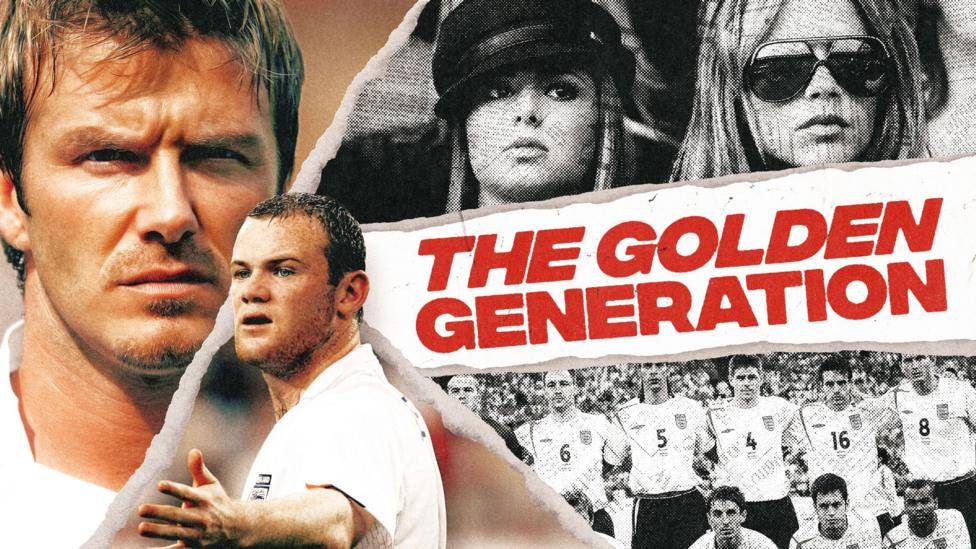
System Failure: The Tactical Autopsy of England's Golden Generation
Lampard, Gerrard, Beckham, Rooney, Terry, Ferdinand — and a 4-4-2 that wasted them all.

Possession Orthodoxy Meets Pragmatic Revolt: Europe's Tactical Crossroads
Across Europe's top leagues, coaches are abandoning possession dogma for adaptive, transition-based systems that redefine modern football.