Possession Orthodoxy Meets Pragmatic Revolt: Europe's Tactical Crossroads
Across Europe's top leagues, coaches are abandoning possession dogma for adaptive, transition-based systems that redefine modern football.
The Possession Orthodoxy Under Siege
4-3-3 has long been the default setting of the European football establishment. From La Masia to the Ajax academy, the positional play framework built on controlled possession, numerical superiority in central corridors, and systematic ball progression has defined what we consider modern, sophisticated football. Yet across the continent, a quieter revolution is dismantling the assumptions that underpinned a decade of tactical orthodoxy.
The shift is visible in the numbers. Average possession figures for league leaders across Europe's top five leagues have dropped from 62.4% in the 2018-19 season to 58.1% this campaign. That decline, seemingly modest, reflects a philosophical rupture. Teams are no longer treating the ball as an unconditional good. Coaches are increasingly asking whether domination of possession translates into domination of chances, and the empirical answer is uncomfortable for the purists.
Pep Guardiola's Manchester City still represent the gold standard of positional play, but even their structure has evolved. The introduction of inverted fullbacks into 3-2-5 attacking shapes was not merely an aesthetic refinement. It was a response to opponents who had learned to sit in mid-blocks and exploit the transitional vulnerabilities inherent in heavily committed possession structures.
The Pragmatic Counter-Revolution
What we are witnessing is not the death of possession football but the reassertion of tactical pluralism. Diego Simeone's Atlético Madrid, Gian Piero Gasperini's Atalanta, and Roberto De Zerbi's various projects have demonstrated that alternative models can compete at the highest level. Each approaches the game from a different philosophical starting point, yet all share a skepticism toward the possession-first doctrine.
Simeone's 4-4-2 block, with its man-oriented pressing and vertical transitions, treats the ball as a tool to be used surgically rather than worshipped. Atalanta's 3-4-2-1 under Gasperini uses aggressive man-marking across the pitch to force chaos, deliberately rejecting the controlled structure that possession systems seek to impose. De Zerbi, contrarily, uses possession as an attacking weapon rather than a defensive shield, inviting pressure to create space behind the first line.
The tactical diversity is not merely entertaining. It is strategically significant. When a team built around 70% possession encounters a system designed to render that possession meaningless, the structural advantage of ball control dissolves. The ball circulates, the shape holds, but the penetration evaporates.
Tactical Shift: The Mid-Block Renaissance
The defining tactical development of this season has been the sophisticated use of the mid-block. Where once the low block was the default response to superior opponents, teams have developed mid-block structures that compress space between the lines while maintaining a threat in transition.
Xabi Alonso's Bayer Leverkusen exemplify this evolution. Their 3-4-3 in defensive phase does not retreat into the penalty area. It occupies the middle third, forcing opponents into wide areas where the touchline acts as an additional defender. The pressing trigger is not the ball position alone but the orientation of the opponent's body shape and the positioning of their passing angles. When the trigger fires, Leverkusen collapse on the ball-carrier with staggering intensity.
"The ball is not the game. The game is the space the ball creates, the space the ball denies, and the decisions players make in those spaces." This insight, shared by a prominent Serie A tactical analyst, captures the philosophical foundation of the new pragmatism.
The mid-block's effectiveness is rooted in geometry. A low block surrenders the initiative entirely, allowing the attacking team to set their shape and find rhythms. A high block requires enormous physical expenditure and leaves space behind. The mid-block splits the difference, occupying just enough territory to disrupt the opponent's build-up structure while preserving enough compactness to protect the penalty area.
The Italian Laboratory
Serie A has become the most tactically diverse league in Europe, a laboratory where contrasting philosophies collide every weekend. Inter Milan's 3-5-2 under Simone Inzaghi uses wingback width to stretch opponents, then strikes through vertical passes into the channels for Lautaro Martínez. Juventus under Massimiliano Allegri oscillates between conservatism and pragmatism, often settling into 4-4-2 defensive shapes that concede the ball willingly.
Napoli's post-Spalletti transitional phase has been turbulent precisely because the structural sophistication that defined their title-winning campaign is difficult to sustain without the architect. The 4-3-3 that Rudi Garcia attempted to implement lacked the relational movement patterns that Luciano Spalletti had drilled into the squad. The ball possession was similar, the pressing intensity was comparable, but the tactical intelligence, the understanding of when to hold possession and when to bypass lines with a single pass, was absent.
This is the fundamental lesson of contemporary tactical analysis. Systems are not transferable. What works in one context, with one group of players and one coaching staff, cannot be simply transplanted into another environment. The 4-3-3 that thrived at Napoli was not the same 4-3-3 that sputtered under Garcia. The formation is merely the starting point, the skeleton upon which tactical intelligence is built.
The Numbers Behind the Shift
The statistical evidence supporting the tactical evolution is compelling and multifaceted.
- Average shots per 90 minutes in Serie A have increased from 14.2 to 15.8 over the past three seasons, while average possession has decreased, suggesting teams are creating more with less.
- Direct attacks leading to shots have risen by 18% across Europe's top five leagues this season compared to the previous campaign, reflecting a willingness to bypass prolonged possession sequences.
- High turnovers leading to shots within five seconds of regaining possession now account for 11.3% of all goals in the Champions League knockout stages, a figure that has doubled since 2019.
- PPDA (Passes Per Defensive Action) numbers show elite pressing teams are becoming more selective, choosing specific moments to engage rather than pressing continuously.
These numbers tell a story of efficiency over aesthetics. Coaches are optimizing for chance creation rather than ball retention, and the results are measurable. A team that holds 65% possession but generates 0.8 expected goals per match is functionally inferior to one that holds 45% possession but generates 1.4 expected goals.
The Manager's Dilemma
For the next generation of coaches emerging from the tactical academies of Europe, the landscape is both liberating and daunting. The old certainty that possession equals control equals success has been replaced by a spectrum of possibilities. A young coach trained in the Barcelona methodology can still build a successful possession-based system, but they must also develop answers for opponents who will refuse to engage on those terms.
The coaches who will define the next decade are those who can synthesize these competing philosophies. Arne Slot's work at Liverpool represents one model, maintaining the positional play principles that defined Jürgen Klopp's heavy metal football while introducing more controlled possession phases. The 4-3-3 remains, but the rhythm shifts between suffocating pressing and patient circulation.
"We want the ball, but we want it with purpose. Possession without penetration is just noise. The opponent hears it, adjusts to it, and eventually it becomes a weakness rather than a strength." — A rising Bundesliga coach, speaking on condition of anonymity about tactical philosophy.
The European Horizon
As the Champions League enters its decisive phase, the tactical contrasts will sharpen. The knockout stage rewards adaptability above all. A team that can only play one way is vulnerable. A team that can shift between possession-based control and transition efficiency within a single match possesses a significant strategic advantage.
Real Madrid's eternal capacity to reinvent themselves mid-match remains the benchmark. Carlo Ancelotti's willingness to abandon structure for chaos, to let the game become a loose, transitional affair where individual brilliance outweighs tactical organization, is itself a tactical choice. It is the pragmatism of the highest order, an acknowledgment that in football, as in all strategic contests, rigidity is fatal.
The coming weeks will reveal which philosophy prevails. Will the systematic precision of Guardiola's positional play finally conquer Europe again, or will the pragmatic revolution continue to produce upsets that defy the analytics? The answer likely lies not in the systems themselves but in the moments between systems, those seconds when a match tips from one tactical reality to another and a coach's ability to read the transition becomes the decisive factor.
For the tactical observer, this is a golden age. The monoculture of possession is breaking down, and what emerges is a richer, more varied, and more honest tactical landscape. Football was never meant to be played one way. The reassertion of that truth is the most significant tactical development of our era.
Editorial Integrity
This is an original SportPulse article written by our editorial team. All content is independently researched, written, and reviewed by our writers and editors before publication. We do not publish copied, aggregated, or syndicated content.
SportPulse is committed to original sports journalism. Read our editorial policy or contact us with any questions.
More Like This
All long-reads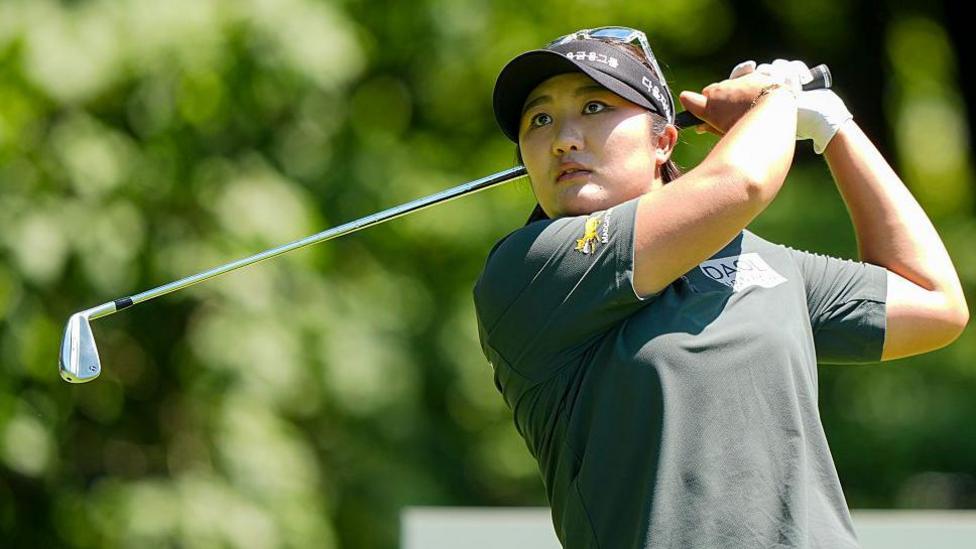
Ryu Seizes Women's PGA Lead as Yoon Crumbles Under Pressure
A five-shot lead evaporated in a single round as nerves consumed Ina Yoon, handing Haeran Ryu control of the Women's PGA Championship.
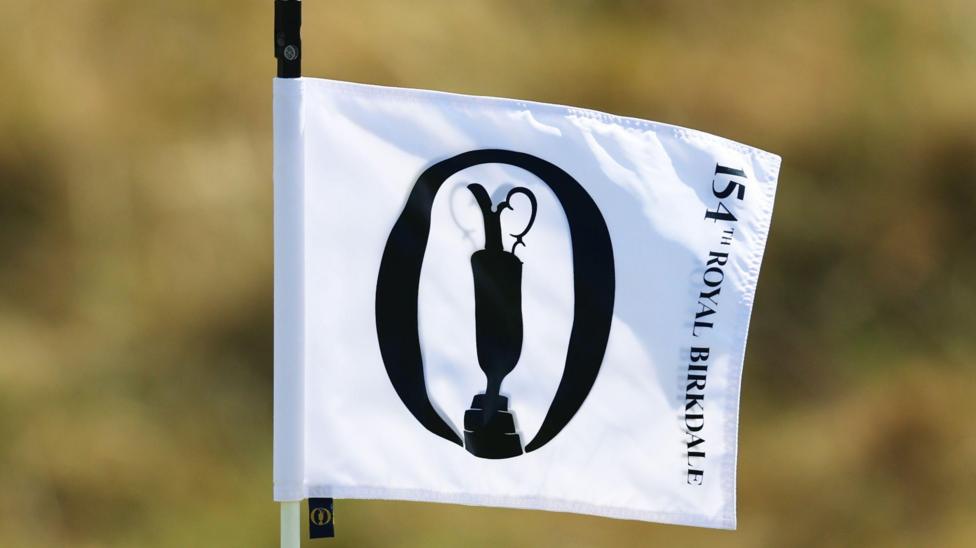
Royal Birkdale's Hidden Theater: What the Open Tee Times Really Tell Us
Tee times at the 154th Open reveal the R&A's strategic chess moves shaping destiny at Royal Birkdale.

De La Hoya Shuts Down Garcia vs Benn Talks
Oscar de la Hoya confirms no negotiations are happening for Ryan Garcia vs Conor Benn, leaving the crossover fight on ice.