Royal Birkdale's Hidden Theater: What the Open Tee Times Really Tell Us
Tee times at the 154th Open reveal the R&A's strategic chess moves shaping destiny at Royal Birkdale.
The First Tee Box as a Chessboard
A tee time at The Open Championship is not a logistical convenience. It is a statement.
It is a calculated maneuver by the R&A, theSun never stops for the world's elite golfers. At the 154th edition of golf's oldest major, held at Royal Birkdale in Southport, the tee times for the opening two rounds are the architecture of the week's narrative.
Every grouping carries subtext. Every morning wave is a gamble against the coastal weather. Every afternoon slot is an invitation to battle the elements.
In Southport, the tee times for rounds one and two function as the first real battlefield strategy of the championship. They dictate who faces the pristine, dew-soaked fairways and who must navigate the turbulent, wind-battered afternoons.
Royal Birkdale is a course where history breathes through every sand dune. The tee times dictate how that history will initially unfold.
Decoding the Royal Birkdale Schedule
The tee sheet for the opening two rounds of the 154th Open Championship at Royal Birkdale is a dense tapestry of ambition.
It features past champions, newly minted pretenders, and seasoned major protagonists. The pairings are constructed to rival the history of the venue itself.
In a typical Open curtain-raiser, the morning wave often enjoys a distinct advantage. The clockwise links land is softer. The coastal winds have not yet reached their full teeth. The putting surfaces remain relatively unblemished by the stomping of hundreds of metal spikes.
By the time te afternoon wave arrives, Royal Birkdale is usually a different beast entirely. The wind is up. The fairways are baked. The pins are tucked and protected by the swirling breezes.
This is the fundamental drama of Open Championship scheduling. The tee times themselves do not create the weather, but they virtually guarantee which players will suffer its wrath.
The Three-Ball Dynamics
Every Open Championship features three-balls for the opening two rounds. It is a tradition that invites intense psychological pressure.
It means a player is never alone with their thoughts. You are constantly watching your playing partners shape shots you cannot. You are hearing their roars, sensing their momentum, and fighting not to be left behind.
The tee times at Royal Birkdale compress these dynamics. Walking down the first fairway alongside two competitors creates a metronomic tension. Every stroke is a direct comparison played out on a public stage.
By the time the 9th hole arrives, the hierarchy within the group is firmly established. The morning three-balls often dictate the pace of the early leaderboard, establishing a target that the afternoon wave must chase without overplaying their hand.
The Southport Weather Lottery
To understand the tee times at the 154th Open, you must understand the address. Royal Birkdale in Southport is a classic British links. It sits exposed to the elements. Smooth, fast-running fescue fairways, brutal pot bunkers, and dense, unpredictable rough.
The course relies heavily on the wind for its defense. When the breeze is calm, Royal Birkdale is wide open, an invitation to aggressive, scoring golf.
When the wind howls off the Irish Sea, it becomes one of the most punishing examinations in the sport.
The tee times are therefore a lottery. A 6:35 a.m. start might reward a player with benign conditions, allowing them to post an early 65.
A 2:15 p.m. time might force that same player to grind for a 75, fighting just to make the cut.
The Open is the ultimate test because it strips away the predictability of parkland golf. You cannot manufactured a calm morning. You play the hand the tee time and the weather deal you.
This inherent unfairness is accepted by the players. It is the romantic, chaotic core of links golf.
But it makes analyzing the tee sheet a critical exercise. Identifying which side of the draw faces the brunt of the weather is nearly as important as assessing the players' form.
Royal Birkdale's History of Champions
The 154th Open Championship returns to a venue steeped in major lore. Royal Birkdale has hosted theOpenmany times, and its roll of honour is a who's who of golfing royalty.
The course demands a completely different type of ball-striking. Precision over power.
Past champions here have often been thegame's premier ball-strikers. Players who can control their flight, who can punch a 7-iron 150 yards under the wind, or flight a wedge high enough to stop a green like concrete.
The tee times frame this test. A morning starter can afford to be slightly more aggressive off the tee, knowing the ball will land softly and release predictably.
An afternoon starter must be disciplined. The bounces are sharp, the fairways are running fast, and the margins for error are non-existent.
The Pressure of the Afternoon Wave
There is a unique, suffocating pressure that comes with an early morning tee time at a major championship.
You are the first to strike. There is no leaderboard to watch, no target to chase, no one else's score to react to. You are writing the first paragraph of the day's story.
But the afternoon wave carries a different psychology. These players must watch the scores roll in. They see who is tearing the course apart and who is being humbled by the conditions.
By the time they peg their tee in the ground, the narrative is established. The pressure to match the morning scores—and the fear of falling behind the cut line—can cripple even the most seasoned professional long before they reach the turn.
Strategizing the Draw
The importance of the opening two rounds at the 154th Open Championship cannot be overstated. These are the rounds that decide who spends the weekend battling for the Claret Jug, and who goes home early.
The tee times are the R&A's attempt to balance the draw across two days.
The principle is simple: if the morning wave faces brutal weather on Thursday, the afternoon wave will hopefully face it on Friday, leveling the playing field over 36 holes.
The R&A's tee time selections are test of probabilities over certainties. The forecast can change in an hour. A predicted afternoon storm can shift to the morning, rendering the entire draw hopelessly skewed.
This is the enduring beauty of The Open. At Royal Birkdale, the tee times are the starting pistol to a week dictated by weather, history, and human endurance.
Editorial Integrity
This is an original SportPulse article written by our editorial team. All content is independently researched, written, and reviewed by our writers and editors before publication. We do not publish copied, aggregated, or syndicated content.
SportPulse is committed to original sports journalism. Read our editorial policy or contact us with any questions.
More Like This
All long-reads
Whistleblower Drops Claim as Cricket Scotland Admits Regret
Majid Haq abandons his victimisation claim after Cricket Scotland finally acknowledges the hurt endured by its racism whistleblower.

McGregor Rips Holloway's Glasses Off in Heated UFC 329 Face-Off
McGregor's theatrical glasses snatch exposes the psychological warfare underpinning his UFC 329 rematch with Holloway.
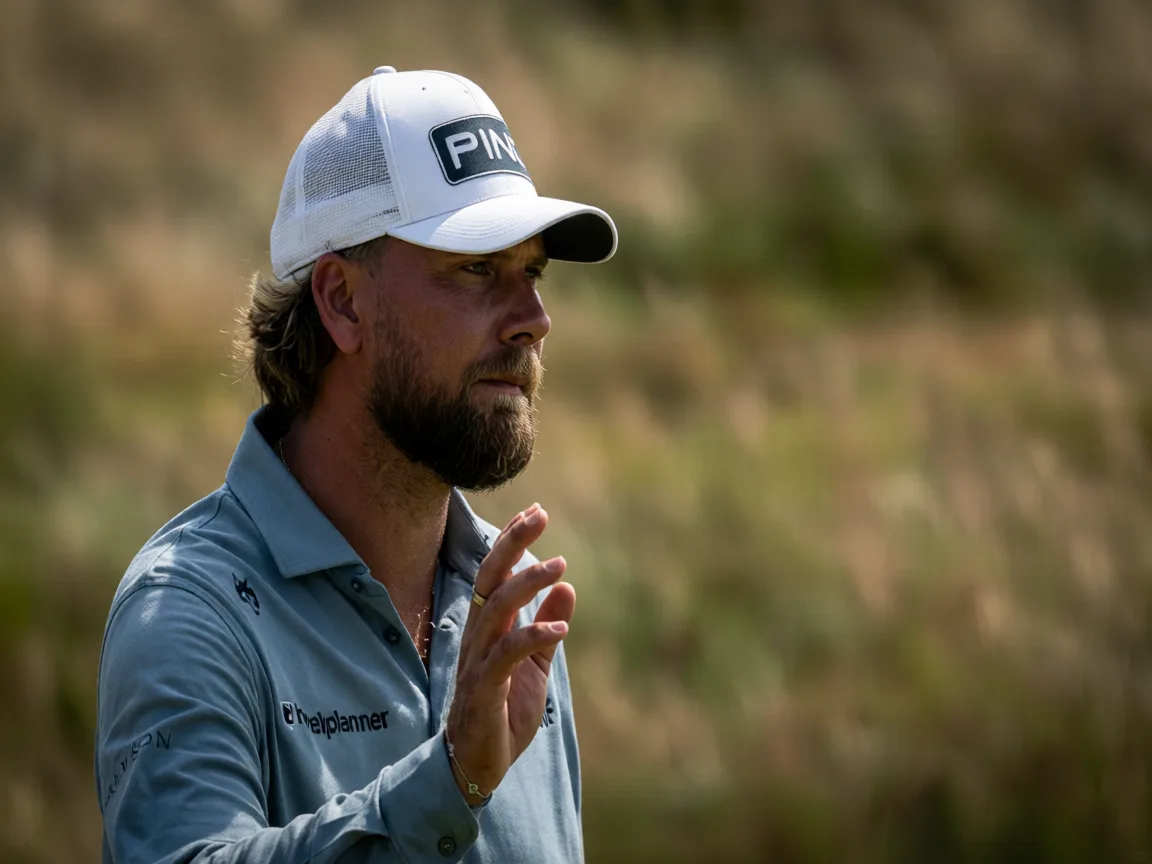
Dan Brown Lights Up The Open, Then Apologises to Mum
England's Dan Brown stubbed out cigarettes at Royal Birkdale and apologised to his mum after smoking during The Open's first round.