Alfie Hewett's Relentless Pursuit of Wimbledon Glory on Two Fronts
Britain's wheelchair maestro fights through a grueling Thursday double-header to keep his SW19 singles and doubles dreams alive.
The Grueling Double Header
The sun beats down on the SW19 lawns, and somewhere in the bowels of the All England Club, Alfie Hewett is catching his breath. Thursday at Wimbledon is not supposed to be easy, but for the British wheelchair tennis maestro, it became a test of endurance that few would envy. Two matches in a single day. Two victories. Two pathways still open in his relentless pursuit of a historic Wimbledon double.
Winning once at a Grand Slam demands everything. Winning twice in the same afternoon, across two different draws, requires a constitution that borders on the superhuman. Yet there was Hewett, grinding through the men's wheelchair singles before pivoting seamlessly to the doubles arena, each match a chapter in a story that continues to captivate the home crowds.
A Career Forged in Resilience
To understand what Thursday meant, you have to understand where Hewett came from. Born with a congenital heart condition and later diagnosed with Legg-Calvé-Perthes disease, which restricted blood flow to his hip joints, Hewett grew up in Norwich knowing his body would betray him in ways most athletes never experience. The wheelchair was not a setback but a launchpad. By the time he was a teenager, he was already redefining what British wheelchair tennis could look like on the world stage.
The journey from a determined kid in Norfolk to the top of the wheelchair rankings is a study in stubbornness. Hewett does not simply play tennis. He attacks it. Every rally is an argument, every passing shot a declaration. His partnership with Gordon Reid in doubles has become one of the most dominant forces the sport has ever seen, a Golden Slam in 2021 cementing their place in history.
The Tactical Anatomy of a Double Bid
There is a particular psychology required to chase two titles simultaneously. The singles draw demands solitary accountability. Every error is yours alone. Every breakthrough belongs to you and you only. Then, within hours, you must shift from that isolated intensity into the shared enterprise of doubles, where trust and synchronicity replace individual brilliance as the primary currency.
Hewett manages this cognitive whiplash better than perhaps anyone in the game. His court coverage in the chair is extraordinary, the product of thousands of hours refining technique that most spectators take for granted. The upper-body strength required to propel, pivot, and strike with precision is immense. Do it twice in a London summer day, with the weight of British expectation pressing down, and you begin to measure the scale of his achievement.
"Every time I go out there, I'm not just playing for myself. I'm playing for everyone who's been told they can't do something. That fuel never runs out."
That fire has burned through ten Grand Slam singles titles and an astonishing 22 Grand Slam doubles titles as of the current season. The numbers are staggering, yet they only tell part of the story. What they cannot quantify is the emotional toll of a career spent constantly proving that wheelchair tennis belongs on the same stage, the same lawns, the same broadcast schedules as the able-bodied game.
The Grass Court Question
Grass is the great leveler and the great divider. It rewards predictability and punishes hesitation. For wheelchair players, the surface adds layers of complexity that hard courts and clay never introduce. The chair slides differently. The bounce stays low. Points end quicker, and the margin for error shrinks to almost nothing.
Hewett's adaptability on grass is a testament to his tactical intelligence. He does not simply grind from the baseline. He takes the ball early, flattens his groundstrokes, and uses the speed of the surface to his advantage. Against opponents who try to extend rallies and wait for mistakes, Hewett brokers no patience. He imposes his tempo.
Thursday's doubles match, coming on the heels of a singles battle, demanded a recalibration. The chemistry with his partner had to override the physical fatigue accumulating in his shoulders and arms. This is where Hewett's experience becomes his most lethal weapon. He has been here before, in the crucible of Grand Slam fortnights, and the familiarity breeds a calm that younger opponents simply cannot replicate.
Career by Numbers
The statistical ledger of Alfie Hewett's career reads like a monument to sustained excellence. At just 26 years old, he has already constructed a resume that would be the envy of any player in the sport.
- 10 Grand Slam singles titles across the Australian Open, French Open, and US Open
- 22 Grand Slam doubles titles with longtime partner Gordon Reid
- Paralympic gold medal in doubles at the 2016 Rio Games
- Career Golden Slam in doubles achieved in 2021
- Former world No. 1 in both singles and doubles
- Multiple Wimbledon doubles titles on home soil
What the Home Crowds Mean
There is something unmistakably different about a British player at Wimbledon. The crowd does not merely watch. They participate. Every hold of serve ripples through the stands like a small wave of collective belief. Every break point saved produces a roar that you can feel in your chest if you are sitting close enough.
For Hewett, that energy is a double-edged sword. The support is genuine and deeply felt. The British public has embraced wheelchair tennis with a warmth that the sport's pioneers spent decades fighting for. But with that embrace comes an expectation. Hewett is no longer a curiosity or an inspiring story. He is the standard. He is the player the crowd believes should win every time he rolls onto court.
Managing that pressure across two draws in a single day is a psychological feat that deserves its own recognition. Most players struggle with the weight of one match. Hewett carried two, and emerged with his ambitions fully intact.
The Road Ahead
The thing about chasing a Wimbledon double is that the difficulty compounds with each round. The field narrows. The opponents sharpen. The physical toll deepens. Every session in the chair is borrowed time in a sport that taxes the body unlike any other.
Hewett knows this intimately. He has felt the sting of near misses and the soaring euphoria of titles claimed. The difference between the two is measured in points, in moments, in the fraction of a second it takes to commit to a shot and live with the consequence.
As the tournament progresses deeper into the second week, the margins will thin. A double bid requires not just skill and stamina but an almost reckless belief that the body will hold, that the mind will stay sharp, that the chair will move when commanded. Alfie Hewett has built his entire career on exactly that kind of belief.
Thursday proved it once more. Two matches. Two wins. The dream still breathing.
A Legacy Beyond Trophies
When the history of Wimbledon is written, the chapters on wheelchair tennis will grow longer with each passing year. And in those chapters, the name Alfie Hewett will appear with a frequency that transcends mere statistics. He will be remembered as the player who turned the Championships' hallowed grass into a stage for a sport too long relegated to the margins.
The doubles titles with Reid. The singles battles fought with teeth-gritting intensity. The moments where the crowd on Court 3 or No. 1 Court forgot entirely that they were watching wheelchair tennis and simply lost themselves in the drama unfolding before them. That is the legacy.
A Wimbledon double would add another gleaming line to the career by numbers. But legacy is not a ledger. It is the lasting feel of a player who made you believe that greatness has no single form. Alfie Hewett has been doing that for years. Thursday was just the latest reminder.
Editorial Integrity
This is an original SportPulse article written by our editorial team. All content is independently researched, written, and reviewed by our writers and editors before publication. We do not publish copied, aggregated, or syndicated content.
SportPulse is committed to original sports journalism. Read our editorial policy or contact us with any questions.
More Like This
All tennis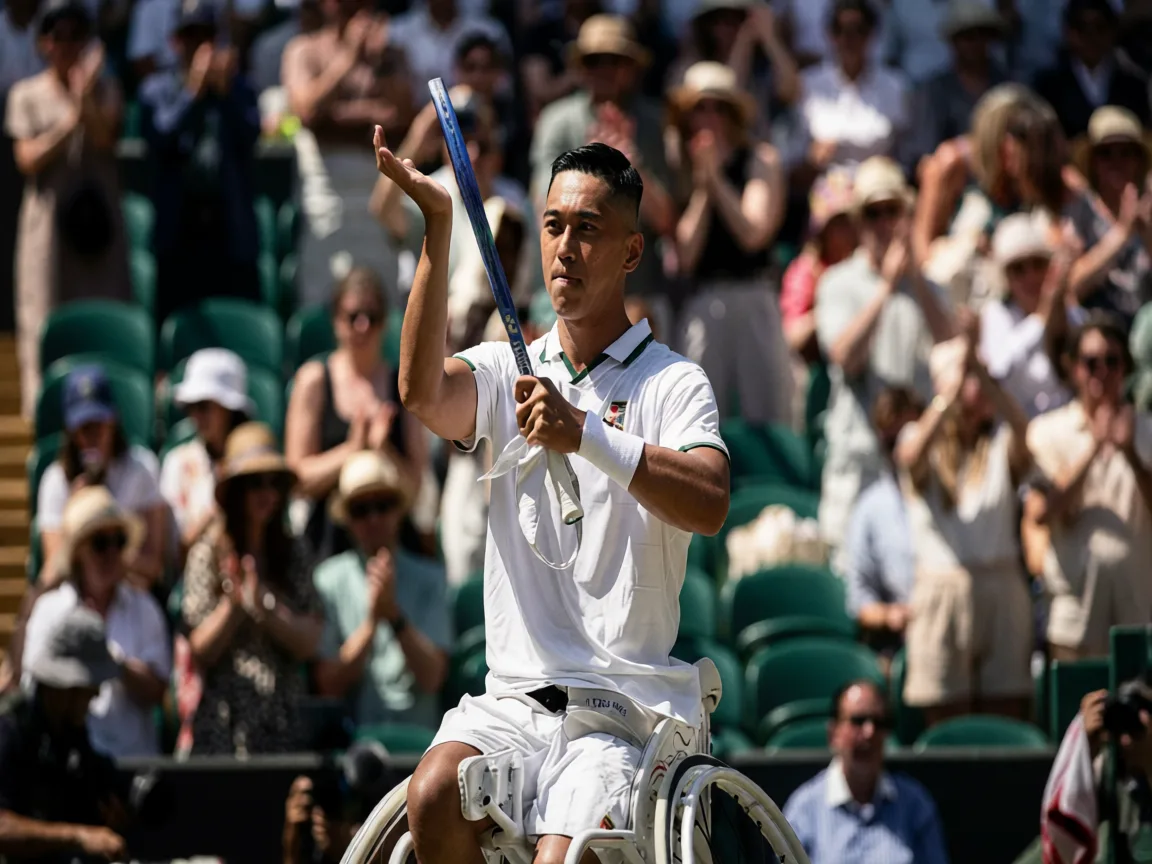
Oda Dismantles Hewett to Claim Wimbledon Wheelchair Crown
Tokito Oda delivered a masterclass on grass, crushing Britain's Alfie Hewett 6-1 6-1 in the Wimbledon wheelchair singles final.
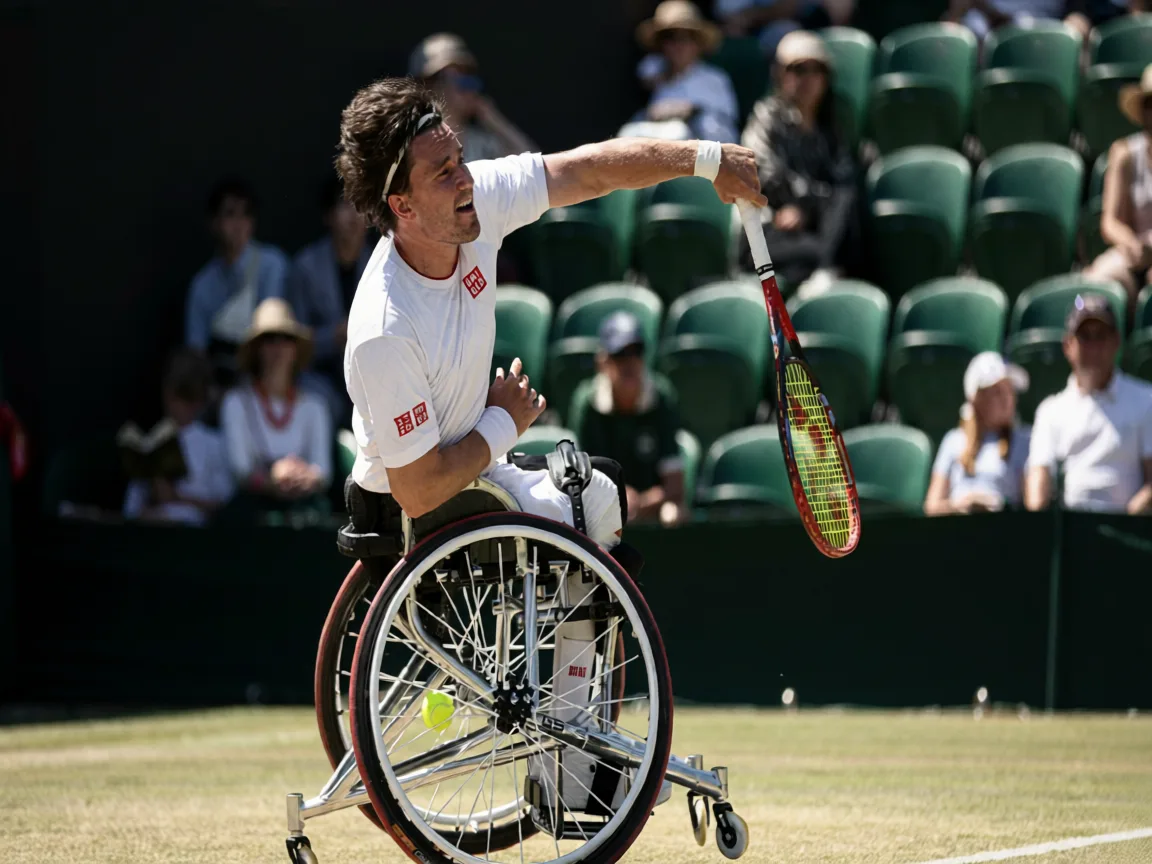
Two Games, One Court: Decoding Quad and Wheelchair Tennis
Quad and wheelchair tennis share a court but split on rules, equipment, and athleticism. Here is what separates them.
Noskova's Composed Brilliance Ends Keys' Wimbledon Dream
The ninth seed delivers a clinical straight-sets masterclass on Court One, outlasting Madison Keys 6-4, 7-6 (2) to reach the Wimbledon quarter-finals.