Alpine's Silverstone Damage Limitation Masks A524 Aerodynamic Rebuild
Alpine's double-points finish at Silverstone reveals a calculated aerodynamic rebalance transforming their-season from crisis management to strategic recovery.
The Carbon Fiber Reset
Alpine arrived at Silverstone not with a revolution but with a meticulous recalibration of the A524's aerodynamic platform. The double-points finish at the British Grand Prix represents far more than a lucky afternoon in changeable conditions. It validates a technical philosophy shift that began materializing several races ago.
The battle with Racing Bulls for P6 in the constructors' championship has effectively become Alpine's entire season narrative. The Silverstone result, stretching their margin to 4 points, reflects a team that has stopped chasing headline upgrades and started optimizing what already exists.
Think of it like tuning a radio frequency. Early in the season, Alpine kept twisting the dial wildly, searching for a signal. Now, they've found the approximate wavelength and are making fine adjustments to lock onto the clearest possible reception.
Unpacking the A524's Silverstone Configuration
The Northamptonshire circuit demands a specific aerodynamic philosophy: high-speed corner stability through complexes like Maggotts-Becketts-Chapel, balanced against sufficient straight-line efficiency for the Hangar Straight. Alpine's technical team, led by the Enstone aerodynamics department, arrived with a floor specification that prioritized ride height stability over raw downforce peak.
This is critical because the A524's fundamental weakness has been its unpredictable aero platform behavior in yaw. When a car rotates through a high-speed corner, the airflow underneath shifts, and if the floor's edge wings aren't generating consistent sealing pressure, the downforce drops off a cliff mid-corner. The driver feels this as sudden understeer followed by snap oversteer, a terrifying combination through 180mph+ sweepers.
Alpine's floor updates, introduced incrementally across the previous three rounds, address this through revised edge wing geometry. The vortex generators along the floor's periphery now create a more robust sealing curtain that maintains underfloor pressure consistency even as the car pitches and rolls.
"We have to be realistic about where we are. The upgrades are working as expected, step by step. It's about damage limitation and maximizing every opportunity when conditions play into our hands." — Alpine team principal.
The phrase "damage limitation" is telling. It reveals a team acutely aware of their performance ceiling relative to the top four constructors. They're not pretending the A524 is suddenly a race-winning platform. Instead, the focus is surgical: extract the maximum from the current architecture while avoiding the correlation pitfalls that plagued their early-season development.
Engineering Insight: The Ride Height Sweet Spot
Alpine's technical breakthrough at Silverstone centers on what aerodynamicists call the ride height window. Every Formula 1 floor has an optimal operating range, typically measured in millimeters, where the Venturi channels produce maximum downforce with minimum aerodynamic blockage.
Run the car too low and the floor stalls as airflow chokes underneath, creating porpoising and catastrophic loss of cornering force. Run it too high and you sacrifice the ground effect advantage that defines modern F1 aerodynamics, leaving downforce on the table.
Alpine's suspension geometry revision, introduced quietly in the background, has widened this operating window. The heave stiffness adjustment, combined with modified pull-rod front suspension kinematics, allows the A524 to maintain a more consistent rake angle under braking and corner loading.
Imagine a gymnast on a balance beam. A wider beam gives more room for error. Alpine hasn't made the beam wider, but they've given the car better proprioception, the ability to sense where it is in space and respond accordingly. The dampers now receive more predictable vertical loads, which translates to a floor that stays in its sweet spot for longer fractions of each corner.
The Racing Bulls Differential
The strategic calculus against Racing Bulls adds a fascinating technical subplot. RB's VCARB 01 has historically shown superior mechanical grip on lower-speed circuits, thanks to a softer suspension philosophy that absorbs kerbs and bumps more effectively. Alpine's advantage lies in high-speed corner efficiency, where the A524's downforce dominance, now actually working as intended, shines.
Silverstone's layout inherently favors Alpine's strengths, meaning the result alone doesn't definitively prove a permanent shift in the intra-midfield balance. However, the manner of the double-points finish reveals a team operating with strategic clarity.
Both drivers managed their tire degradation across the varying track conditions with precision. The intermediate-to-slick crossover period is where races are won and lost at Silverstone, and Alpine's pit wall executed their calls with the timing of a team that has finally built operational trust between the engineering desk and the cockpit.
To extend the earlier radio analogy, they're not just receiving the signal clearly now, they're broadcasting on the right frequency too.
Correlation and the Wind Tunnel Reality
Beneath the positive Silverstone narrative lies the persistent specter of correlation gaps that haunted Alpine earlier. The team openly acknowledged that CFD predictions and wind tunnel data weren't aligning with on-track reality during the season's opening stint. This is every aerodynamicist's worst nightmare because it invalidates the entire development feedback loop.
The Enstone facility's 60% scale wind tunnel model testing now appears to be producing data that better matches the real-world telemetry. This doesn't mean perfect correlation exists rather that the gaps have narrowed sufficiently for the engineering team to make confident development decisions.
Alpine's recent floor updates validate this improved correlation. The downforce numbers from Silverstone's high-speed sections align more closely with pre-event simulations than they did during the early-season struggles. For a team operating under strict Aerodynamic Testing Restrictions, maximizing every wind tunnel run is essential.
The data convergence trend includes:
- Front wing loading predictions matching within 3% of track measurements
- Floor downforce delta correlation improving from a previous 12% variance to under 5%
- DRS effectiveness on the Hangar Straight confirming wake sensitivity models
- Tire thermal degradation curves aligning with the simulator's thermal modeling
Each data point represents a click of the dial, a tightening of the signal.
What Silverstone Proves and What It Doesn't
The double-points finish demonstrates that Alpine's A524 can capitalize when conditions create a shuffled order. The variable weather at Silverstone compressed the field, bringing Alpine's downforce level into the operative window for sustained competitive running.
What it doesn't prove is that the A524 has fundamentally closed the performance gap to the top teams in dry, consistent conditions. The 7-tenths deficit to the leading pace in qualifying trim remains the aerodynamic reality. Alpine's improvement is real but relative. They've moved from the back of the midfield battle to a dicey P6 defense, which, given their early-season struggles, represents a meaningful recovery.
The points structure means Alonso and Gasly must execute weekends with minimal operational errors. Every positions swap with Racing Bulls carries multiplied championship weight.
The Technical Road Ahead: Hockenheim and Spa
The upcoming circuits will provide a more definitive read on Alpine's true recovery arc. The German Grand Prix at Hockenheim presents a different aerodynamic challenge entirely. The circuit's stadium section demands high downforce and mechanical grip, while the long parabolica-esque sectors test power unit deployment and energy recovery strategy.
Alpine's Renault E-Tech RE24 power unit has shown competitive deployment modes this season, but the electrical energy harvesting maps need careful calibration for Hockenheim's mixed layout. The tight infield sections offer limited MGU-K recovery opportunities compared to Silverstone's flowing nature, placing greater demand on the MGU-H for sustained electrical boost.
Watch for Alpine to bring a circuit-specific rear wing to Germany, likely a higher-downforce configuration than Silverstone's medium-downforce setup. The trade-off will be straight-line speed deficit on the circuit's longer bursts, requiring precision in DRS optimization to maintain overtaking capability.
Spa-Francorchamps, following shortly after, presents the ultimate aerodynamic efficiency test. The Ardennes circuit's extended sweeps through Eau Rouge-Raidillon and the Kemmel Straight will examine whether Alpine's improved ride height stability translates to sustained high-speed corner performance on a track where the floor works harder than anywhere else on the calendar.
For Alpine, the next races aren't just about points. They're about validating the technical philosophy that Silverstone hinted at. If the correlation holds and the platform delivers across different aerodynamic demands, the damage limitation mindset might evolve into something more ambitious: a genuine, sustainable midfield recovery built on engineering substance rather than opportunistic fortune.
The radio signal is clearer now. The question is whether it stays tuned.
Editorial Integrity
This is an original SportPulse article written by our editorial team. All content is independently researched, written, and reviewed by our writers and editors before publication. We do not publish copied, aggregated, or syndicated content.
SportPulse is committed to original sports journalism. Read our editorial policy or contact us with any questions.
More Like This
All f1
Red Bull Unleashes Major Upgrade Package as Austrian GP Tech War Heats Up
Red Bull leads a wave of aerodynamic and power unit upgrades rolling into Spielberg this weekend.
Inside F1's 2026 Arms Race: The Technical Battle That Will Reshape the Grid
McLaren boss Andrea Stella says F1 is operating at a level never seen before as teams pour resources into the 2026 rule overhaul.
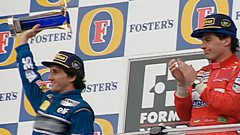
Prost Signs Off With Fourth World Title
Alain Prost bows out of Formula 1 with a fourth world championship, cementing his legacy as the sport's supreme tactical thinker.