Prost Signs Off With Fourth World Title
Alain Prost bows out of Formula 1 with a fourth world championship, cementing his legacy as the sport's supreme tactical thinker.
Overcast skies and a persistent drizzle at the Adelaide Street Circuit provided a fittingly melancholic backdrop for the end of an era. The temporary circuit, with its bumpy concrete walls and slippery painted line markings, demanded absolute precision. Under heavy clouds, Alain Prost clinched his fourth Formula 1 world championship, delivering a final flourish before stepping away from the sport he systematically conquered.
Prost has always been a driver who calculates the war before fighting the battle. His 1993 season with Williams Renault was the ultimate manifestation of this philosophy. The FW15C was the class of the field, bristling with technological superiority, including active suspension and traction control. Yet it was Prost's cerebral approach to extracting the maximum from the package without ever exceeding the mechanical or thermal limits that defined his campaign.
The championship math tells the story of a season dictated by consistency and strategic preservation rather than outright aggressive brilliance. Prost secured the title with a points haul of 99 points, building a margin of 26 points over his nearest rival. In a season where reliability was as critical as raw pace, Prost finished every single race in the points. He scored 7 victories and accumulated an astonishing 12 podium finishes from the 16 rounds. This was a championship won on the pit wall as much as on the track.
Aerodynamically, the Williams FW15C operated in a downforce window that made it inherently superior through high-speed corners, but it required delicate tire management in slow-speed traction zones. Prost adapted his driving style to protect the rear tires, rolling more throttle rather than aggressively picking up the power. This minimized wheelspin, reduced thermal degradation, and preserved the Goodyear rubber deep into stints. It was a methodology his teammate, Ayrton Senna, often eschewed in favor of immediate lap time extraction.
Adelaide presented a classic intermediate-conditions puzzle. With track temperatures struggling to reach 18 degrees Celsius, the tire crossover window from wets to slicks was elongated. Prost, starting near the front, managed the early phase on a damp track by deliberately avoiding the painted kerbing. His steering inputs were smoothed out to prevent sudden load spikes, which would inevitably trigger the traction control system sapping valuable straight-line momentum. Over the team radio, the pit wall constantly fed him gap information, to which Prost famously and coolly replied on several occasions throughout the year that he was managing the pace himself.
Strategy Breakdown
The 1993 season was a masterclass in how a championship is constructed over a year, not merely won on Sundays. At circuits like Donington and Barcelona, the Williams pit wall had to navigate complex fuel strategies. Teams were restricted to a 220-kilogram fuel allocation per race, mandating careful fuel load calculations for qualifying and multiple tire stops during the grand prix.
Prost frequently opted for a slightly higher downforce configuration compared to his teammate. This surrendered a few kilometers per hour on the straights but provided the mechanical grip necessary to protect the rear tires during traction-limited acceleration out of hairpins. The Renault V10 engine, producing roughly 760 horsepower, delivered a broad torque curve. Prost used this to short-shift early in the stints, keeping the revs in the optimal band without stressing the internals.
When rain arrived, the strategy switched from tire management to visibility management. Prost understood that staying within 1.5 seconds of the car ahead was the threshold for maintaining clean air on the visor. Any closer, and the spray would blind him; any further, and he risked losing the tactical reference point. The Williams pit wall orchestrated his pit windows perfectly, keeping him out one lap longer than the competition to avoid traffic on the critical out-lap on cold rubber.
The Final Championship Standings
- Alain Prost (Williams Renault) 99 points
- Ayrton Senna (McLaren Ford) 73 points
- Damon Hill (Williams Renault) 69 points
- Michael Schumacher (Benetton Ford) 52 points
- Riccardo Patrese (Benetton Ford) 20 points
The numbers underscore a season of relentless accumulation. Prost's advantage was built on a floor of high-scoring podiums rather than a ceiling of sporadic wins. Hill's emergence as a race winner midway through the season helped neutralize Senna's occasional tactical masterclasses in the inferior McLaren, but Prost's consistency was the anchor of the championship.
The Psychological Campaign
Prost's departure from the sport was not a sudden capitulation but a carefully orchestrated withdrawal. He recognized, with the cold analytical clarity that defined his career, that the regulations for 1994 would ban electronic driver aids. Active suspension, traction control, and ABS would all be stripped from the cars. The FW15C was the apex of the electronic era, a car that effectively drove itself out of the corners. Prost knew that returning for 1994 meant adapting to a raw, unpredictable machine that required a fundamentally different physical skill set.
There was also the political dimension. Prost's relationship with the Williams management and the internal dynamics of the team were fracturing. The lingering shadow of Senna, who was widely tipped to replace him at Williams for 1994, created an atmosphere of inevitability. Prost chose to bow out on his own terms, securing a statistical parity with the greats of the sport rather than risking a decline in competitiveness.
His psychological approach to race weekends was unmatched. While Senna operated on raw emotional intensity, Prost approached a grand prix like an engineering problem. He would spend hours with the telemetry technicians, analyzing minute fluctuations in suspension travel and brake pressure. He understood that a championship is rarely won by the fastest driver, but by the smartest one over 16 races.
A Legacy Sealed in Numbers
Prost retires with 4 World Championships, placing him in an elite tier alongside Juan Manuel Fangio and just behind the seemingly insurmountable record of 5 titles held by Juan Manuel Fangio at the time. His career statistics paint the picture of sustained excellence: 51 Grand Prix victories, 106 podium finishes, and 33 pole positions.
But the raw numbers obscure the tactical sophistication. Prost won races by calculating the precise lap at which his competitors' tires would fall off the cliff. He won championships by understanding that a 4th place finish on a bad day was infinitely more valuable than a crashed car on a good one. The Professor, as he was known, taught Formula 1 that brains could consistently beat brawn.
The impact on the Drivers' Championship record books is profound. Prost's fourth title effectively closes the chapter on the turbo-hybrid-electronic era of F1. The sport now moves toward a more driver-centric formula. Prost exits having maximized the technological environment to its absolute limits.
As the chequered flag fell in Adelaide, the hierarchy was secure. Prost's era of intellectual dominance concludes, leaving behind a blueprint that future champions will study for decades. The pit wall radios may have fallen silent on his number, but the echo of his strategic mastery will reverberate through every paddock for years to come.
Editorial Integrity
This is an original SportPulse article written by our editorial team. All content is independently researched, written, and reviewed by our writers and editors before publication. We do not publish copied, aggregated, or syndicated content.
SportPulse is committed to original sports journalism. Read our editorial policy or contact us with any questions.
More Like This
All f1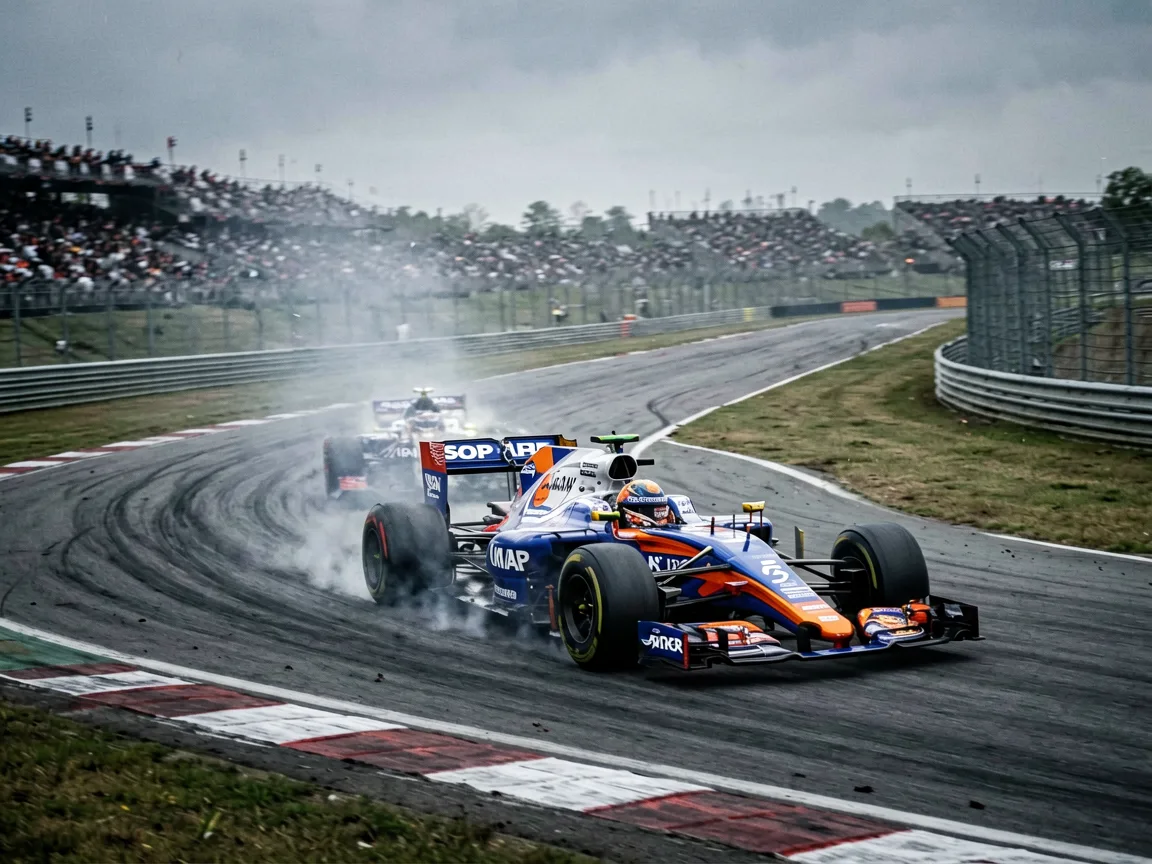
Spa's Strategist's Playground: Where Qualifying Bets Live or Die
Spa-Francorchamps rewards precision over power, making Belgian GP qualifying bets a high-wire act of tire thermodynamics and weather timing.
Hamilton's Silverstone Renaissance: Why Ferrari Finally Clicked
Hamilton returns to his nine-win fortress armed with a reborn Ferrari package that has technically finally clicked.
Silverstone's Quiet Revolution: Making F1 Accessible for Autistic Fans
Silverstone's sensory accessibility initiatives are transforming the British Grand Prix experience for neurodivergent fans who once found racing impossibly overwhelming.