Gasly's Eau Rouge Crash Exposes Alpine's Spa Fragility
Pierre Gasly's FP2 crash at Eau Rouge red-flagged Belgian GP practice and exposed Alpine's ongoing aerodynamic balance fragility at Spa.
Aerodynamic Instability at Spa's Most Unforgiving Corner
Pierre Gasly's Free Practice 2 crash at Eau Rouge during the Belgian Grand Prix weekend delivered an immediate red flag and spotlighted the aerodynamic tightrope Formula 1 teams walk at Circuit de Spa-Francorchamps. The incident, which caused significant rear-end damage to the A524, punctuated a session where the team was aggressively probing the outer limits of their downforce configuration.
Spa remains the ultimate aerodynamic crucible on the calendar. Drivers navigate Eau Rouge-Raidillon at speeds exceeding 300 km/h, pinning the throttle through a blind, sweeping uphill compression that tests every aerodynamic surface on the car. The margin for error is invisible to the naked eye. If yaw stability degrades by even a fraction of a degree mid-corner, the car swaps ends before a driver can process the slide. That is precisely what the overhead telemetry likely revealed: minute instability amplified by compressed airflow and the circuit's steep gradient.
The Aerodynamic Reality of Low-Downforce Spa
Alpine arrived in Belgium searching for performance. The Enstone-based squad has executed a remarkable in-season development pivot, transforming the A524 from early-season backmarker to points scorer. Spa, however, presents unique aerodynamic demands that often penalize the ongoing setup search. The circuit requires a low-drag configuration to maximize speed on the Kemmel Straight between La Source and Les Combes. Reducing drag means trimming rear wing incidence, which consequently reduces rear-end downforce.
This setup philosophy leaves drivers managing a nervier rear end through medium-speed corners. When a car runs a skinny rear wing, the slipstream effects from preceding cars upstream through Eau Rouge can severely destabilize the underbody airflow. A 2% loss in rear downforce at 300 km/h translates to a massive spike in lateral load. The floor's aerodynamic map works hardest in that region, relying on stable underbody airflow to produce consistent suction.
The physics here are brutal and binary. At high speeds, the floor generates a disproportionate percentage of the car's total downforce output, often exceeding the contribution from the top-body aerodynamics. When that suction is disrupted by turbulent air from a preceding car, the floor stalls instantly. The rear of the car steps out with zero warning. For Gasly, the sequence likely unfolded in milliseconds: the floor stalled, the rear unloaded, and the rotation began before his hands could counter it.
"The snap came out of nowhere. At that speed, you aren't correcting a slide; you are just a passenger waiting for the impact. We need to understand if the turbulence from the car ahead was the catalyst." — A paddock engineer's perspective
Engineering Insight: The Anatomy of an Eau Rouge Moment
The A524 utilizes an evolved pull-rod front suspension geometry. This layout optimizes front-end grip but can induce pro-anti-dive characteristics under braking. Through Eau Rouge, drivers are not braking; the dynamic shifts entirely. The car is accelerating through the uphill compression, with bump compression forces loading the suspension as the track drops into the apex and rises toward Raidillon.
At the precise moment of maximum compression, rear toe-link geometry becomes critical for stability. A slight bump unsettling the rear can trigger immediate rotation. The suspension kinematics are designed to keep the contact patch loaded and planted. But this requires stable floor aerodynamics to pin the underbody down. When a trailing car in turbulent air loses downforce mid-compression, the suspension cannot react quickly enough to the simultaneous unloading of vertical load and the introduction of yaw.
The crash highlights how the modern ground-effect cars remain acutely sensitive to wake turbulence. The 2024-spec diffuser designs feature heavily sculpted trailing edges to manage the outwash of airflow. But this aerodynamic trickery cannot fully compensate for a stall-floor condition induced by a car ahead. The diffuser stalls, the rear wing operates temporarily in low-alpha airflow, and the driver loses the rear end before the mechanical grip can recover.
Damage Assessment and the Data Friction
Alpine confirmed significant rear-end damage to the gearbox casing and rear impact structure, requiring an overnight rebuild before Free Practice 3. The floor scrapes will reveal aerodynamic scoring that might compromise the underbody surface integrity. The floor is critical to total performance, and any damage to the plank surface or diffuser fences introduces an unknown aerodynamic variable.
Spa is the highest-cycle fatigue circuit for power units and structural components, so Alpine faces a damage limitation exercise when track time is already critical. Gasly will lose approximately 20 minutes of setup time from the extended red flag and garage rebuild. The brutal track limits at Spa mean a limited window for long-run pace data collection to set Sunday's race strategy.
This incident compounds Alpine's challenge because the team needs clean running to evaluate upgrades. The data acquired pre-crash was likely gathered during baseline runs; the high-fuel performance remains under-sampled. The lack of incomplete telemetry gathered across the practice window severely reduces the predictive accuracy of Sunday tire degradation simulations on a track that famously strains the tires.
The Setup Compromise Dilemma
Alpine faces a classic aerodynamic dilemma heading into qualifying. Option A: add rear wing angle to cure the balance instability, accepting a 4-6 km/h speed deficit on the long straights. Option B: maintain the aggressive setup that shows pace but risks a repeat of the high-speed car control loss. Run trimmed for qualifying pace and risk Sunday instability, or run stable for Sunday and compromise Saturday's grid slot.
Spa typically varies its setup aggressively in qualifying and the race. Free practice rarely provides stable enough conditions for accurate representative running. The team must balance single-lap qualifying pace against the need for straight-line speed to overtake into Les Combes on race day.
For Gasly, the challenge is psychological as much as technical. An accident at high speed always stays with a driver momentarily. Eau Rouge demands absolute commitment, and any subconscious hesitation to protect the car can ruin a qualifying lap. The telemetry will show whether he has managed that across the compression in FP3 and qualifying.
"As engineers, we need to give him a platform that is predictable when the grip level drops. A car that snaps without warning destroys confidence, especially through a corner like Eau Rouge."
What Spa Reveals About the A524 Development Arc
This incident is a reminder that despite Alpine's marked improvement, the A524 remains aerodynamically on a knife-edge. The aggressive sidepod inlet design and revised downwash ramp have unlocked rear-end performance, but they have not fundamentally cured the car's nervousness in low-downforce scenarios. The team's decision to abandon their initial launch-spec car and build a new monocoque mid-season was bold, but it is still maturing through the development cycle.
The Enstone engineering team is still building their correlation database for this iteration of the car. Every high-speed circuit visit is a mining exercise to build understanding. Spa and Monza will be the ultimate validation tests of their simulation tools. The challenge is that these circuits take place in different conditions; Sunday promises cooler temperatures with a chance of rain, potentially altering the track's grip profile entirely. Alpine flat into cloud cover proceedings demands Theo fast-cap.
Looking Ahead: Managing the Fragility
The remainder of the weekend hinges on accurate data response. Alpine must quickly complete a forensic inspection of the impact damage and ensure the replacement components match their full aerodynamic spec within the cost cap budget. Spa's long lap means less running overall, and the disruption to a crash-hampered program forces decisions on strategy that are not ideal forcing careful.
Qualifying at Spa rewards bravery and mechanical confidence over raw downforce if the driver trusts the rear end. If Alpine cannot crack the code and the car remains nervy through quick corners, Gasly might reduce time sectors. The team's thin margins mean a point-scoring result is still achievable from the midfield with strategy depth and clean execution of their long-run pace plan. The A524 will need to prove more robust in race conditions.
Sunday's forecast adds another dimension: temperatures are predicted to be cooler, potentially changing the track's grip profile and altering the car's balance window. Alpine's engineers face a long night rebuilding both the car and their simulations. The crunch data session needs reliable metrics.
"As engineers, we must build him a predictable platform. A car that snaps without warning results in profound hesitation at Eau Rouge."
The Midfield Battle Stakes
Alpine's weekend trip to Spa marks their final race before the mandatory summer shutdown. The crash and rebuild left the squad playing catch-up as they attempt to refine the A524's aero platform for the rest of the season. The summer pause means any smart trend shifts configured here carry high momentum value into the second half of the campaign.
The tightly-bunched midfield means a single point is not a rounding error. Qualifying position strategy and damage mitigation will all play into Alpine's plan as Gasly seeks to recover the time. As for Enstone's technical staff, the overnight repair is more than just work-it's a decipher-pacing exercise, a chance to haul the car back from the limit and set it for a race-ready mode.
Editorial Integrity
This is an original SportPulse article written by our editorial team. All content is independently researched, written, and reviewed by our writers and editors before publication. We do not publish copied, aggregated, or syndicated content.
SportPulse is committed to original sports journalism. Read our editorial policy or contact us with any questions.
More Like This
All f1
Decoding Leclerc's SF24 Setup Nightmare in Austria
Charles Leclerc's Austrian weekend exposed a fundamental aero imbalance in the SF24, revealing deep setup mismatches.
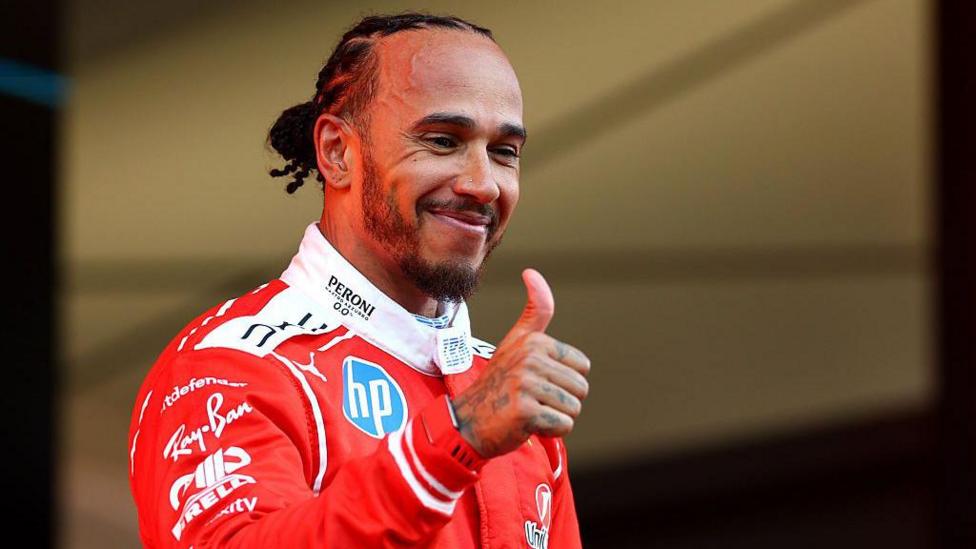
Hamilton's Monaco P2 Wasn't Luck — It Was Engineering Revenge
A second-place finish in Monaco reveals a Hamilton and Ferrari package finally clicking where it matters most.
Red Bull Ring: Why Altitude, Strategy, and Thin Margins Define Austria
The Austrian Grand Prix is a pressure cooker of aerodynamic compromise, brutal tire degradation, and razor-thin qualifying margins.