Ancelotti's Cold Calculus: Brazil's Patience Pays Off Against Japan
Carlo Ancelotti kept his nerve as Brazil fought back to sink Japan 2-1, revealing a tactical patience that could define their World Cup run.
The scoreboard flashed a uncomfortable truth. 1-0. Japan, relentless and fiercely organized, had taken a shock lead against the tournament giants. Inside the Brazil dressing room at half-time, panic would have been the natural currency of a nation carrying six decades of obsessive expectation.
Carlo Ancelotti does not deal in panic. He deals in structure.
“At half-time I told the players to be patient because sooner or later we would score. What was important was to keep our structure. We know we’re going down the right path and we have to continue on this path.”
Those words reveal the exact architecture of his management. In the furnace of a World Cup last-32 clash on Monday, Brazil’s 2-1 comeback victory over Japan was not forged in desperation. It was built on the chilled, calculated belief of a manager who has scaled every peak the European game has to offer and now stands on the precipice of global glory.
The Scare That Tested a Superpower
Japan did not come to Dallas to lie down. They came to execute a specific, grueling blueprint. For 45 minutes, it worked to devastating perfection. The Samurai Blue pressed with trademark intensity, swallowed space in the defensive third, and struck on the break with the kind of clinical precision that has become their hallmark on the world stage.
When the opening goal hit the net, the shockwave was palpable. Brazil, the pre-tournament behemoths, were suddenly staring at an unthinkable exit. The narrative was writing itself: the flashy South Americans undone by the relentless industry of the underdog. It was a script we have seen before in World Cup history.
But Ancelotti has rewritten these scripts before. In Milan, Munich, Madrid. His greatest trick is making the extraordinary look utterly inevitable. At the interval, while a nation held its breath, the most decorated manager in European football simply asked his players to trust the scaffolding he had spent months constructing.
The Structure of a Comeback
What does "keep our structure" actually mean in the high-stakes vocabulary of a World Cup knockout match? It means resisting the primal urge to abandon shape. It means refusing to launch desperate long balls into the box. It means trusting that the tactical geometry will eventually pry open a stubborn defense.
- Maintain the press: Brazil kept their high line in the second half, suffocating Japan's ability to counter.
- Width over width: The fullbacks pushed higher, turning Japan's compact low block into a stretched, vulnerable shell.
- Selective timing: Instead of forcing the final ball, Brazil circulated possession with lethal patience, waiting for the precise moment to strike.
The equalizer was not a bolt of luck. It was the inevitable consequence of structural persistence. And when the winning goal finally arrived, breaking Japanese hearts in the dying embers of the match, it felt less like a miracle and more like a mathematical certainty.
Moriyasu's Brutal Honesty
On the opposite side of the technical area, Hajime Moriyasu was left to dissect the cruel anatomy of a near-perfect upset. The Japanese head coach has built a side capable of going toe-to-toe with anyone on their day. But on Monday, their day simply ran out of minutes.
“We have to improve.”
Four words that cut to the chase. Moriyasu knows that in the modern World Cup, physical and tactical endurance for 90 minutes is the absolute baseline. Japan can dominate spells. They can punch above their weight. But turning a courageous 45 minutes into a historic 90 minutes requires another level of evolution.
Japan gave everything. Their pressing triggers were sharp, their defensive shape was disciplined, and their transition play was menacing. But against an Ancelotti-coached Brazil, giving everything is sometimes just the entry fee. The toll comes in the second half, when the structure begins to squeeze.
Behind the Deal: Ancelotti's Brazil Project
This match was never just about advancing to the next round. It was a vital stress test for a controversial and highly scrutinized project.
When the Brazilian Football Confederation handed the keys to the Seleção to an Italian legend, the move met with inevitable skepticism. Could a European club master adapt to the chaotic, emotional, and deeply cultural rhythms of international football in South America?
The early signs in the tournament were promising but disjointed. The group stage offered few genuine examinations. Japan, however, provided the exact kind of adversity that wins World Cups. Falling behind to a motivated, tactically elite opponent in a knockout match is the ultimate crucible.
By passing that test, Ancelotti didn't just prove his tranquil demeanor is more than a touchline aesthetic. He proved his tactical adaptability crosses continents. The philosophy that conquered the Champions League is now conquering the sunshine and altitude of North America.
The Timeless Virtue of Patience
In an era of football addicted to chaotic transitions and frantic pressing, Ancelotti's Brazil offers a terrifying counterpoint: controlled suffocation. They do not need to sprint out of the gates. They do not need to overwhelm opponents in the first 20 minutes. They are entirely comfortable letting you exhaust yourself before they deliver the fatal blow.
This has always been the hidden genius of Ancelotti's management. He does not demand his teams play with furious intensity for every second. He demands they play with permanent intelligence. Against a Japanese side that expended massive energy in the first half trying to disrupt Brazil's rhythm, that intelligence proved fatal.
The Bigger Picture: Brazil's Ascending Trajectory
Forget the early nerves. Brazil are not just surviving in this World Cup. They are accelerating.
Ancelotti’s post-match declaration that this was Brazil’s "most complete game" of the tournament is a startling piece of spin. Or is it a chilling warning? If coming from behind to defeat a world-class opponent in a hostile knockout environment is his baseline for completeness, the rest of the field should be deeply concerned.
The late goals, the stubborn refusal to panic, the unwavering adherence to the tactical plan. These are the habits of champions. Every great World Cup run requires a moment of existential dread, a split second where the players look at each other and decide how badly they want it. Brazil passed that test on Monday.
What's Next
The road ahead only steepens. The quarter-final bracket is littered with European heavyweights and South American rivals who will have watched this comeback and taken notes. They will know how to trouble Brazil. They will try to replicate Japan's early intensity and first-half suffocation.
But they will also know the terrifying truth: you can put Brazil under pressure, you can even score first, but you cannot break their structure. And as long as Carlo Ancelotti is standing on the touchline with his arms folded and his pulse barely rising, the Seleção will believe they are exactly where they need to be.
The right path is rarely the easiest one. But for Brazil, it is looking increasingly like the one that leads to the ultimate destination.
Editorial Integrity
This is an original SportPulse article written by our editorial team. All content is independently researched, written, and reviewed by our writers and editors before publication. We do not publish copied, aggregated, or syndicated content.
SportPulse is committed to original sports journalism. Read our editorial policy or contact us with any questions.
More Like This
All football
Ronaldo's Last Stand: The Tactical End of Football's Last Terminator
Cristiano Ronaldo confirms his sixth World Cup will be his last, as Portugal face Spain in Dallas.

Cape Verde's Unlikely Hero Eyes Messi: 'If You Think About It, You Lose Your Mind'
From bin bags as curtains in Germany's fifth tier to facing the GOAT at a World Cup — Sidny Lopes Cabral's story is pure football magic.
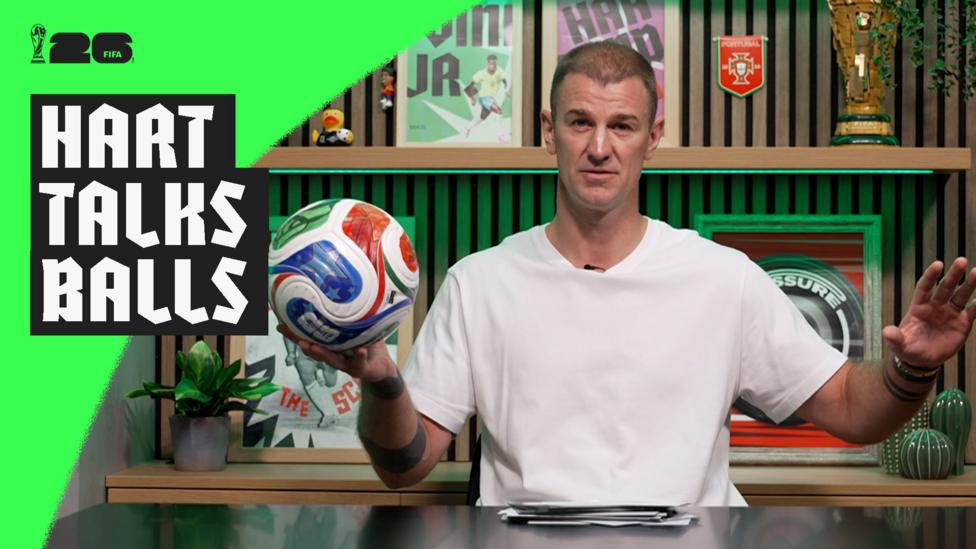
The Trionda Problem: Why World Cup Goalkeepers Can't Read This Ball
Joe Hart breaks down why the Trionda World Cup ball is leaving elite goalkeepers guessing at the worst possible moment.