The Trionda Problem: Why World Cup Goalkeepers Can't Read This Ball
Joe Hart breaks down why the Trionda World Cup ball is leaving elite goalkeepers guessing at the worst possible moment.
When the Ball Becomes the Enemy
There is a specific kind of nightmare that visits goalkeepers every four years. Not the usual ones, the ones about spilled crosses or misjudged angles. This nightmare features a football that moves like it has a mind of its own, knuckling through the air in directions that defy physics, arriving at gloves with the subtlety of a bar fight.
Former England international Joe Hart knows this nightmare intimately. Across 75 caps for his country and a career that spanned the Premier League's most ruthless era, he's felt the sting of a ball that refuses to cooperate. Now, watching the current World Cup unfold from the studio rather than the penalty area, Hart has offered a candid breakdown of why the Trionda match ball is causing chaos between the posts.
His diagnosis? It's not the goalkeepers who have gotten worse. It's the ball that's gotten smarter.
A Ball Built for Spectacle, Not Safety
Every World Cup ball is a statement of intent from its manufacturer. The Trionda is no different. Engineered with a textured surface and aerodynamic panel design meant to enhance swerve and unpredictability in flight, it was conceived to produce the kind of stunning goals that define a tournament's highlight reel.
The problem is that unpredictability is a double-edged sword. What looks spectacular from the stands looks terrifying through a goalkeeper's eyes.
"You're reading body shape, the run-up, the angle of the foot. You're trained to process all of that in a fraction of a second and commit. But when the ball does something none of that information predicted, you're left flat-footed. It's not a skill issue. It's a processing issue." — Joe Hart
Hart's observation cuts to the heart of a tension that has plagued World Cup football for decades: the interests of spectacle and the interests of competition are not always aligned.
The Ghost of Jabulani Past
To understand why this conversation matters now, you have to go back to South Africa 2010. The Jabulani, Adidas's infamous creation for that tournament, became a villain in goalkeeping circles. Its eight-panel design created erratic knuckleball movement that left keepers stranded.
That tournament produced 145 goals in 64 matches, a rate of 2.27 per game that seemed inflated not by attacking brilliance but by goalkeeping bewilderment.
Gianluigi Buffon called it a disaster. Julio Cesar compared it to a supermarket ball. Iker Casillas said it was impossible to judge in the air.
The pattern repeats itself every time a new tournament ball introduces radical aerodynamic changes. Goalkeepers, whose entire craft depends on reading trajectory, are the first to suffer. And they suffer in the most public, most consequential arena imaginable.
Inside the Goalkeeper's Mind
Hart's analysis goes beyond surface-level frustration. He explains the cognitive load that modern goalkeepers carry, and why a ball like the Trionda can shatter even elite preparation.
Modern goalkeeper coaching is built on pattern recognition. Keepers spend hundreds of hours studying footage, learning how a striker's body shape correlates with shot placement, how a free-kick taker's approach angle predicts the ball's flight path. The ball itself has always been the one constant in this equation.
Until it isn't.
"You train your whole career trusting that the ball will do what balls do. It dips, it swerves, sure, but within a range your brain has calibrated for. When that range changes overnight, you're essentially starting from zero with milliseconds to react." — Joe Hart
This is the invisible crisis of tournament football. The outfield players, who spend most of their time passing on the ground, have days to adjust to the ball's surface and weight. Goalkeepers, who face high-velocity strikes from distance and swerving set pieces, must calibrate in real time.
The Technical Breakdown
What specifically makes the Trionda difficult?
According to Hart and multiple goalkeeping analysts, the ball's key characteristics include:
- Reduced surface drag compared to domestic league balls, meaning shots arrive faster and with less deceleration
- Asymmetric panel seams that create unpredictable turbulence in flight
- Textured skin that grips the air differently depending on humidity and temperature, making the same strike behave differently from match to match
- Lighter effective weight in wet conditions, amplifying dip and swerve on long-range efforts
The Numbers Behind the Chaos
The Trionda's impact isn't just anecdotal. Early tournament data paints a troubling picture for shot-stoppers.
- Goals from outside the box have risen significantly compared to the previous World Cup cycle
- Free-kick conversion rates are tracking above the historical tournament average
- Save percentages on shots from distance have dropped noticeably compared to domestic league benchmarks
These aren't small fluctuations. They represent a meaningful shift in the balance between attack and defense, one that tilts the game toward spectacle at the expense of the last line of defense.
Hart notes that this is precisely what manufacturers design for. The Trionda isn't defective. It's doing exactly what it was built to do.
"These companies want wonder goals. They want the ball to dip over a wall from 30 yards and nestle into the top corner. That sells. What doesn't sell is a goalkeeper calmly gathering a routine shot." — Joe Hart
The Preparation Gap
One of the most revealing aspects of Hart's commentary is the preparation inequality he identifies. Top-tier national teams with deep resources begin working with the tournament ball weeks before the competition starts. Smaller federations, operating on tighter budgets and shorter camp periods, often get their first taste of the Trionda just days before their opening match.
This creates a hidden competitive disadvantage that never appears on a tactics board. A goalkeeper from a well-funded federation might have taken 500 shots with the Trionda before the tournament. One from a smaller nation might have faced 50.
That gap matters enormously when the margins are as thin as they are at a World Cup. One misread flight path, one wrong step, one ball that dips half a meter more than expected, and a campaign is over.
Goalkeepers Speak Out, Quietly
Hart is not alone in his assessment, though few active goalkeepers will say it publicly. Criticizing the match ball during a tournament is considered poor form, a potential distraction, and a subtle admission of vulnerability that opponents will look to exploit.
But off the record, the complaints are consistent. Multiple goalkeeping coaches at the tournament have told reporters that their keepers are adjusting their starting positions, moving a step deeper on set pieces and long-range free kicks to buy an extra fraction of a second to read the flight.
This is a significant tactical concession. That extra step means less coverage of the near post, less ability to rush out for through balls, less control of the box on crosses. The ball doesn't just affect the moment of the save. It reshapes the entire defensive geometry.
Behind the Design: The Business of Unpredictability
The Transfer Intel here isn't about player movement. It's about the invisible economics of match ball design.
Every World Cup ball is a multi-million dollar commercial product. The tournament serves as a global showcase, with manufacturers investing heavily in research, marketing, and distribution to capitalize on the exposure.
The Trionda's design philosophy reflects a clear market strategy: create a ball that produces viral moments. Goals that defy physics generate social media engagement, sell replicas, and establish brand identity in a crowded market.
Goalkeepers are, in this calculus, collateral damage. Their highlight reel is the save, which generates a fraction of the engagement that a 35-yard screamer does. The incentive structure of the sport's commercial ecosystem rewards chaos in the air and punishes stability between the posts.
Hart understands this trade-off with the clarity of someone who has lived on the wrong side of it.
"Nobody buys a replica ball because a goalkeeper caught it cleanly. They buy it because someone bent it into the top corner from nowhere. I get it. I just wish we had more say in the matter." — Joe Hart
What Comes Next
The Trionda won't change mid-tournament. It will remain the official ball, and goalkeepers will continue adapting or falling victim to its quirks. That's the reality of international football's power dynamics.
But Hart's intervention matters because it normalizes a conversation that goalkeeping unions and former players have been pushing for years: greater goalkeeper representation in ball testing and approval processes. Currently, the path from design lab to World Cup pitch is dominated by outfield player feedback and commercial considerations. The voice of the last line of defense is barely a whisper.
As this tournament progresses, watch for the subtle adjustments. Watch the keepers who start dropping deeper, the set-piece walls that move a half-step to compensate, the long-range shooters who realize they have a weapon that previous tournaments didn't offer.
The Trionda hasn't just changed how the ball moves. It's changed how the game is defended. And in a tournament decided by the thinnest of margins, that shift could define who lifts the trophy and who goes home wondering what happened.
The ball, as always, has the final word.
Editorial Integrity
This is an original SportPulse article written by our editorial team. All content is independently researched, written, and reviewed by our writers and editors before publication. We do not publish copied, aggregated, or syndicated content.
SportPulse is committed to original sports journalism. Read our editorial policy or contact us with any questions.
More Like This
All football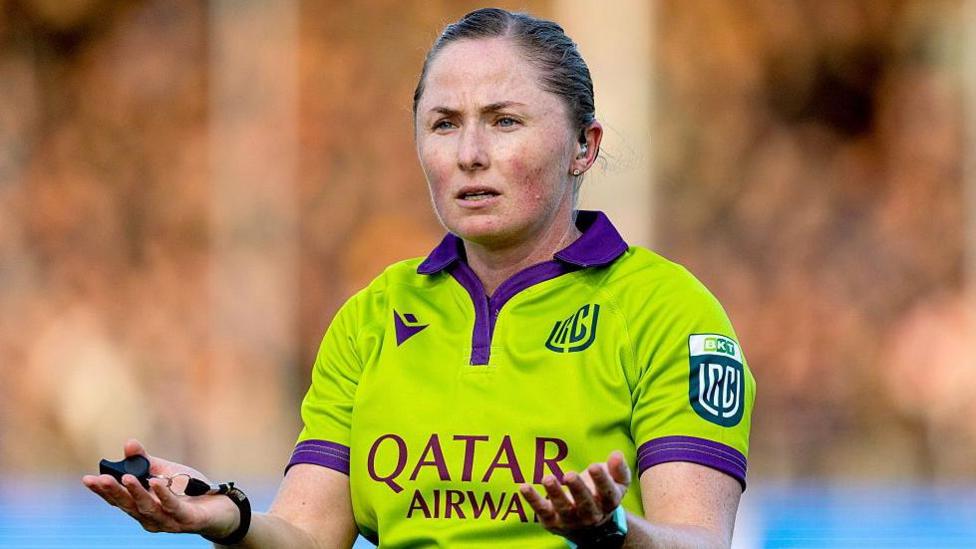
Pioneer Aimee Barrett-Theron Steps Down After Cancer Diagnosis
World Rugby's top female referee Aimee Barrett-Theron puts her whistle down to fight breast cancer, halting a trailblazing career.
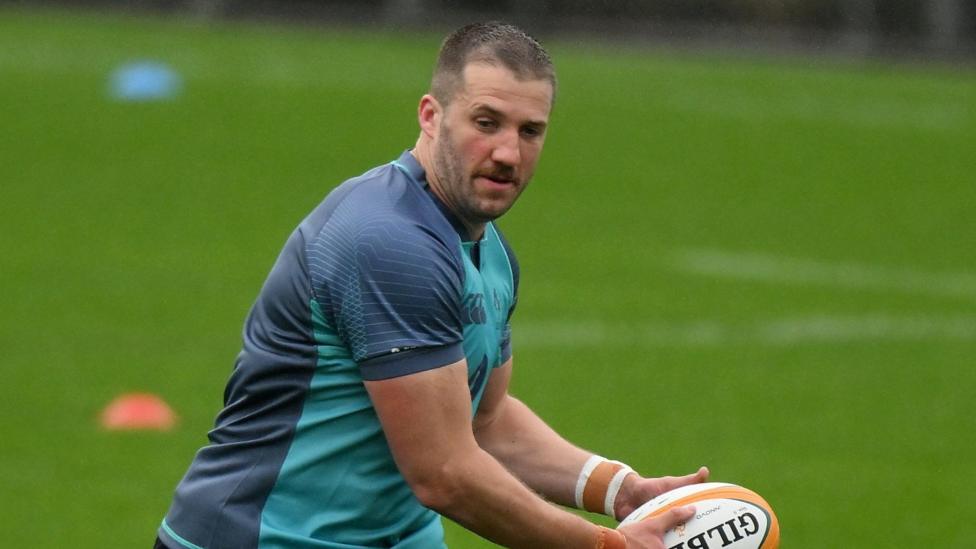
Ireland's Clean Bill of Health Changes the Sydney Equation
Paul O'Connell confirms a fully fit Irish roster ahead of the Nations Championship opener, handing Andy Farrell a rare luxury Down Under.
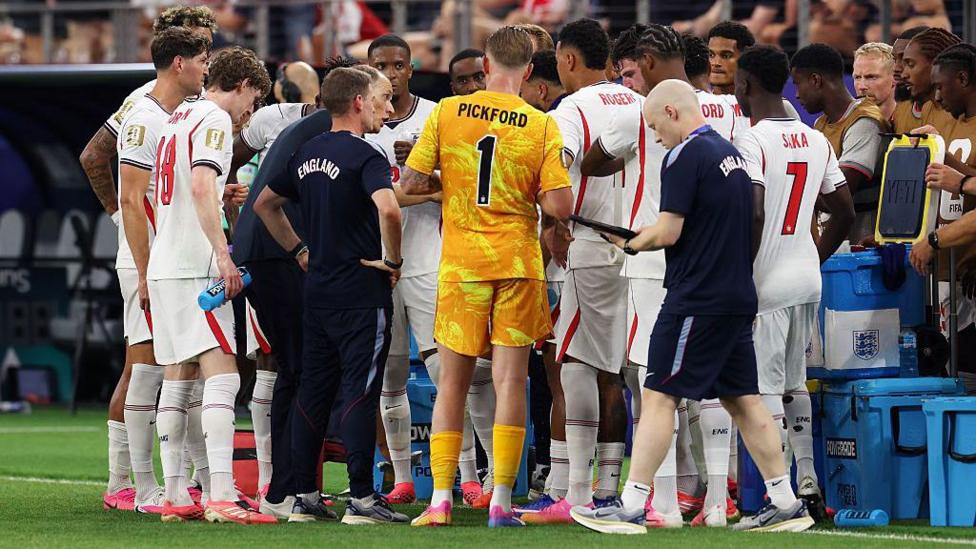
The $250M Pause: Why Hydration Break Ads Are Football's Next Battleground
Hydration breaks sparked fury in the Premier League, but a quarter-billion-dollar revenue stream won't disappear quietly.