Anisimova Returns to the Scene of Her Nightmare — and Plays Like She Owns It
Amanda Anisimova began her Wimbledon redemption in style, dismissing Gjorcheska 6-3, 6-2 on Tuesday.
The Memory That Won't Quite Leave
There is a scoreline that will follow Amanda Anisimova for the rest of her career, no matter how many titles she wins. 6-0, 6-0. Wimbledon final. Twelve months ago. A scoreline that doesn't belong on Centre Court, a scoreline that felt almost cruel to witness, a scoreline that had commentators scrambling for the right words and finding none.
Iga Swiatek dismantled Anisimova in 48 minutes. It was the most lopsided women's singles final at Wimbledon in the Open era. Anisimova won just 19 points across the entire match. She never held serve. She never even reached deuce on Swiatek's serve. It wasn't a contest. It was an ambush dressed in white.
And yet.
On Tuesday, walking back onto the grass at the All England Club, Anisimova looked nothing like a woman haunted. She beat Lina Gjorcheska of North Macedonia 6-3, 6-2 in a first-round performance that was controlled, aggressive, and utterly devoid of the anxiety that might reasonably be expected from someone returning to the site of their most public professional humiliation.
A Redemption Arc That Started Before Wimbledon
The narrative might suggest that Tuesday was the beginning of Anisimova's healing process, but that would be inaccurate. Her actual response to the Wimbledon final meltdown was startling in its speed and completeness.
Just weeks after the Swiatek debacle, Anisimova arrived at the US Open and did something extraordinary: she beat Swiatek herself en route to another Grand Slam final. Let that sink in. The same woman who had been bageled on the sport's biggest stage turned around and knocked out the player responsible for the embarrassment. The same forehand that had misfired relentlessly under the Centre Court roof suddenly had bite again.
She ultimately fell to Aryna Sabalenka in the final in a tight two-setter, but the damage to the narrative was already done. Anisimova had proven that the Wimbledon collapse was an aberration, not a definition. She reached back-to-back Grand Slam finals, a feat that places her among a select group of active players to have achieved it.
Her run to the 2026 Australian Open semifinals further cemented the trajectory. At just 24 years old, Anisimova is no longer a prodigy burning bright and fading. She is something more interesting: a player who has absorbed the worst the sport can deliver and come back harder.
"The thing about Amanda is she doesn't process fear the way you'd expect. She processes it as fuel. After Wimbledon, she didn't disappear. She went to practice the next morning." — Patrick Mouratoglou on Anisimova's mentality
The Anatomy of a 6-0, 6-0 Recovery
Sports psychologists talk about two kinds of athletes after traumatic losses. The first kind internalizes. They pull back, play tentatively, and the loss becomes a weight they carry into every subsequent match. Think of Jana Novotna after her 1993 Wimbledon final collapse (before her eventual triumph in 1998). Think of Caroline Wozniacki's years of Grand Slam heartbreak before breaking through in Melbourne.
The second kind externalizes. They use the loss as a detonation point. They play with a fury that suggests the pain never fully left but instead got redirected into something productive.
Anisimova belongs firmly in the second category.
Her game has always been built on first-strike tennis. The forehand is heavy, flat, and hit with an aggressive contact point that can overwhelm opponents on any surface. On grass, where the ball stays low and skids through the court, that forehand becomes a genuine weapon. Against Gjorcheska, she hit it freely, with confidence, the kind of confidence that only comes from knowing you've already survived the worst possible outcome.
Career by the Numbers
- 2 Grand Slam finals reached (Wimbledon 2025, US Open 2025)
- 1 Grand Slam semifinal reached (Australian Open 2026)
- Career-high WTA ranking: No. 6
- 78% first-serve points won on grass in 2025
- 6-3, 6-2 — scoreline vs. Gjorcheska in this year's Wimbledon opener
- Win-loss record on grass since 2024: 14-3
- Age at first Grand Slam final: 23
The Road Ahead Gets Steeper
Gjorcheska, ranked outside the top 100, was never expected to trouble Anisimova. The real test will come in the second round and beyond, where the draws at Wimbledon tend to sharpen quickly. Anisimova's potential path could run through Madison Keys in the fourth round and, further down the bracket, a possible rematch with Swiatek in the semifinals.
That hypothetical Swiatek meeting would be the match that defines this tournament for Anisimova, whether it happens or not. Every point she plays at Wimbledon this fortnight exists in the shadow of that 6-0, 6-0 scoreline. Every ace, every forehand winner, every fist pump is an argument against the narrative that Centre Court broke her.
The early signs suggest the argument is already won. Anisimova moved well against Gjorcheska, returned aggressively on second serves, and showed no visible tension at key moments. Her serve placement was notably precise, landing 67% of first serves and winning the majority of her service games at love or at 15.
But one match does not erase a memory. Anisimova knows this. The tennis world knows this.
Meanwhile, Svitolina's Grass Woes Continue
The other major storyline from Tuesday's play was less triumphant. Elina Svitolina, the former world No. 3 and a two-time Wimbledon semifinalist, suffered a surprise defeat to fellow Ukrainian Daria Snigur, losing 5-7, 2-6 in a match that slipped away from her in the first set and never came back.
Svitolina has been open about the challenges of balancing elite competition with the realities of life as a mother and a public figure whose home country continues to endure a devastating war. Her grass-court form has been inconsistent in recent seasons, and the loss to Snigur — a player she would have been expected to handle — raises questions about her trajectory heading into the second half of the season.
What Anisimova's Return Means for the Women's Draw
Wimbledon's women's draw has been wide open in recent years. Since Ashleigh Barty's retirement, no single player has established the kind of sustained dominance on grass that Serena Williams once did. Anisimova's game is tailor-made for these courts. Her flat, penetrating groundstrokes reward the low bounce. Her return game, one of the best on tour in terms of break-point conversion rate, punishes second serves that sit up invitingly on grass.
If she can maintain the level she showed against Gjorcheska, she is a genuine contender for the title. The confidence of having already been to two Grand Slam finals, the knowledge that she recovered from the worst loss imaginable, and a game that naturally suits the surface all point to a deep run.
The question isn't whether Anisimova can compete at Wimbledon. She already proved that last year. The question is whether she can finish what she started.
Twelve months ago, she stood on Centre Court holding a runner-up trophy and wondering what might have been. This fortnight, she's back with the quiet conviction of someone who has already faced the abyss and decided it wasn't so frightening after all.
6-0, 6-0 happened. It will always have happened. But Amanda Anisimova is writing a different ending this time.
Editorial Integrity
This is an original SportPulse article written by our editorial team. All content is independently researched, written, and reviewed by our writers and editors before publication. We do not publish copied, aggregated, or syndicated content.
SportPulse is committed to original sports journalism. Read our editorial policy or contact us with any questions.
More Like This
All tennis
Half a Million for Two Seats: Wimbledon's Debenture Divide
At £293,000 per ticket, Wimbledon's Centre Court debentures expose tennis's widening class chasm.

WTA Finals Cut Saudi Arabia Short, Return to California's Desert Oasis
The WTA's season-ending spectacle abandons Riyadh a year early, seeking redemption in the California sun.
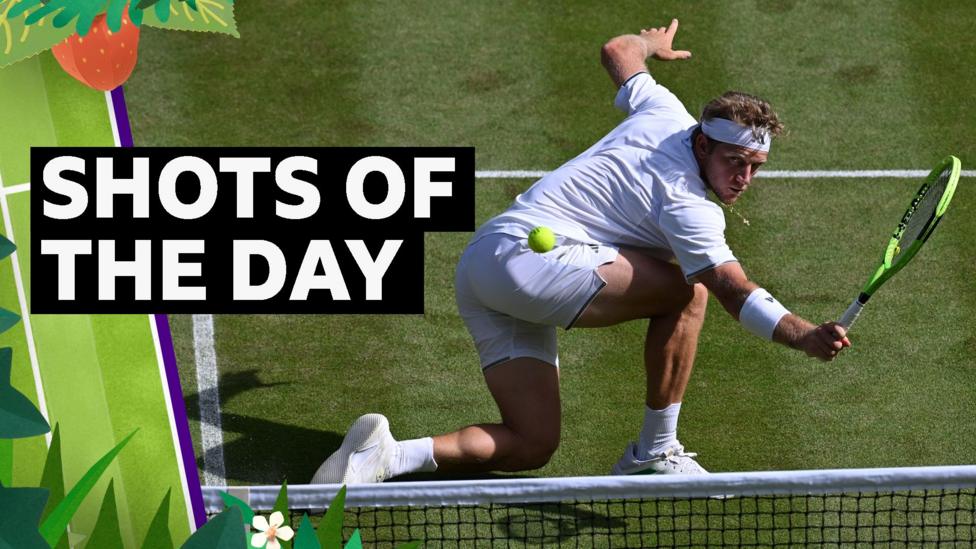
Wimbledon Day Seven: The Tactical Nuance Behind Simply Brilliant Shot-Making
Day seven at Wimbledon showcased how modern grass-court tennis blends raw power with chess-like positional intelligence.