Wimbledon Day Seven: The Tactical Nuance Behind Simply Brilliant Shot-Making
Day seven at Wimbledon showcased how modern grass-court tennis blends raw power with chess-like positional intelligence.
The grass-court swing is the shortest on the tennis calendar, yet it demands the most profound tactical adaptation. Arriving at the All England Club, players who have spent months grinding on clay and hard courts must recalibrate their entire positional framework to survive on a surface where the ball skids through the strike zone and rewards proactive geometry over reactive defense. Day seven at Wimbledon has historically served as the tournament's crucible, the midpoint where the round of 16 transitions from early-week chaos to second-week championship obsession, and where the tactical literacy of the remaining players is tested under intensifying scrutiny.
Among those navigating this draw are Britain's Heather Watson and Alejandro Davidovich Fokina, two players whose presence on day seven underscores the diverse strategic paradigms that thrive on grass. The visual highlights from the day showcase brilliant shot-making, but within those frames of athletic brilliance lies a complex interplay of court positioning, weight distribution, and deliberate court geometry. Understanding what makes these moments simply brilliant requires looking beyond the aesthetics and into the underlying tactical architecture.
The Geometry of the Forehand Approach
For Alejandro Davidovich Fokina, the transition to grass represents a fascinating tactical pivot. The Spaniard's natural instincts were refined on the slow clay courts of his homeland, where the high bounce affords time for extended baseline construction. Grass, however, strips that luxury away. The surface demands that a player compress his preparation phase and accelerate his contact point forward to neutralise the low, skidding bounce before it rises uncomfortably into the body.
The most brilliant shots captured from Davidovich Fokina on day seven are not merely the product of hand-eye coordination. They represent a tactical recalibration of his court positioning. On clay, his typical defensive shape invites him to drift three to four meters behind the baseline, absorbing pace and redirecting through heavy topspin. On grass, that retreat becomes a liability, as the ball dies in the court and forces players to generate their own pace from a stationary position. His ability to step inside the baseline and take the ball on the rise transforms his defensive baseline shape into a proactive first-strike pattern.
The adjustment lies in the footwork patterns. Clay encourages lateral sliding; grass demands forward commitment. When Davidovich Fokina executes a forehand winner on day seven, observe the position of his lead foot. It is planted earlier, positioned closer to the baseline, allowing him to cut off the trajectory of the incoming ball before it dips below the knee. This is geometry in motion, compressing the opponent's reaction time by advancing the contact point by crucial fractions of a second.
Tactical Adaptation: Watson's Court Intelligence
Heather Watson's presence on day seven reinforces the importance of tactical intelligence on grass. The British player has long been regarded as a student of the sport, possessing an intuitive understanding of how to maneuver opponents through deliberate court geometry. Her approach to shot construction on grass reflects a positional discipline that elite coaches prize heavily on this surface.
Watson's tactical framework is built around the principle of forward compression. On grass, the slice backhand remains a critical neutralising tool, pulling opponents forward into uncomfortable contact zones and preventing them from establishing rhythm. Watson employs the slice to disrupt her opponent's offensive posture, dragging them into the low-bounce territory where generating pace requires exceptional timing and core strength.
The brilliant shots captured from Watson during her day seven appearance reveal a player who understands that grass-court tennis is not simply about hitting through an opponent. It is about manipulating the geometry of the court itself, using height and depth to create uncertainty before punishing with an angled approach. Her net positioning following a deep approach draws the opponent into a forced passing attempt, where the grass rewards the volleyer by keeping the opponent's passing shot low and reachable.
What the Numbers Say
- Grass courts produce an average bounce height roughly 20-30% lower than clay, fundamentally altering the strike zone and contact point geometry.
- Players who win consistently at Wimbledon average a net approaches won rate of 68% or higher, compared to around 55% on clay.
- The average rally length on grass is approximately 4-5 shots, compared to 8-10 shots on clay, emphasising the importance of first-strike tennis and early court positioning.
- Serve and volley points, while declining in frequency, still yield a win rate of approximately 65% when executed by players with elite hands.
Tactical Shift: The Mid-Tournament Court Positioning Evolution
What distinguishes day seven at Wimbledon from the opening rounds is the tactical evolution visible in the remaining players. Through rounds one and two, the primary objective is survival. Players adjust to the speed of the courts, the variability of the bounce, and the atmospheric conditions. By day seven, the draw has crystallised, and the remaining competitors have established their tactical baseline for the fortnight.
The shift is subtle but measurable. In the early rounds, players tend to remain more conservative in their court positioning, lingering a meter or two behind the baseline to absorb pace and read the trajectory of the ball. By day seven, that conservatism is abandoned. The players who advance are those who have refined their forward movement and are willing to commit to the net with greater frequency.
This tactical shift is driven by the changing condition of the courts. After a week of play, the baseline area becomes worn, slicker, and more unpredictable. The ball begins to bounce erratically, rewarding players who move forward to take the ball earlier and avoid the deteriorating surface close to the baseline. Watson's court awareness and Davidovich Fokina's athletic flexibility allow them to adapt to these conditions in real time, demonstrating why they have reached this stage of the Championships.
"The surface rewards those who dare to take time away. On grass, the bravest player is usually the one holding the trophy." — A coaching perspective on grass-court tennis
The contrast between early-round survival and second-week dominance lies in the tactical conviction of the player. Hesitation on grass is punished ruthlessly. A player who pauses to read the bounce rather than committing to an offensive position will find the ball skidding past them before their racket can be prepared. Day seven marks the transition from negotiation to assertion. The players who progress beyond this stage are those who impose their tactical structure on every point, rather than reacting to the chaos their opponent presents.
The Bigger Picture: Wimbledon's Mid-Tournament Canvas
The significance of day seven extends beyond individual matches. It is the moment when Wimbledon transitions from a wide-open draw into a concentrated field of tactical specialists. The narrative arc of the tournament crystallises, and the players who remain have demonstrated not only the physical capacity to compete but also the tactical adaptability to thrive on grass.
For Watson, the day represents another milestone in a career defined by persistence and positional intelligence. For Davidovich Fokina, it is a testament to the evolution of his game, transitioning from a clay-court specialist to a player capable of adapting his tactical structure to the demands of grass. Both players, captured in the highlights of day seven, embody the essence of Wimbledon: a tournament where tactical nuance coexists with explosive athleticism.
As the Championships move into the second week, the tactical landscape will shift once again. The courts will become more worn, the serving patterns more conservative, and the return positioning more aggressive. The players who survive day seven are those who have read these conditions and adapted their games accordingly. Their brilliant shots are not merely moments of athletic inspiration. They are the product of tactical structures refined through years of repetition and hours of analysis.
Looking Ahead: The Second Week's Tactical Battlegrounds
As Wimbledon progresses into its second week, the remaining players must prepare for a tactical escalation. The court conditions will continue to evolve, wearing further at the baseline and rewarding those who embrace a forward-leaning positional structure. The serve return battle will intensify, with players forced to stand deeper and react quicker to the skidding trajectories.
For the tournament favourites, the challenge is to maintain their tactical discipline while managing the physical demands of best-of-five set tennis on a surface that punishes hesitation and rewards aggression. For the underdogs, the opportunity lies in disrupting the rhythmic equilibrium of their higher-ranked opponents through deliberate tactical variance, mixing pace, trajectory, and net approaches.
The brilliant shot-making captured on day seven is a preview of the tactical theatre to come. Each winner, each angled volley, each perfectly timed approach shot is a reflection of a player's tactical blueprint being executed under pressure. As the Championships move toward their conclusion, it is this tactical literacy, as much as physical power or technical precision, that will determine who lifts the trophy on the final Sunday.
In the theatre of Wimbledon, the grass is the stage, but the tactical architecture is the script. Day seven has revealed its authors. The second week will reveal who can deliver the final act.
Editorial Integrity
This is an original SportPulse article written by our editorial team. All content is independently researched, written, and reviewed by our writers and editors before publication. We do not publish copied, aggregated, or syndicated content.
SportPulse is committed to original sports journalism. Read our editorial policy or contact us with any questions.
More Like This
All tennis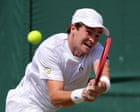
Fonseca Stumbles, Djokovic Looms: Wimbledon's Friday Reckoning
Brazilian wunderkind Fonseca drops the first set to qualifier Safiullin as Centre Court prepares for Djokovic, Sabalenka, and Sinner.

Arthur Fery's Wimbledon Miracle Built on Nose Surgery and The Godfather
A secret nose procedure and Coppola's epic turned a bleeding qualifier into a Wimbledon semi-finalist facing Alexander Zverev.
Wimbledon's Purple and Green: Identity Written in Chlorophyll and Royalty
The Championships' iconic palette weaves together Victorian weed-killing pragmatism, imperial pageantry, and brand alchemy.