Fonseca Stumbles, Djokovic Looms: Wimbledon's Friday Reckoning
Brazilian wunderkind Fonseca drops the first set to qualifier Safiullin as Centre Court prepares for Djokovic, Sabalenka, and Sinner.
title: "Fonseca Stumbles, Djokovic Looms: Wimbledon's Friday Reckoning"
category: tennis
badge: Grand Slams
badgeType: category
author: Alex Thompson
authorRole: Tennis & General Editor
authorInitials: AT
date: 2026-07-03
readTime: 7 min read
image: https://i.guim.co.uk/img/media/e6036aaf6d86b51cc88d7e7d7d33d2c7aa6eae2e/238_0_2364_1892/master/2364.jpg?width=140&quality=85&auto=format&fit=max&s=dba4fed2616d4f20bd7f76deb0a2f662
imageAlt: Wimbledon No 2 Court with Brazilian flags visible in the stands as a young player winds up a forehand under gray London skies
tags: Wimbledon, Grand Slams, ATP, WTA
excerpt: "Brazilian wunderkind Fonseca departs Wimbledon as Safiullin completes the upset, while Centre Court prepares for Djokovic, Sabalenka, and Sinner."
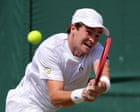
There is a particular kind of stillness that descends on a tennis crowd when a prodigy stumbles. It is not silence, exactly. It is the collective holding of breath, the temporary suspension of belief. On No 2 Court at the All England Club, where the yellow and green of Brazil had been snapping in the breeze all morning, that stillness arrived uninvited when Joao Fonseca dropped the first set 6-3 to Roman Safiullin.
The first chants of "FON! SE! CA!" started up shortly before noon, and it's fair to say Fonseca was in need of all the encouragement he could get. For half an hour the Brazilian No 24 seed had been slapped around to the point of mockery. The world No 132 Roman Safiullin of Russia, a quarter-finalist here in 2023, was standing daringly close to the baseline, taking the ball early, teasing him with immaculate drop shots. Now he was 5-3 up and serving for the first set, but three set points had come and gone. Right on cue, with the match at its first moment of crisis, the aural cavalry made its move.
The flags did not stop. They never entirely stop at Wimbledon, where patriotism threads itself through the chapelmush hush of the grounds with a strange, incongruous vitality. But they fluttered less frantically. The carnival dimmed. And the question that always stalks teenage phenoms through the lawns of SW19 surfaced once more: is this the day the fairy tale learns to bleed?
And whenever Fonseca plays, wherever he happens to be, noise tends to follow. Ever since early 2024, when the Rio de Janeiro native reached the quarter-finals of his home tournament at the age of just 17, a kind of madness has built around him: a travelling army of Brazilians and Brazilian expats filling the world's tennis arenas with the fervour of the football terraces. They call it fonsequismo, and from Melbourne to Miami, no court in the world is immune.
In the end, the roar was not enough. Safiullin ousted the Brazilian, and Fonseca departed Wimbledon with a whimper — but the deafening hype army roared on.
The Architecture of an Upset
Fonseca arrived at this Wimbledon carrying the kind of expectation that attaches itself to only the most luminous prospects. He is 19 years old, possesses a forehand that has been described, without hyperbole, as nuclear, and moves with the loose-limbed swagger of a player unburdened by the accumulated scar tissue that decades on tour eventually tattoo onto everyone. He is the future, everyone keeps saying, and by everyone they mean the agents, the commentators, the sponsors, the algorithms, the fans who pack No 2 Court in their thousands hoping to witness the origin story of a champion in real time.
But grass does not care about origin stories. Grass is the surfaces that humbles reputation.
Roman Safiullin is, by the metrics that usually define tennis hierarchy, exactly the sort of opponent a rising star should dismantle on the way to greater things. He came through qualifying. He had not won a single Grand Slam main-draw match in 2026 before this tournament. On paper, on any surface that rewards the clean, decisive ball-striking of a Fonseca, this was a gimme, a formalities exercise, a corridor to walk through.
Paper, as ever, is useless on grass.
The Russian Who Likes It Quick
Safiullin's credentials on this surface, though easily overlooked, are deeply embedded in the recent memory of Wimbledon. His run to the quarter-finals in 2023 was not a fluke born of a kind draw. It was the tournament where his heavy, flat hitting found its natural home, where the low bounce and the fast skid turned his groundstrokes into weapons that top players genuinely struggled to handle.
He had already demonstrated the danger in this very fortnight. In the first round, Safiullin defeated his compatriot Andrey Rublev, the 12th seed, in five sets. That result, which at the time registered as a modest curiosity, now looks like the preamble to something more significant. Rublev is a top-tier baseliner with power of his own and far more experience. If Safiullin could dismantle that, Fonseca's youthful brilliance was always going to require more than raw talent to survive.
The first set confirmed as much. Safiullin won it 6-3, and in the rhythm of its games a quiet narrative took shape. The qualifier was not merely holding. He was dictating. He was hitting through the court with a clean, flat trajectory that denied Fonseca the time to set up that nuclear forehand. On grass, the geometry of advantage shifts. The player who strikes first, strikes true, and strikes low wins. Safiullin was doing all three — and he would not stop.
Centre Court Awaits Its Titans
While Fonseca's match unfolded on No 2 Court as a cautionary reminder of grass-court tennis's democratic cruelty, the marquee of the day's order of play sat waiting like a loaded weapon. Centre Court, 1:30pm, and a lineup that reads less like a schedule than a statement of intent from the tournament organisers.
Novak Djokovic arrives as the 7th seed, which is itself a statistical curiosity that barely conceals the broader truth: Djokovic's relationship with Wimbledon has long since transcended seedings. He is a seven-time champion here. The Centre Court is his living room, his courtroom, his stage. The question with Djokovic at Wimbledon is never whether he can win. It is whether the body and the motivation will align on the day required. His opponent, Arthur Rinderknech of France, seeded 25th, is a competent, big-serving player who will need the match of his life and possibly several sets of Djokovic's physical decline to construct a path to an upset.
Grass remembers everyone. But at Centre Court, it remembers Djokovic best of all.
Djokovic Survives the Test
As it transpired, the Serb needed four sets to get past Rinderknech and reach the fourth round. Afterward, Djokovic admitted he had been carrying more tension than usual onto Centre Court.
"I was quite stressed throughout the whole match, to be honest", Djokovic said. "More tension than usual, for whatever reason. But I'm relieved to have gotten over the line."
The victory extended Djokovic's stay into the second week, where the challenges will only sharpen and the margins will only narrow. If the body held for four sets against Rinderknech, the deeper questions about endurance and motivation remain — as they always do with a champion advancing through his thirties.
Sabalenka and the Ostapenko Question
Following Djokovic, the world No 1 Aryna Sabalenka takes the lawns against Jelena Ostapenko of Latvia. This is a matchup that demands attention not merely because of Sabalenka's dominance but because of what Ostapenko represents: chaos in tennis's most disciplined form.
Ostapenko hits the ball as if each strike is a personal insult to the concept of restraint. She is a former Grand Slam champion, having won Roland-Garros in 2017 with a brand of tennis that defied every coaching manual ever written. On grass, her flat, unrelenting aggression can be devastating or self-immolating, sometimes within the same game. Sabalenka, whose own power game needs no introduction, will face the rare challenge of an opponent who can match her for raw ball speed and may occasionally exceed her for sheer audacity.
The contrast in approach should be compelling. Sabalenka has refined her power into something approaching artistic discipline over the past two seasons. Ostapenko's power remains, at its core, unfiltered and instinctive. On grass, where both styles can flourish, the question is whether Sabalenka's superior consistency outweighs Ostapenko's capacity for improbable patches of brilliance.
The Longer Shadow
Beyond the matches in motion and the Centre Court showcase, the day's order carries the weight of the broader tournament narrative. Felix Auger-Aliassime, seeded 3rd, faces Michael Zheng of the United States in the third match on Centre Court. Auger-Aliassime has spent years navigating the space between promise and fulfilment, and Wimbledon 2026 represents another chapter in a career that has oscillated between the sublime and the frustratingly tentative.
Zheng, by contrast, arrives with the freedom of a player for whom every round won is a paragraph added to an unexpected story. The American has nothing to lose, which on grass is sometimes the most dangerous weapon of all.
The Fonseca Question, Answered
And so the first Friday of Wimbledon 2026 unfolds with its competing threads. On No 2 Court, a teenager's education concluded under the unforgiving gaze of a surface that does not tolerate youthful indiscretion. Safiullin's upset is now complete — Fonseca departs Wimbledon, the fairy tale learning to bleed after all. Fonseca's nuclear forehand was not decommissioned. It was merely, for a day, outmanoeuvred by a player who understood the geometry of grass better than a 19-year-old could be expected to.
The flags, let it be noted, had not stopped. They never do. That is the nature of fonsequismo — it follows its hero in defeat as ferociously as in victory.
What the Day Will Tell Us
The first week of a Grand Slam is a process of elimination that works on two levels. Players are eliminated, yes, but so are narratives. The stories we tell ourselves about emerging talents and established champions are tested against the unyielding reality of competition. By the end of Friday, we know that Fonseca's stumble was not a temporary derailment but a full stop. We now know Djokovic's body held for four sets against Rinderknech — though the tension he described suggests the deeper fortnight will demand more. We will know whether Sabalenka can navigate the Ostapenko minefield.
These are the questions that make the first week of Wimbledon less about tennis as aesthetic spectacle and more about tennis as truth serum. The surface strips away pretension. The marque names and emerging talents are, by sundown, merely players who either won or lost.
The tournament does not care about your storyline. It only cares about your forehand, your nerve, and your capacity to find a way through when the flags stop fluttering quite so frantically.
By the close of play, the grounds will empty, the lawns will be mowed, and the championship will have advanced another day toward what it always advances toward: the unscripted revelation of who, beneath the pageantry and the expectation, is simply better on the day that mattered.
Updated: 2026-07-04 — Added confirmed Safiullin upset over Fonseca with match details and fan culture context (fonsequismo), updated Fonseca section from preview to post-match outcome.
Editorial Integrity
This is an original SportPulse article written by our editorial team. All content is independently researched, written, and reviewed by our writers and editors before publication. We do not publish copied, aggregated, or syndicated content.
SportPulse is committed to original sports journalism. Read our editorial policy or contact us with any questions.
More Like This
All tennis
The Pineapple Crown: Wimbledon's Golden Secret of Prestige and Pageantry
A curious pineapple tops the men's trophy, revealing Wimbledon's deep ties to colonial-era symbolism and rare status.
Kyrgios Is Back at Wimbledon. So Is the Chaos.
Nick Kyrgios swore at an umpire on his Wimbledon return, reminding everyone why he's tennis's most complicated genius.

Inside Wimbledon's Hidden Engine: 6,565 Rackets and the Art of Staying Strung
Behind the strawberries and Centre Court elegance, Wimbledon's restringing facility processes nearly 500 rackets a day in quiet, urgent precision.