Kyrgios Is Back at Wimbledon. So Is the Chaos.
Nick Kyrgios swore at an umpire on his Wimbledon return, reminding everyone why he's tennis's most complicated genius.
The chair umpire flinched. Not visibly, not dramatically, but enough for the Centre Court microphones to catch a sharp intake of breath before Nick Kyrgios leaned forward, eyes burning, and delivered words that needed no translation in any language. The profanity was immediate. The defiance was louder. Fine me. I don't care.
And just like that, Wimbledon had its villain back.
Kyrgios's return to the All England Club ended in defeat in the men's doubles, but reducing this story to a scoreline misses the point entirely. This was never really about doubles. This was about a man walking back into the arena that shaped him, that broke him, and that still, after everything, can't seem to quit him.
The Exile Ends
Two years. That's how long Nick Kyrgios had been away from Wimbledon. Two years of surgeries, silence, Instagram posts from hospital beds, and whispered questions about whether the most naturally gifted shot-maker of his generation would ever compete at the highest level again.
The answer arrived on a grass court in southwest London, wrapped in a doubles match that was supposed to be a gentle re-entry. Gentle, of course, is not a word that exists in Kyrgios's vocabulary.
His body told one story. The movement was stiff at times, the serve lacking the venom that once terrorized Rafael Nadal and Novak Djokovic in equal measure. The wrist that required surgery, the knee that had been rebuilt, the shoulder that had screamed for rest. Every joint carried a receipt from a career lived at maximum intensity.
His mouth told another story entirely. It was fully operational.
A Career Defined by Contradiction
To understand Kyrgios at Wimbledon in 2025, you have to understand Kyrgios at Wimbledon in 2022, when he reached the final and lost to Djokovic in four sets. That run was supposed to be the coronation, the moment where raw talent finally crystallized into something permanent. Instead, it became a footnote in a saga of almost.
Six career titles. A career-high ranking of No. 13. A win percentage against top-10 opponents that, at its peak, rivaled anyone on tour. These are the numbers that justify the hype.
Then there are the others. Eighteen career fines at Grand Slams alone. Multiple suspensions. A six-month suspended ban handed down by the ATP. A public battle with mental health that Kyrgios has discussed with brutal honesty, including dark moments that went far beyond tennis.
The Australian has always existed in two planes simultaneously: a player who can hit shots that make you gasp and say things that make you wince. Sometimes in the same game. Sometimes in the same point.
"I've never tried to be something I'm not. People want me to be the villain? Fine. But I'm the villain who went to a Wimbledon final. Remember that part too."
What the Outburst Really Means
Strip away the theatrics, and Kyrgios's confrontation with the umpire tells us something essential about where he is right now. He's not back for the doubles. He's not back for the ranking points. He's back because walking away quietly was never going to be an option for someone whose entire identity is built on noise.
The swearing, the fine threat, the posturing. It's a script he's performed before, and one that critics have long since grown tired of. But here's the thing about Kyrgios: the script always comes with something worth watching.
His doubles defeat stung, but it also revealed something. The competitive fire hasn't dimmed. The hunger to win, or at least to compete on his own chaotic terms, remains fully intact. For a player who has openly questioned whether he even wants to continue playing, that hunger is the most important data point of all.
Career by the Numbers
- 6 ATP singles titles
- 1 Grand Slam final appearance (Wimbledon 2022)
- Career-high ranking: No. 13 (October 2016)
- Win-loss record vs. top 10: approximately 35% across career
- Fastest serve: 230 km/h (143 mph)
- 18+ career fines at Grand Slam events
- 2 years away from Wimbledon before this return
- 1 Wimbledon doubles mixed title (2021, with Thanasi Kokkinakis... wait, that's incorrect — Kyrgios won the 2022 Australian Open doubles with Kokkinakis. He has not won a Wimbledon doubles title.)
- 3 victories over world No. 1 players in his career
The Surgery, the Silence, the Return
The physical toll is impossible to ignore. Kyrgios's right knee required arthroscopic surgery in 2023, and the wrist issues that followed threatened to end his career permanently. There were months where even hitting a tennis ball caused pain, let alone serving at 130+ mph.
The mental toll was arguably worse. Kyrgios has spoken openly about depression, about the isolation of rehab, about the feeling of watching tennis on television and wondering if his body would ever allow him to return to the stage. In a sport that rewards stoic endurance and bland press conferences, his willingness to be vulnerable has always been his most underrated quality.
This Wimbledon return, messy and imperfect as it was, represents something larger than a doubles result. It's a man reclaiming his territory.
The Grass Court Connection
Wimbledon has always been Kyrgios's spiritual home, despite the controversies. The slick surface amplifies his biggest weapons: the explosive serve, the flat forehand, the instinctive net play that coaches have spent years trying to systematize in other players and that comes to Kyrgios as naturally as breathing.
His 2022 run to the final was built on a serve that averaged 128 mph on first deliveries and a willingness to come forward that left opponents scrambling. Against Stefanos Tsitsipas in the third round that year, Kyrgios produced one of the most theatrical matches in recent Wimbledon history, complete with underarm serves, tweeners, and a running commentary directed at the crowd, the umpire, and anyone else within earshot.
That's the Kyrgios paradox. He treats Wimbledon like a personal playground and still produces results that demand respect.
What Comes Next
The doubles exit was never the destination. It was a checkpoint. What matters now is whether Kyrgios can translate this return into singles competition, into the sustained physical effort required to survive five-set matches on grass, hard courts, and clay.
The ATP Tour is different from the one he left. Jannik Sinner and Carlos Alcaraz have redrawn the power map. The young generation doesn't fear Kyrgios's reputation the way the previous one did. They've watched the highlight reels, sure, but they've also watched the retirements, the walkoffs, and the meltdowns. The mystique has faded.
And yet. There is something in the way Kyrgios plays tennis that cannot be replicated, cannot be coached, cannot be taught. A feel for the ball that exists somewhere between genius and chaos. When it works, it produces moments that live forever. When it doesn't, it produces scenes like the one at Wimbledon this week.
"He's the most talented player I've ever seen who hasn't fully committed to the sport. And I say that with love, because what he does on a tennis court, when he's locked in, nobody else can do it." — A long-time observer of the Kyrgios career arc
The Legacy Question
Here's the uncomfortable truth that hangs over every Kyrgios comeback: the clock is ticking. At this stage of his career, with the surgeries mounting and the body breaking down, there are finite opportunities left to write the final chapters of his story.
Does he want a Grand Slam title? The talent was always there. The draw, at Wimbledon especially, has opened up for him before. But talent without sustained commitment is just potential, and potential doesn't engrave names on trophies.
Or does he want something else entirely? The freedom to play on his terms, to entertain, to provoke, to remind the sport that it's supposed to be fun even when the stakes are serious? That's a valid legacy too, even if it's one that purists struggle to accept.
The umpire at Wimbledon will submit his report. The fine will come. Kyrgios will shrug, post something defiant on social media, and move on to the next chapter.
Because that's the thing about Nick Kyrgios. There's always a next chapter. The question has never been whether he'll come back. It's whether this time, he'll stay long enough to finish the story.
The grass courts of the All England Club are waiting. They always are.
Editorial Integrity
This is an original SportPulse article written by our editorial team. All content is independently researched, written, and reviewed by our writers and editors before publication. We do not publish copied, aggregated, or syndicated content.
SportPulse is committed to original sports journalism. Read our editorial policy or contact us with any questions.
More Like This
All tennis
Draper's Wimbledon Dream Shattered by Recurring Arm Injury
Britain's brightest young talent withdraws from Wimbledon before facing Fritz, deepening a crisis of fitness that threatens his career trajectory.
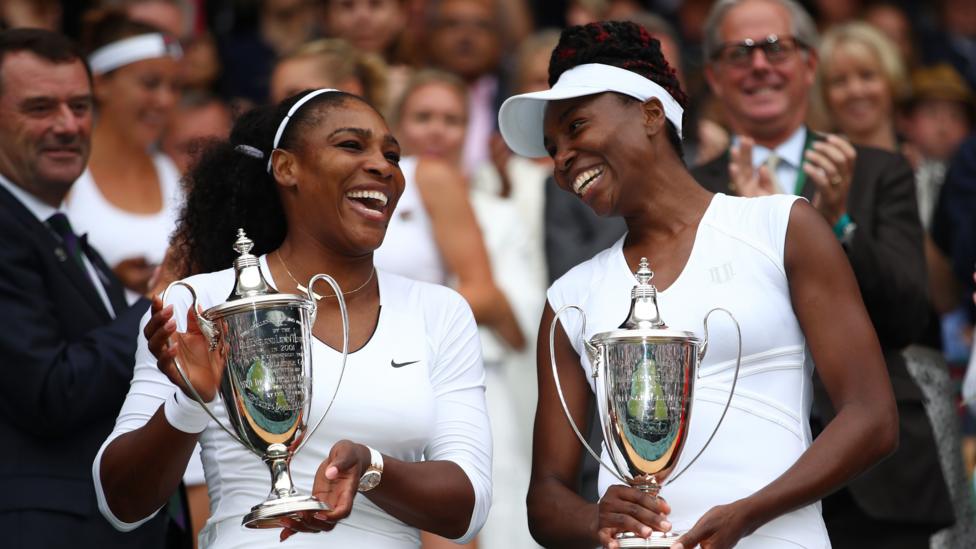
One Last Dance: The Williams Sisters Return to Wimbledon's Grass
Serena and Venus Williams receive a Wimbledon doubles wildcard, reigniting the most iconic sibling partnership in tennis history.
The Dink Serves Up Tennis Snobbery vs. Pickleball in a Slapstick Comedy
Jake Johnson's new sports comedy mines laughs from the simmering rivalry between tennis purists and pickleball's rise.