One Last Dance: The Williams Sisters Return to Wimbledon's Grass
Serena and Venus Williams receive a Wimbledon doubles wildcard, reigniting the most iconic sibling partnership in tennis history.
The Call That Changes Everything
There is a particular kind of electricity that runs through the All England Club when the Williams sisters step onto a doubles court together. It is not simply the presence of two of the greatest athletes to ever grip a racket. It is the knowledge that you are watching something built in Compton, California, forged on cracked public courts where a father with a plan and a dream wrote a seventy-eight-page manifesto before either girl could spell the word "championship."
When the All England Club announced that Serena Williams has been granted a wildcard to play alongside her older sister Venus in the women's doubles at Wimbledon, the decision landed like a thunderclap across the sport. Not because it was unexpected. Because it felt like history reaching back to remind the present what it owes the past.
A Partnership Forged Before Stardom
Long before Serena amassed 23 Grand Slam singles titles and Venus became a seven-time major champion, the two were doubles partners. That is the part of the story casual fans tend to forget. The Williams sisters were not singles stars who occasionally paired up. They were a unit first.
Richard Williams pulled his daughters off the junior circuit entirely, believing the conventional pathway chewed up young talent and spat out burned-out adults. Instead, he trained them on the public courts of east Los Angeles, often amid the ambient noise of gunshots and sirens, building a tennis education that prioritized tactical intelligence and competitive fearlessness over rankings points.
Doubles was central to that philosophy. It taught them court geometry, net instincts, communication without words. It taught them to trust each other under pressure in a way that no coach could manufacture. By the time they arrived at their first professional doubles event, they already possessed something no other team on tour could buy: a psychic link born from thousands of shared hours.
The Record on Grass
Wimbledon's lawns have been the stage for some of the Williams sisters' most breathtaking work as a doubles team. Their record at the All England Club is staggering. They have won the women's doubles title six times together, dominating stretches of the tournament's history with a brand of tennis that combined Serena's raw power with Venus's fluid net play.
Their Grand Slam doubles record together stands at 14 major titles, a figure that puts them among the most decorated doubles partnerships in the Open Era. Each victory carried its own texture. Some were clinical dismantlings of overmatched opponents. Others were wars of attrition where only their unshakeable bond pulled them through.
What made them so lethal was not just individual talent. It was the way their games interlocked. Serena's serve, widely regarded as the most devastating weapon in the history of women's tennis, created immediate pressure. Venus, standing six feet one inch tall with an extraordinary wingspan, controlled the net with a reach that suffocated opposing returns. When both were firing, there was simply no tactical answer.
The Weight of This Moment
Context matters here. This is not a routine wildcard allocation. Serena's competitive future has been the subject of intense speculation for years. Since giving birth to her daughter Olympia in 2017, she has made several runs at the elusive 24th Grand Slam singles title that would tie Margaret Court's all-time record, each time falling agonizingly short.
Venus, meanwhile, has fought a battle that puts tennis in its proper perspective. Diagnosed with Sjögren's syndrome, an autoimmune condition that causes fatigue and joint pain, she has continued to compete at the highest level through sheer willpower and meticulous management of her body. That she remains active on tour at all is a testament to her extraordinary discipline.
The doubles wildcard, then, is not about ranking points or prize money. It is about legacy. It is about two sisters in their forties stepping onto Centre Court one more time, together, in front of a crowd that has watched them grow from teenage prodigies into the most important figures their sport has ever produced.
"We grew up thinking we had to be the best. Not just good. The best. And we did it together. That's the part nobody can take." — Venus Williams, in a previous interview about their partnership
Career by the Numbers
- Serena Williams: 23 Grand Slam singles titles, 14 Grand Slam doubles titles (all with Venus), 319 weeks ranked world No. 1 in singles
- Venus Williams: 7 Grand Slam singles titles, 14 Grand Slam doubles titles (all with Serena), 11 weeks ranked world No. 1 in singles, 5 Wimbledon singles titles
- Together: 6 Wimbledon doubles titles, 14 Grand Slam doubles titles, Olympic gold medal in doubles (2000 Sydney, 2008 Beijing, 2012 London)
- Combined: 30 Grand Slam singles titles, 28 Grand Slam doubles titles across two careers that have spanned nearly three decades
What the Wildcard Really Signals
The All England Club does not hand out doubles wildcards carelessly. Wimbledon's wildcard process is notoriously selective, and the committee's decisions carry institutional weight. Granting the Williams sisters entry is simultaneously a sporting decision and a cultural statement. It says: this tournament understands what these women mean to its history.
There is also a competitive dimension. Serena has been absent from tour-level competition for extended stretches. Her singles ranking has plummeted, making it impossible for her to enter Wimbledon's doubles draw on her own merits. The wildcard bypasses that obstacle, acknowledging that some players transcend the arithmetic of ranking points.
For Venus, the pairing offers something rare: the chance to compete at Wimbledon without the solitary grind of singles, where her body is pushed to its absolute limit. Doubles is physically demanding in its own way, but the shared workload, the ability to lean on her sister's serve, and the reduced court coverage requirements could allow Venus to play with a freedom that the singles draw no longer affords her.
The Tactical Question
How competitive will they actually be? This is where analysis must temper sentiment. Modern women's doubles has evolved significantly since the Williams sisters last dominated it. Teams are more specialized, tactics are more sophisticated, and the depth of quality has increased.
But dismissing them would be foolish. Serena's serve alone can still tilt a doubles match. At her peak, she routinely hit serves above 120 mph, and even in her late thirties, the motion remains technically flawless. Venus's net instincts, honed over decades of grass-court tennis, have not dulled with age.
The question is fitness and match sharpness. Grand Slam doubles is a best-of-three-sets format played across two weeks alongside singles commitments. For the Williams sisters, whose schedule will be dedicated entirely to doubles, there may actually be an advantage in freshness. No singles body to break down. No mental fatigue from solo battles. Just two sisters who know each other's games better than anyone alive.
A Legacy Beyond Numbers
It is impossible to overstate what the Williams sisters have meant to tennis. They did not simply dominate the sport. They changed its demographic, its economics, and its cultural position. Before Serena and Venus, women's tennis was overwhelmingly white, overwhelmingly European, and overwhelmingly middle-class. After them, the pathways into the sport looked fundamentally different.
Serena's 23 major singles titles stand as the most in the Open Era. Venus's advocacy for equal prize money at Wimbledon directly led to the tournament finally paying women the same as men in 2007. Together, they won three Olympic doubles gold medals, each one a monument to their partnership.
Now, with this wildcard, they have the chance to add one final chapter. Not a chapter about dominance or records. A chapter about the bond between two sisters who were once two girls on a public court in Compton, dreaming impossible dreams.
What Comes Next
The draw will matter enormously. A favorable first-round matchup could build momentum and crowd energy. A brutal opening encounter against a top-seeded doubles team would test them immediately.
Regardless of the result, the image of Serena and Venus walking onto the grass at the All England Club together will resonate far beyond this year's tournament. It will be replayed in documentaries, printed in retrospectives, and remembered by every young player who ever picked up a racket and dared to imagine greatness.
Some stories in sport are about winning. This one is about everything else. The partnership. The journey. The two sisters who changed tennis forever, stepping onto Centre Court one more time, side by side, as they always have been.
Editorial Integrity
This is an original SportPulse article written by our editorial team. All content is independently researched, written, and reviewed by our writers and editors before publication. We do not publish copied, aggregated, or syndicated content.
SportPulse is committed to original sports journalism. Read our editorial policy or contact us with any questions.
More Like This
All tennis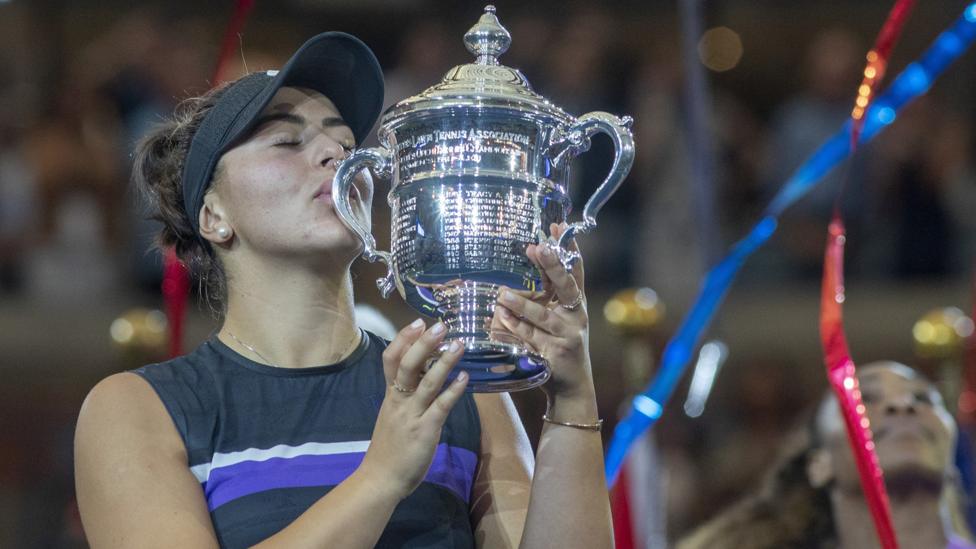
Andreescu Breaks the Curse After 2,300 Days in the Wilderness
Bianca Andreescu's return to the winner's circle ends a staggering 2,300-day drought that exposed the brutal reality of post-Slam success.
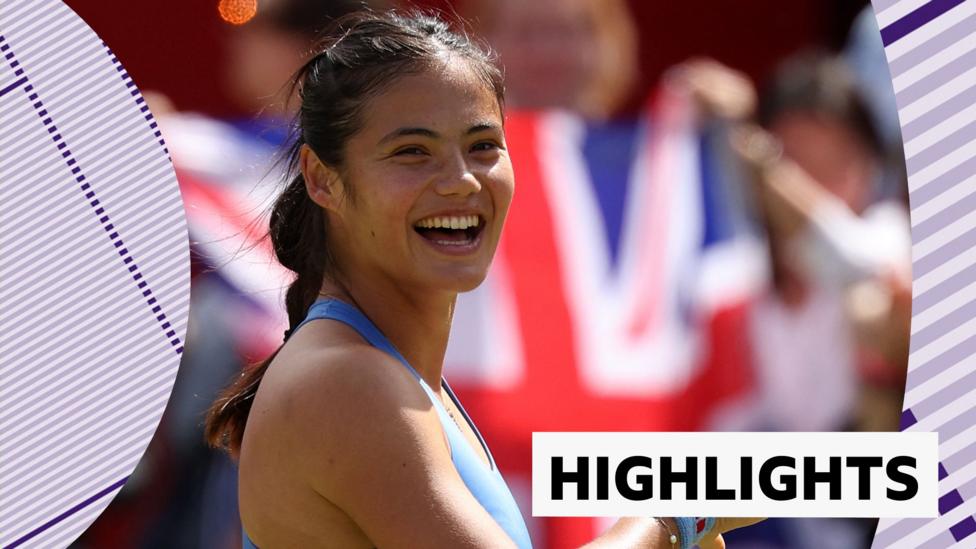
Raducanu's Quiet Renaissance Finds Its Voice at Queen's Club
A straight-sets dismantling of Cirstea signals something deeper than a routine win for Britain's most scrutinised talent.

The Serve That Heals: Anisimova Channels Serena to Rewrite Her Wimbledon Story
Amanda Anisimova fired 20 aces to survive Sofia Kenin and continue her redemptive Wimbledon journey.