The Serve That Heals: Anisimova Channels Serena to Rewrite Her Wimbledon Story
Amanda Anisimova fired 20 aces to survive Sofia Kenin and continue her redemptive Wimbledon journey.
The Ghost of Centre Court
There is a scoreline that lives rent-free in the mind of every tennis fan who watched last year's Wimbledon final. 6-0, 6-0. Iga Swiatek dismantling Amanda Anisimova in a women's championship match so lopsided it felt like a cruel joke. Fifty-four minutes. Twelve games. Zero games won. The kind of defeat that doesn't just sting a career, it redefines it.
Amanda Anisimova walked off Centre Court that day as a ghost. Not because she lost a Grand Slam final, that happens to great players. But because she didn't compete in one. The scoreline was an absence, a void where her game was supposed to be.
On Thursday at the All England Club, she returned to the grass not as a ghost, but as something far more dangerous: a woman with a weapon nobody saw coming.
Twenty Aces and a Conversation Nobody Expected
The knock on Anisimova has always been her forehand, her movement, her temperament under pressure. But her serve? Nobody talks about Amanda Anisimova's serve. If you poll the locker room, her peers will rave about her backhand, a liquid, single-handed stroke that draws comparisons to Justine Henin. They will not mention the serve. It has been a tool, functional, adequate. Nothing more.
That changed on Court 2 against former Australian Open champion Sofia Kenin.
Twenty aces. Not in a first-round mismatch against a qualifier. Against Kenin, a player with Grand Slam pedigree, tactical nous, and the stubbornness of someone who has rebuilt her career from the rubble of injuries and ranking slides. Kenin doesn't give you free points. You have to take them. Anisimova took twenty.
The match itself was a war. Anisimova took the first set, Kenin clawed back the second, and then came the gut-check moment: Anisimova trailed 3-1 in the third set, her Wimbledon campaign threatening to unravel in the same city where it had been destroyed twelve months earlier.
The Deciding Set: A Serve is Born
What happened next belongs in the category of sporting moments where a player discovers something new about themselves in real time.
Nine of her 20 aces came in the third set alone. Nine. When her back was against the wall, when the ghosts of that Swiatek demolition were surely circling, Anisimova reached for a weapon that had never been her calling card and made it the sharpest blade in her arsenal.
Her first-serve placement was surgical, painting the lines with a confidence that suggested this was no accident. This was a serve that had been built in practice, refined in training, and saved for the exact moment she needed it most. The speed numbers told the story: she was hitting spots on the wide serve to Kenin's forehand that left the American flat-footed, while the body serves jammed Kenin's two-handed backhand and produced weak returns that Anisimova devoured.
It was, as the Centre Court regulars murmured, a Serena kind of day.
Rebuilding After the Avalanche
To understand why this performance matters so much more than a second-round victory, you have to understand the road Anisimova has walked.
The American was a prodigy. She reached the Roland Garros semifinals at 17 years old in 2019, beating Simona Halep along the way. The tennis world anointed her as the next great American hope. Then life intervened in the cruelest possible way. Her father and longtime coach, Konstantin Anisimov, died suddenly that same year. She was 18 years old.
What followed was a period of grief, withdrawal, and struggle that is familiar to anyone who has watched talented young athletes navigate personal tragedy. Anisimova took extended breaks from the tour. She spoke openly about her mental health. She dropped in the rankings. The prodigy narrative evaporated.
But she came back. Slowly, stubbornly, match by match, she rebuilt. Her ranking climbed. Her game matured. And then, last summer, she surged through the Wimbledon draw with a brand of tennis that was more controlled, more strategic, and more complete than anything she had shown before. She reached the final. The dream was alive.
And then Swiatek put it to sleep in 54 minutes.
"I think the hardest part wasn't losing. It was that I didn't show up. I didn't play my tennis. I froze. And you carry that. You carry it into the next match, the next tournament. It sits in your chest."
Career by Numbers
- Born: August 31, 2001, Freehold Township, New Jersey
- WTA singles titles: 3
- Career-high ranking: No. 18
- Grand Slam best result: Roland Garros semifinal (2019), Wimbledon final (2025)
- Aces against Kenin: 20 (career-high at a Grand Slam)
- Aces in the third set: 9
- Age at first Slam semifinal: 17
- Backhand: Single-handed, widely regarded as best on WTA Tour
The Serena Comparison Nobody Asked For (But Everyone Needed)
Comparing anyone to Serena Williams is a fool's errand. There is no comparison. 23 Grand Slam singles titles. A serve that rewrote the physics of women's tennis. A presence that turned opponents into spectators.
But the comparison isn't about totality. It's about moments. And in that third set on Thursday, Anisimova produced a moment that was pure Serena: the summoning of a serve from somewhere deep inside, a refusal to let the match slip, a weapon deployed not with mechanical precision but with will.
Serena did this routinely. She would drift through a match, appear vulnerable, and then unleash a serving barrage that left opponents shaking their heads. It was an act of defiance disguised as athletic excellence. On Thursday, Anisimova channeled that same energy. The 20 aces weren't just a stat. They were a statement.
I am not the player you humiliated last year. I have something new.
What Comes Next
Anisimova moves into the third round of Wimbledon with momentum that goes far beyond a single match result. She has proven to herself that she has a serve capable of bailing her out of the deepest trouble. That knowledge is priceless.
The draw ahead will only get tougher. The seeds are beginning to separate from the field, and the grass court specialists are sharpening their tools for the second week. Anisimova's backhand will always be her signature. But if Thursday was any indication, the serve is becoming something else entirely: a co-star.
For a player who has carried the weight of grief, expectation, and the most devastating scoreline in recent Wimbledon history, this was more than a win. It was a psychological breakthrough. The kind that changes the trajectory of a tournament.
There will be tougher matches ahead. There always are at Wimbledon. But Amanda Anisimova walked onto the grass this week as a woman with a score to settle. And in twenty thunderbolts from the service line, she began to settle it.
The ghost of 6-0, 6-0 hasn't vanished. But it's fading. One ace at a time.
Editorial Integrity
This is an original SportPulse article written by our editorial team. All content is independently researched, written, and reviewed by our writers and editors before publication. We do not publish copied, aggregated, or syndicated content.
SportPulse is committed to original sports journalism. Read our editorial policy or contact us with any questions.
More Like This
All tennis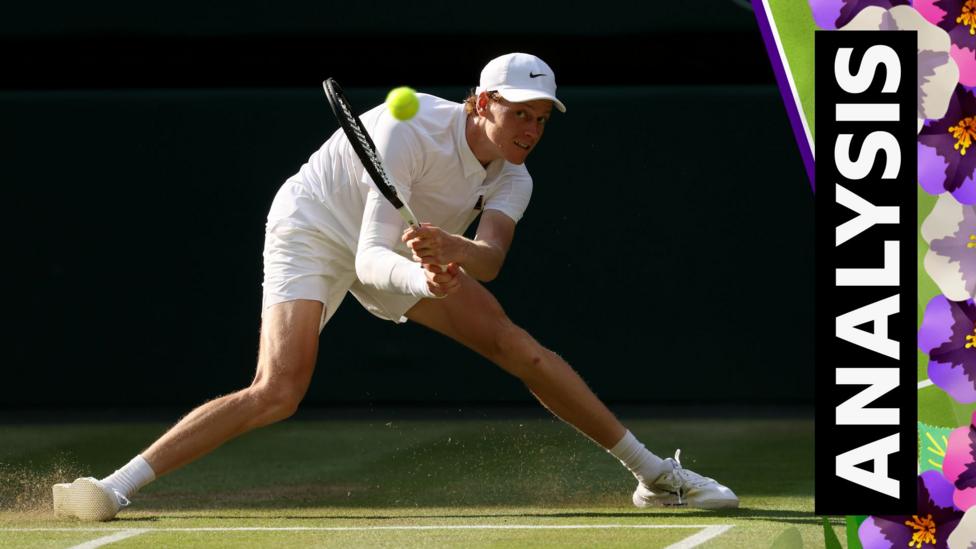
Sinner Crowned King of Centre Court in Wimbledon Thriller
Jannik Sinner dismantled Alexander Zverev on grass's grandest stage, delivering a tactical masterclass under the Centre Court roof.
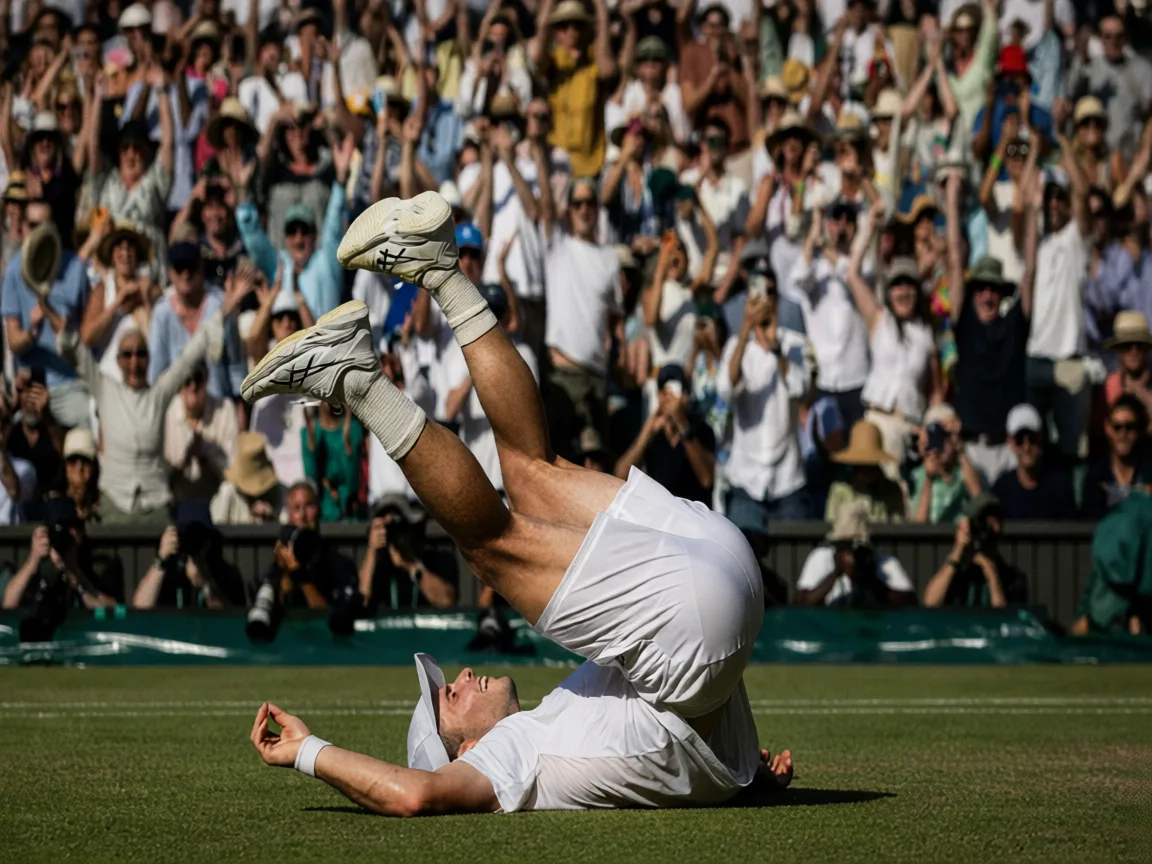
Arthur Fery's Wimbledon Semi-Final Run Stuns Centre Court
British wildcard Arthur Fery transformed from qualifier to Centre Court sensation, reaching the Wimbledon semi-finals with poise beyond his years.
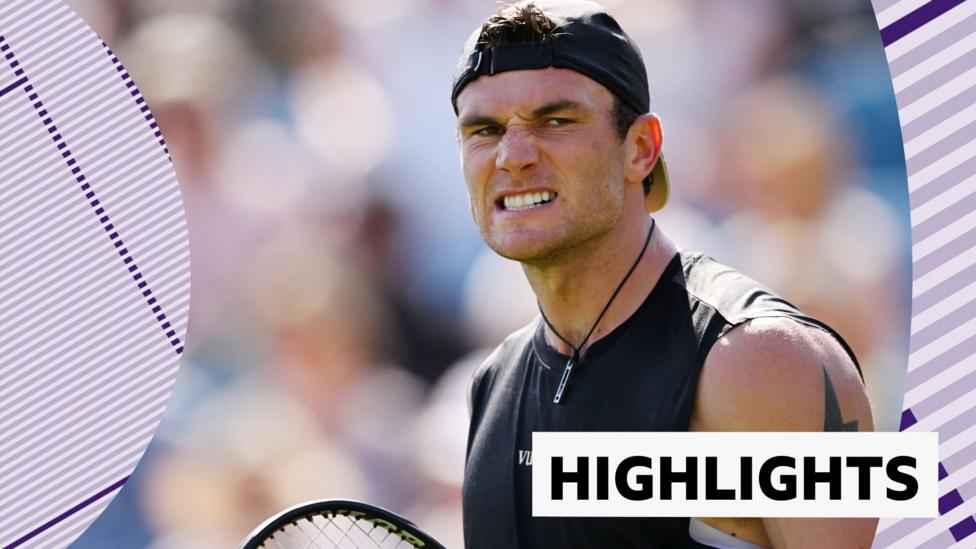
Draper Battles Past Giron In Injury Comeback At Eastbourne
Jack Draper shook off two months of knee misery to grind down Marcos Giron and kickstart his grass-court season.