Sinner Crowned King of Centre Court in Wimbledon Thriller
Jannik Sinner dismantled Alexander Zverev on grass's grandest stage, delivering a tactical masterclass under the Centre Court roof.
The Coronation on Centre Court
Jannik Sinner stepped onto Centre Court for the Wimbledon men's final carrying the burden of a nation and the weight of his own staggering expectations. He walked off the most hallowed lawn in tennis as its newest champion. The world number one dismantled Alexander Zverev in a match that was less a contest and more a clinical dissection of grass-court tennis. Sinner captured the title with a performance that will be replayed for decades, cementing his status as the undisputed king of the current era.
The scoreline tells a story of pure dominance. Sinner barely faced a hiccup across three sets, breaking the German powerhouse at will. The Italian's serve was unbreakable, his returning was relentless, and his movement was nothing short of supernatural. Centre Court, packed to the rafters and buzzing with anticipation, found itself witnessing a masterclass rather than a battle.
For Zverev, the defeat marks another painful stumble at the final hurdle of a Grand Slam. The German has now contested multiple major finals without breaking his duck, and the ghosts of those missed opportunities hung heavy over his shoulders by the second set. Sinner simply did not allow him a breath.
Breaking Down the Blueprint
Tennis purists immediately pointed to oneStatistic that defined the afternoon: Sinner won a staggering percentage of his first-serve points. He landed 72% of his first serves in play, winning an ungodly 85% of those points. Against a returner of Zverev's caliber, those numbers are almost fictional. Sinner was never broken, facing just a single break point across the entire championship match.
Former British number one Tim Henman was succinct in his assessment of the Italian's display from the BBC studio. He zeroed in on Sinner's court positioning and his relentless pressure. To Henman, the newly minted champion played the match on his own terms from the very first ball.
"He was so aggressive with his positioning. He dictated play from inside the baseline and never allowed Zverev to find any rhythm. His movement was extraordinary, far beyond anything we typically see from a player of his height on grass."
The grass-court season demands specific adjustments that separate natural grass players from those who merely tolerate the surface. Sinner has clearly evolved into a natural. His movement, once a question mark on the slicker lawns, has become arguably his greatest weapon. He slides on grass with a controlled aggression that defies the surface's reputation for treacherous footing.
The Grass Court Transformation
Todd Woodbridge, the Australian doubles legend with unparalleled insight on the grass, pinpointed the sliding as the decisive factor. Sinner's willingness to slide on a surface that punishes the slightest hesitation allowed him to maintain a.low center of gravity. It gave him the leverage to redirect pace and neutralize the brutal Zverev forehand. The German's biggest weapon was rendered toothless.
The numbers back up Woodbridge's observation. Sinner hit 32 winners to Zverev's 18. He committed just 12 unforced errors across nearly three hours of high-octane tennis. Those metrics are absurd for a final played at this tempo and under this pressure. The Italian was economically devastating.
Jamie Murray, a renowned specialist on the courts at the All England Club, broke down the psychological battle. Murray understood better than most the emotional weight of a Wimbledon final. The evening before the match, Murray noted, was often far more agonizing than the match itself. For Sinner to arrive with such clarity of purpose and execute such a flawless tactical plan was testament to his phenomenal composure.
"The occasion can swallow you whole. Sinner didn't just handle the pressure, he thrived on it. He played as if the Wimbledon title was always destined to be his, as if there was no doubt that would ever be allowed to creep in."
Zverev's Unanswered Questions
While Sinner ascends to grass-court royalty, Zverev is left to confront the most agonizing question in tennis. The German powerhouse possesses every conceivable weapon required to dominate the sport. His serve is among the most explosive on the ATP Tour. His forehand, when timed cleanly, can blast anyone off the court. Yet the biggest titles remain maddeningly elusive.
The tale of the tape from the final reveals a player who struggled to impose himself. Zverev won only 67% of his first-serve points, a catastrophic number for a man who stands six-foot-six and relies heavily on his delivery. He created just one break point. That singular opportunity vanished in a blur of a Sinner ace.
The tactical matchup exposed Zverev's limitations on grass. The low bounce of the surface negates the kick on his second serve. It forces him to bend lower than he is naturally comfortable doing, disrupting his ball striking. The German's movement, adequate on clay and hard, was exposed by Sinner'sceaseless redirection of the ball.
The Atmosphere and the Aftermath
The post-match atmosphere on Centre Court was electric yet tinged with the deference of a coronation. The Royal Box rose to its feet as Sinner climbed into the players' box, embracing his team in a huddle of raw, unfiltered emotion. His coach was visibly moved, the culmination of years of meticulous planning and brutal training cycles captured in a single tearful embrace.
Back in the locker room, the scene was strikingly subdued but deeply respectful. Zverev sat motionless at his locker, staring at his phone before finally reaching for his kitbag. Across the hall, the Sinner camp was cracking open bottles of water, not champagne, still processing the magnitude of the acclaim. A tournament official quietly entered and delivered the runners-up runner-up plate, placing it on the bench with a gentle, almost apologetic nod.
Sinner's Evolution and the Days Ahead
The triumph at the All England Club represents the crowning achievement of Sinner's relentless pursuit of perfection. His journey on grass has been years in the making, a slow and steady climb that mirrored his meteoric rise up the rankings. Grass demands patience, adaptive footwork, and an intuitive understanding of bounce and speed. Sinner has spent the past two seasons honing those elements.
The statistics from his grass-court campaign this year are staggering. He won 12 consecutive matches on the surface leading into the final, dropping only a single set. His hold percentage on grass climbed above 90% for the season, a number approaching the mythical territory once occupied by grass-court legends. Sinner is no longer merely a hard-court specialist. He is now a genuine multi-surface threat.
With another Grand Slam title secured, the conversation around Sinner shifts entirely. The next goal is extending his reign at the summit of the men's game. The upcoming hard-court swing in North America presents an opportunity to consolidate his ranking position. The US Open looms large on the horizon, where Sinner returns as the defending champion.
What It Means
The Wimbledon title marks more than just another trophy for Sinner's ever-expanding cabinet. It signifies the completion of a tactical and physical metamorphosis. He has conquered the one surface that historically posed the greatest threat to his baseline-orientated, flat-hitting game. The psychological barrier of proving himself on grass has been obliterated entirely. Sinner is now the hunted on every surface and on every continent.
For Zverev, the Grand Slam narrative grows increasingly bleak and difficult to stomach. The German must return to the drawing board and find a way to translate his undeniable talent into the sport's most significant prizes. Every failed final deepens the psychological scar tissue that makes the next attempt even harder.
The era of Sinner is no longer approaching. It has arrived, and it is dressed in the pristine whites of a Wimbledon champion.
Editorial Integrity
This is an original SportPulse article written by our editorial team. All content is independently researched, written, and reviewed by our writers and editors before publication. We do not publish copied, aggregated, or syndicated content.
SportPulse is committed to original sports journalism. Read our editorial policy or contact us with any questions.
More Like This
All tennis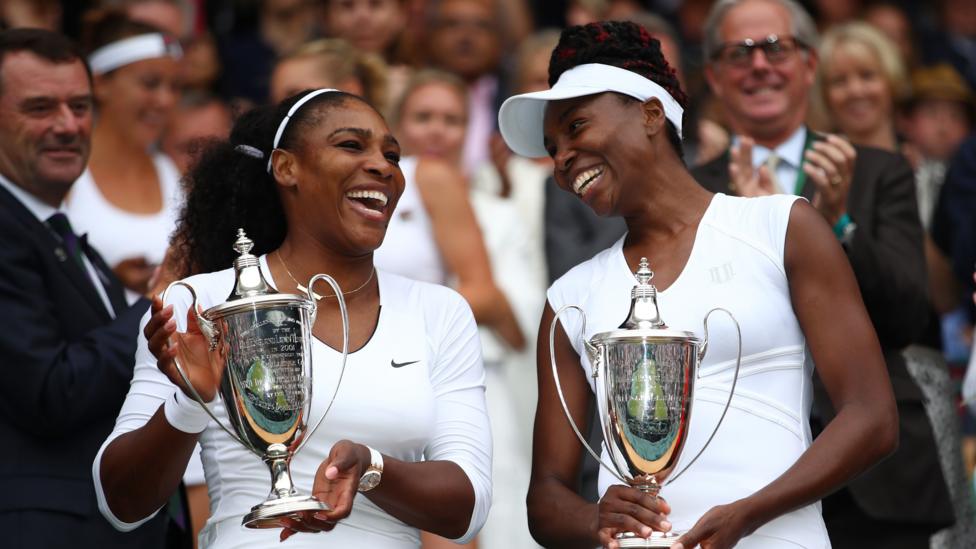
Williams Sisters Back on Wimbledon Grass for Saturday Doubles
Serena and Venus Williams are set to reunite on Wimbledon's doubles stage Saturday, adding star power to an already packed order of play.
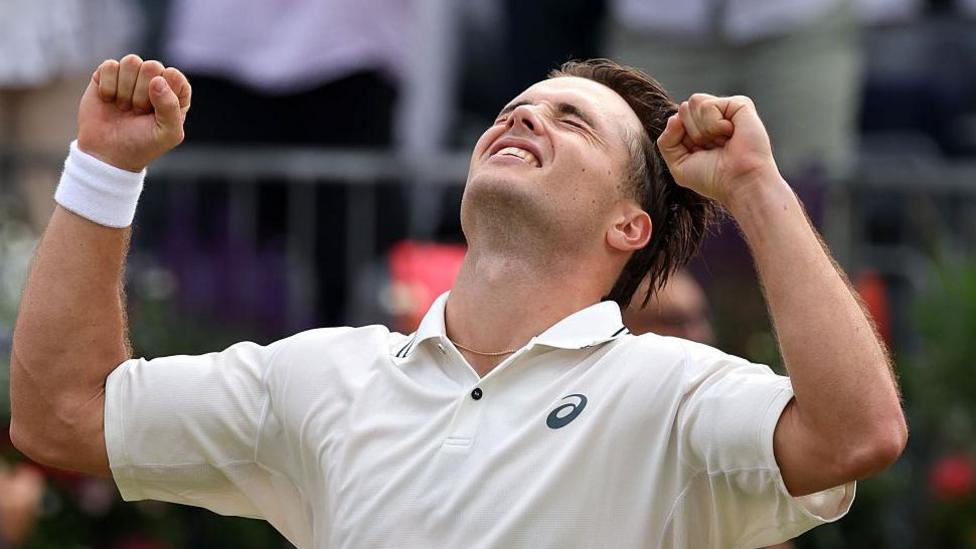
Fery Shocks Mannarino to Reach Queen's Quarters
British wildcard Arthur Fery delivered a career-best performance at Queen's Club, upsetting Adrian Mannarino to keep home hopes alive.
12,000 Abusive Posts: The Silent Opponent Crushing Women's Tennis
Female tennis players faced 12,000 abusive posts in 2025, a digital plague weaponizing anonymity into a career-threatening assault.