Draper's Wimbledon Dream Shattered by Recurring Arm Injury
Britain's brightest young talent withdraws from Wimbledon before facing Fritz, deepening a crisis of fitness that threatens his career trajectory.
A First-Round Blockbuster That Won't Happen
The draw ceremony at the All England Club had delivered one of those delicious first-round pairings that makes Wimbledon's opening Monday electric. Jack Draper, the 23-year-old British left-hander ranked inside the world's top 30, was set to face sixth seed Taylor Fritz under the gaze of a Centre Court crowd hungry for homegrown heroics. The match had everything: a rising star against an established Grand Slam contender, national pride on the line, the kind of narrative that fuels a fortnight of storytelling.
It will not happen. Draper withdrew on the eve of the tournament after a recurrence of the arm injury that has stalked him for the better part of 12 months, dealing a crushing blow not only to his own season but to British hopes at a Championships already thin on credible home contenders.
"This is the absolute worst moment in the last 12 months," Draper said, his words carrying the weight of a young athlete who knows exactly how fragile momentum can be in professional tennis.
The Injury Cycle That Won't Break
To understand the full devastation of this withdrawal, you have to trace the timeline. Draper's arm first became a serious concern in the latter stages of 2024, when recurring pain forced him off the tour and into a prolonged rehabilitation period. The injury bled into 2025, wiping out months of competitive tennis at a stage of his career when match fitness and ranking points are currency you cannot afford to lose.
He returned at Eastbourne last week, his first tournament appearance in two and a half months, having also battled knee tendonitis during his absence. The comeback was supposed to be the launchpad for Wimbledon. Instead, Eastbourne became another false summit. The arm flared again, and the decision to pull out was made swiftly once it became clear that competing at the All England Club would risk further, potentially long-term damage.
This is not a minor setback. This is a pattern. Draper has now withdrawn from or missed a staggering number of events over the past year, and each recurrence chips away at the physical foundation a professional tennis player needs to compete at the highest level. The arm is not healing properly, or it is healing and breaking again under the stress of elite competition. Either diagnosis is deeply concerning.
The Fritz Match That Got Away
The cruelty of the draw was not lost on anyone. Fritz, the world number six and one of the most dangerous hard-court players on the planet, would have been a stern test, but it was precisely the kind of match Draper needs. Grand Slam tennis is forged in these first-round crucibles, where a rising player can announce themselves on the biggest stage. Draper's left-handed power, his ability to generate awkward angles and his natural comfort on grass had given British fans genuine reason to believe he could trouble the American.
Fritz, for his part, receives a walkover into the second round. A free pass at Wimbledon is a gift no player takes for granted, but it arrives without the competitive sharpness that a hard-fought opening match provides. Fritz will need to find his rhythm quickly against whatever lucky loser or qualifier replaces Draper in the draw.
For British tennis, the optics are bleak. With Andy Murray long retired from singles competition and no other home player consistently threatening the business end of Grand Slams, Draper was supposed to be the torchbearer. He has the game, the temperament and the flair to captivate a Centre Court crowd. What he does not have, right now, is a body that can sustain the demands of a two-week Grand Slam.
What the Numbers Tell Us About Draper's Fragility
The statistical picture underlines the severity:
- Missed approximately 5 months of competitive tennis across the past 12 months due to arm and knee injuries
- One completed tournament (Eastbourne) in the last two and a half months
- Career Grand Slam main draw record remains limited, with no deep runs at Wimbledon to date
- Has struggled to string together consecutive weeks of match play since breaking into the top 30
- His ranking, once on a steep upward trajectory, has plateaued as a direct consequence of enforced absences
These are not numbers that tell the story of a player in decline. They tell the story of a player who cannot get on court often enough to show what he is capable of. The talent is not in question. The durability very much is.
The Physical Toll on a Modern Tennis Body
Draper's struggles are a reminder of how brutal the modern tennis calendar is on young bodies. The sport demands explosive serving, repetitive rotational forces on the arm and shoulder, and relentless movement across hard, clay and grass surfaces with barely a pause between seasons. Players who break through at a young age, as Draper did, often discover that the transition from promising junior to sustained tour professional is paved with injuries.
The arm injury, in particular, is one that tennis players dread. Whether it manifests as a stress reaction in the bone, tendon irritation or a more complex soft tissue issue, the arm is the engine of every serve and forehand. Rush back too soon and you risk chronic problems. Wait too long and your ranking evaporates, your confidence fades and the young players behind you on the Challenger circuit overtake you.
Draper is caught in precisely this vice. Eastbourne was supposed to be the careful, measured return. Instead, it exposed how far from full fitness he truly remains.
The Broader British Picture
Wimbledon without a genuine British contender in the men's draw is not a new phenomenon, but it stings every time. The All England Club crowd is partisan by nature, roaring for any player draped in Union Jack branding or speaking with a Home Counties accent. Draper had become the focus of that energy, the player fans believed could one day challenge for the title.
With his withdrawal, British hopes rest on a thin supporting cast. There will be wildcard entrants and lower-ranked players who will receive thunderous backing from the stands, but none possess Draper's combination of power, variety and big-match potential. The gap between aspiration and reality at British tennis, a perennial talking point, has widened again.
The Lawn Tennis Association will be watching Draper's recovery with intense interest. He represents the single biggest investment in British men's tennis for the next decade. Getting this rehabilitation right, even if it means sacrificing the rest of the grass-court season, is paramount.
"He's a special talent. Everyone in the sport knows that. But talent doesn't mean anything if you can't stay on the court." — A sentiment echoed widely across the British tennis community this week.
What Comes Next
The immediate question is whether Draper can recover in time for the North American hard-court swing, which begins in earnest with the Masters 1000 events in Montreal and Cincinnati in August before the US Open at Flushing Meadows. Given the recurring nature of this arm issue, a cautious timeline seems the only responsible path.
If the injury is managed correctly, there is still a scenario where Draper returns fully fit for the US Open and uses the autumn to rebuild his ranking and confidence heading into 2026. If the arm continues to betray him, the conversation shifts from comeback timelines to long-term management, a far more unsettling prospect for a player who should be entering his peak years.
For now, the lawns of the All England Club will host their fortnight of drama without one of the sport's most exciting young talents. The first-round blockbuster between Draper and Fritz exists only as a what-if, another entry in tennis's long catalogue of matches that never were.
Draper will watch from the sidelines, rehabilitating once again, hoping that this withdrawal is the last in a cycle that has already cost him too much. The arm, stubborn and uncooperative, holds the key to everything that comes next.
Update:
新项目增加了杰克·德雷珀表达失望的直接引语,但核心退出事件与现有文章相同。
Editorial Integrity
This is an original SportPulse article written by our editorial team. All content is independently researched, written, and reviewed by our writers and editors before publication. We do not publish copied, aggregated, or syndicated content.
SportPulse is committed to original sports journalism. Read our editorial policy or contact us with any questions.
More Like This
All tennis
Guess the Tennis Star: The Art of the Puzzle
A daily trivia game challenges fans to identify tennis stars from minimal clues, but the real test is knowing the legends behind the numbers.

The Making of Jannik Sinner: How the Ice Man Conquered Tennis
From Alpine ski slopes to the apex of men's tennis, Jannik Sinner's relentless pursuit of perfection redefined the modern baseline game.
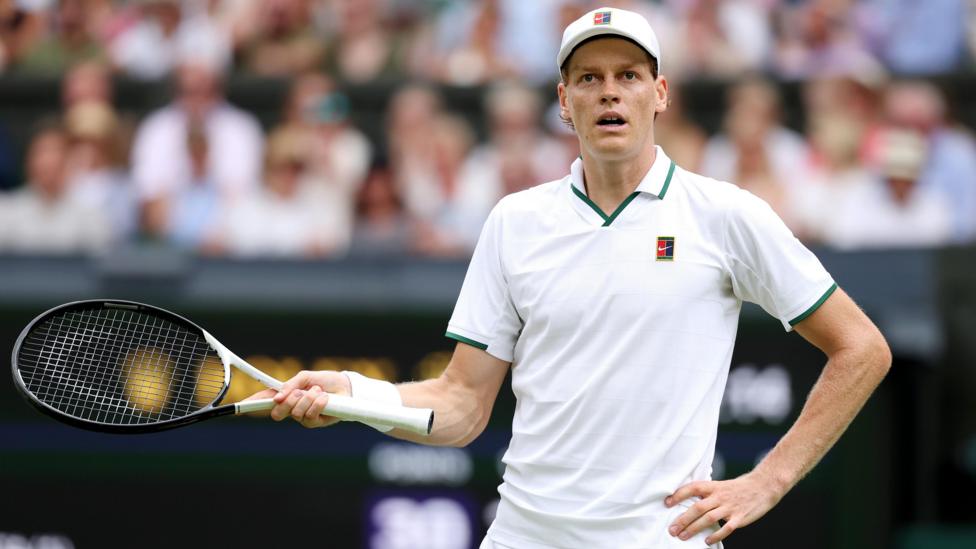
Sinner Survives Stiff Borges Challenge in Tricky Wimbledon Opener
The defending champion navigates a tricky second-round encounter against a fearless Portuguese opponent on Centre Court.