Guess the Tennis Star: The Art of the Puzzle
A daily trivia game challenges fans to identify tennis stars from minimal clues, but the real test is knowing the legends behind the numbers.
A Single Clue, A Thousand Memories
It starts with a silhouette. A single fact. A number on a screen and the faintest outline of a career that once moved millions. "Will you get today's tennis player in as few attempts as possible?" The prompt is deceptively simple. Yet behind those words lies an entire architecture of memory, demanding that fans excavate decades of tennis history, statistics, and emotion to pinpoint one identity.
This is the daily ritual of Guess the Tennis Star, a puzzle that strips the sport down to its bones and asks you to rebuild a legend from fragments. No highlight reel. No roaring crowd. Just the cold geometry of data and the warm pulse of recollection.
The Blueprint of a Career
Every great tennis player is constructed from moments that calcify into myth. Consider the architecture of a career. 23 Grand Slam singles titles. You already know who that is. The number is a fingerprint. It belongs to Serena Williams, and it immediately conjures the image of a devastating serve, an unmistakable competitive glare, and a legacy that transcended the white lines of a court.
The beauty of these puzzles is that they force the fan into the role of archivist. When you are given 14,000 career aces or 310 weeks at world No. 1, you are not merely guessing. You are navigating a labyrinth. You are sifting through the pantheon. You dismiss the one-slam wonders, the perpetual finalists, and the hard-court specialists. You zero in on the player whose very existence redefined what was possible. The puzzle isolates the essence of greatness.
"Tennis is a sport of lonely figures. You remember the stance, the grunt, the way they walked to the chair. The numbers just confirm what the eye already knew."
The Identity Behind the Data
Flashes of a Forgotten Era
Let us take a different path through the maze. Suppose the clue reveals a player who won 8 Grand Slam singles titles across the 1980s, possessing a lethal forehand and a rivalry that defined a golden era. The mind races. Ivan Lendl? Mats Wilander? The data is the thread, and you must pull it through the eye of a needle woven from decades of matches.
Or perhaps the clue leans into the women's game. 43 WTA singles titles. A career Grand Slam. A pioneering serving motion that became instantly recognizable. Arantxa Sánchez Vicario? No, the slams do not match. The mind edges closer. Steffi Graf. The puzzle resolves itself in a flash of recognition, a brief cognitive reward that mimics the satisfaction of a perfectly struck passing shot.
These puzzles are not merely tests of memory. They are exercises in narrative compression. They take the sprawling, chaotic, often beautiful history of professional tennis and distill it into a code. Cracking the code requires more than knowledge. It requires fluency in the unwritten language of the sport. The language of rivalries, of surfaces, of the subtle arms race between serve and return that has defined every era.
Career by Numbers
To appreciate the depth of these guessing games, one must consider the sheer density of information available for every notable player. The puzzle makers do not invent the challenge. They merely organize it. Here is what a career looks like when reduced to its skeletal form, ready to be puzzled out.
- 20 Grand Slam singles titles, including a record 9 at the French Open
- 209 weeks ranked as the world No. 1
- 92 ATP singles titles across all surfaces
- An Olympic gold medal in singles and a career Golden Slam in 2010
These numbers belong to Rafael Nadal. But to the puzzle solver, they are a sequence of logical deductions. Nine French Opens eliminates everyone except the King of Clay. The equation balances. The silhouette gains a face, a left-handed forehand, and an unyielding ritual of toweling off and adjusting water bottles.
The Psychology of the Puzzle
The Deductive Mindset
There is a distinct psychology to solving these athletic riddles. The initial guess is often a stab in the dark, a willingness to sacrifice a token attempt to gauge the game's logic. The system responds with color-coded hints. Green for a correct attribute. Amber for proximity. Red for a complete miss. It is a dialogue between the fan and the algorithm.
The real experts do not guess wildly. They triangulate. They use the opening clue to establish a boundary, then use the feedback to narrow the parameters. If the player is retired but active within the last two decades, the field shrinks. If the player never won Wimbledon, a group of icons is instantly removed from the board. He becomes the prime suspect. The puzzle becomes a work of elimination.
Why These Games Endure
In an era of limitless content, where every match is available on demand and every statistic can be retrieved in milliseconds, trivia games offer something rare. They offer friction. They demand effort. They ask the fan to pause, to think, and to remember.
Tennis, more than most sports, is built on the loneliest of legacies. A single player stands across the net. They win alone. They lose alone. Their career is a progression of isolated confrontations. To reduce that career to a puzzle is to acknowledge the sport's inherent drama. It is to say that an identity can be deduced from a handful of numbers, that greatness leaves a trail of clues.
The guessing game persists because it taps into the fundamental joy of being a fan. The game asks you to prove your devotion. Not with a purchased ticket, but with recalled knowledge. It asks you to honor the history by remembering it correctly.
The Hidden Silhouette
The next time you see that prompt, that challenge to find today's mystery player, consider what it truly represents. It is not a game. It is a monument to the sport's relentless march through time. Each silhouette is a chapter. Each uncovered identity is a reminder that tennis never forgets its own.
So take your guess. Consult the numbers. Weigh the clues. The answer is there, waiting behind the screen, a legend reduced to a puzzle, eager to be remembered. The court is yours. The puzzle is set. All that remains is to solve it in as few attempts as possible.
For SportPulse, this is Carlos Herrera.
Update:
新文章是同一网球猜谜游戏的第七期,内容几乎相同但标号不同。
Editorial Integrity
This is an original SportPulse article written by our editorial team. All content is independently researched, written, and reviewed by our writers and editors before publication. We do not publish copied, aggregated, or syndicated content.
SportPulse is committed to original sports journalism. Read our editorial policy or contact us with any questions.
More Like This
All tennis
Paolini Dazzles, Fery Battles: Wimbledon Day Six's Defining Moments
Day six at Wimbledon delivered breathtaking shot-making from Jasmine Paolini and British qualifier Arthur Fery on a dramatic Saturday.

The Upset That Echoes: Boulter Shatters Rybakina's Queen's Campaign
Katie Boulter's stunning victory over top seed Elena Rybakina signals a seismic shift ahead of Wimbledon.
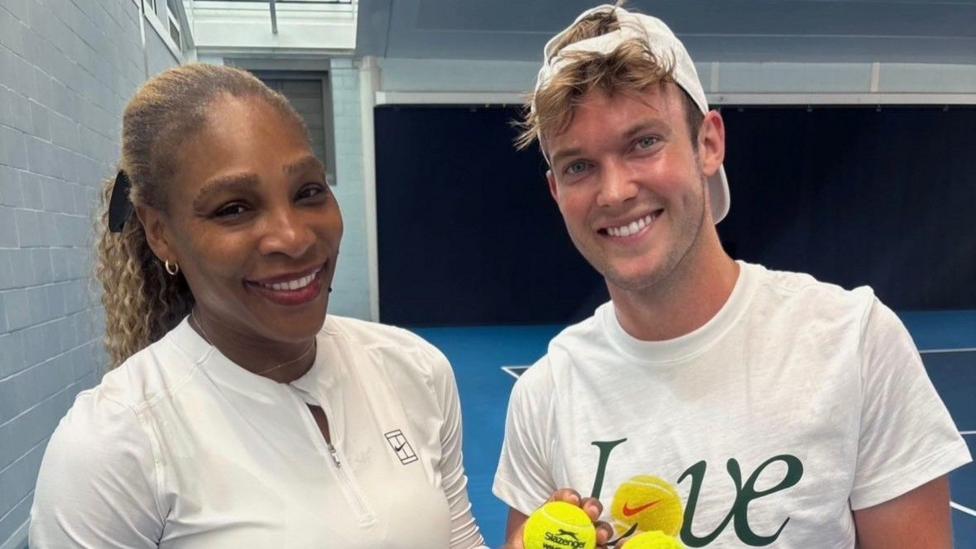
The Man Behind the Curtain: Serena Williams' Secret Keeper Speaks
Serena Williams' British hitting partner kept tennis' biggest secret — now he's telling his story.