The Upset That Echoes: Boulter Shatters Rybakina's Queen's Campaign
Katie Boulter's stunning victory over top seed Elena Rybakina signals a seismic shift ahead of Wimbledon.
There is a particular quality to grass court upsets that sets them apart from every other surface in tennis. On clay, the slow erosion of a favourite's dominance unfolds over hours, almost imperceptibly. On hard courts, the decisive blow tends to arrive in clean, statistical inevitability. But on grass, the shift happens in the space between one footfall and the next. The ball skids. The margin thins. And suddenly the scoreboard reads like a sentence no one expected to write.
Katie Boulter delivered that sentence at Queen's Club, dismantling top seed Elena Rybakina to book her place in the semi-finals. The British No. 1 did not merely survive against the 2022 Wimbledon champion. She overwhelmed her.
A Day the Rankings Forgot
In tennis, seedings are meant to be a prophecy. They compress an entire season of results into a number and stamp it beside a name, whispering: this is how the story should go. Rybakina arrived at Queen's as the top seed, the most decorated player in the draw, a woman whose game was supposedly built for these lawns. She won Wimbledon three summers ago with a serve that turned the grass into a launchpad and a forehand that arrived like an overdue reckoning.
But prophecy and tennis have never been on speaking terms.
Boulter has spent the better part of two seasons quietly assembling the kind of game that punishes complacency on fast surfaces. Her serve, once considered a liability at the highest level, has become a genuine weapon. Her movement on grass, always instinctive, has sharpened into something more deliberate, more clinical. She no longer looks like a player hoping to compete with the elite. She looks like one who belongs among them.
The Geometry of an Upset
What makes Boulter's victory so significant is not merely that it happened, but how it exposes the fragile architecture of Rybakina's current form. The Kazakh star's season has been a study in turbulence. Coaching upheavals, fitness questions, and the peculiar psychic weight of defending a legacy on the surface where she first forged it have all conspired to make her game look intermittently brilliant but structurally uncertain.
Against Boulter, those cracks did not hide.
Grass court tennis is the most unforgiving laboratory in the sport. There is nowhere to conceal a slow first step, no room to recover from a half-second of indecision on the return. The ball stays low. The bounce misbehaves. And players who grew up on these surfaces, who learned to read the skid before they learned to read the drawsheet, carry an advantage that no amount of raw power can fully neutralise.
Boulter grew up on British grass. It is in her muscle memory, her footwork patterns, her understanding of how a sliced backhand dies on this surface like a candle flame in wind. When the moment arrived, she did not flinch. She pressed forward, took the ball early, and refused to let Rybakina settle into the metronomic rhythm that makes her serve so devastating.
The British Summer, Reimagined
There was a time, not so long ago, when British women's tennis at Wimbledon amounted to a single name and a set of expectations that no one else could bear. That era is over. The landscape has shifted beneath our feet, and Boulter stands at the centre of that tectonic movement.
Her rise has not been the overnight, fluorescent kind. It has been earned in qualifying draws, in Challenger events, in the quiet grind of a player who understood that talent alone is not currency in professional tennis. You must also have patience, and resilience, and the willingness to lose badly and return the next morning.
Now she is beating Wimbledon champions on the doorstep of the Championships. The symbolism is not subtle, and Boulter does not need it to be.
What Rybakina Must Confront
For Rybakina, this defeat is more than a blip. It is a data point in a growing pattern that suggests her grass court credentials, once considered among the most formidable in the game, are no longer automatic. The serve remains a marvel. The ball striking, when it clicks, is still among the most aesthetically complete in women's tennis. But tennis is not an art gallery. It is contested in moments of decision, and in those moments, Boulter was the sharper mind.
Rybakina's team will know that Wimbledon is now less than a fortnight away. The Championships demand not just form but conviction, and conviction is the first casualty of a loss like this. She will need to find it quickly, because the draw at the All England Club will not offer gentler opponents, and the grass will not wait for her to remember who she was.
The Semi-Final and Beyond
Boulter's reward is a semi-final berth and the knowledge that she has just beaten one of the most dangerous grass court players alive. But the tournament is not finished, and the deeper she goes, the louder the expectation grows.
British crowds are not known for their patience. They are known for their hunger, and right now they are starving for a homegrown contender to make a legitimate run at Wimbledon. Boulter has the game. She has the temperament. The question is whether she can sustain this level across the compressed, unforgiving fortnight that defines careers.
"You don't beat someone like Rybakina on grass by accident. You do it by knowing exactly who you are on that surface."
After the match, Boulter dedicated her stunning victory to the crowd who stayed late to witness her quarter-final battle, saying, "This win goes to the crowd." The answer, one suspects, is already written somewhere in the way Boulter moved through this match. Not with the wild-eyed aggression of an underdog swinging freely, but with the measured certainty of a player who has spent years preparing for precisely this moment.
A Threshold Crossed
Queen's Club has always been a place where narratives bend. The grass is immaculate, the setting intimate, and the tennis, when it delivers, feels almost private in its intensity. Boulter's victory over Rybakina belongs to that tradition. It is the kind of result that changes the arithmetic of a season, that forces commentators to revise their scripts and opponents to study new footage.
Wimbledon begins soon. The lawns are being mown to their exacting specification. The seedings will be printed, the predictions will be made, and somewhere in the draw, Katie Boulter's name will sit with a weight it did not carry a year ago.
She earned that weight today. On grass. Against a champion. With the kind of performance that does not ask for respect but demands it.
The summer has only just begun, and already it has its first genuine story.
Updated: 2026-06-27 — Added Boulter's post-match dedication of her win to the crowd.
Update:
新文章合并了Boulter和Raducanu的比赛报道,核心事实与已发布的两篇文章基本一致
Editorial Integrity
This is an original SportPulse article written by our editorial team. All content is independently researched, written, and reviewed by our writers and editors before publication. We do not publish copied, aggregated, or syndicated content.
SportPulse is committed to original sports journalism. Read our editorial policy or contact us with any questions.
More Like This
All tennis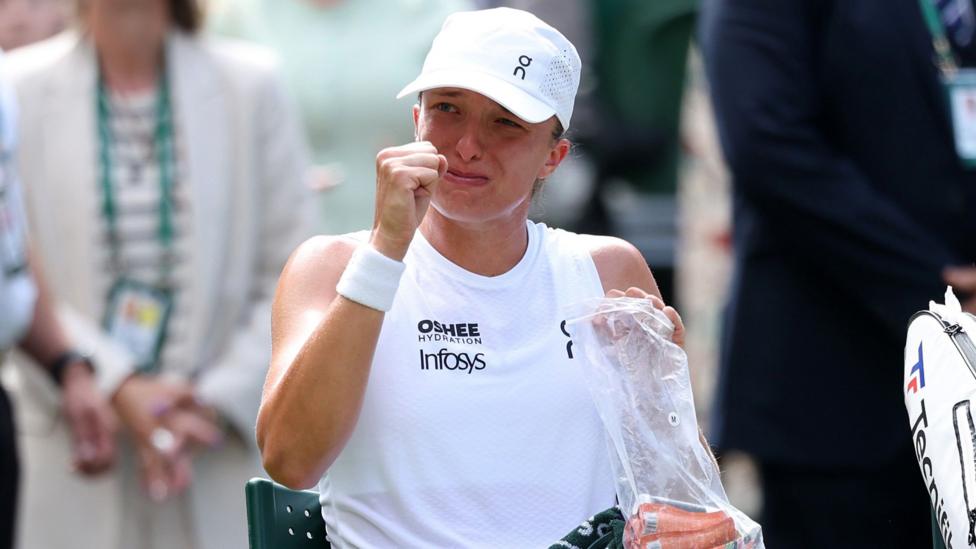
Tears and Tenacity: Swiatek Survives Opening-Round Wimbledon Scare Against Townsend
Iga Swiatek's title defence nearly derailed in round one as the world No. 1 battled tears and a fearless Taylor Townsend.

The Merger That Wasn't: Why ATP-WTA Unity Just Collapsed
A historic merger between tennis tours is dead, leaving the WTA facing brutal budget cuts and hard questions about equity.
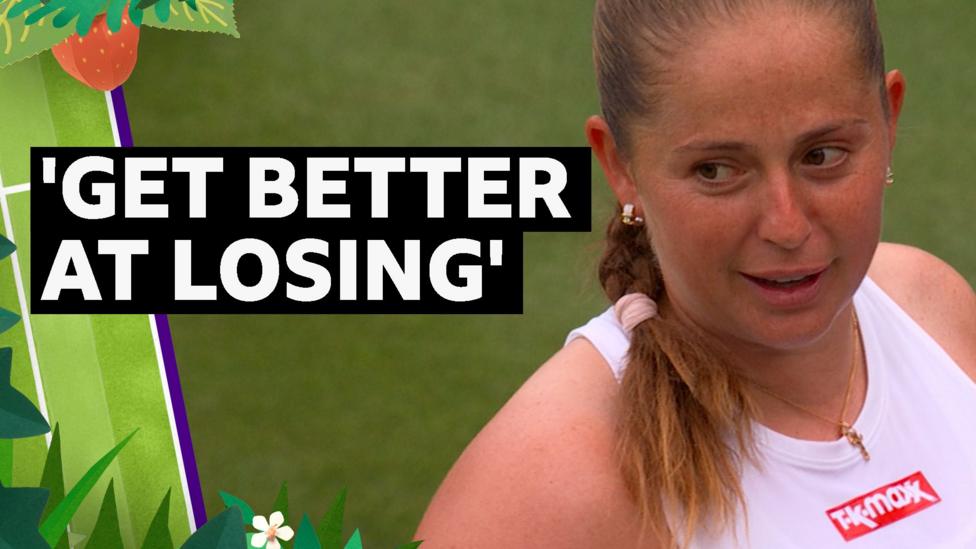
Tempers Erupt: Ostapenko-Arevalo Reach Semis Amid Fiery Time Violation Clash
A straight-sets Wimbledon mixed doubles win descends into chaos as a late time violation sparks a bitter post-match confrontation over slow play.