The Merger That Wasn't: Why ATP-WTA Unity Just Collapsed
A historic merger between tennis tours is dead, leaving the WTA facing brutal budget cuts and hard questions about equity.
There was a moment last year when it felt like the sport's most stubborn wall was finally about to come down.
For decades, men's and women's professional tennis have operated as parallel universes, sharing arenas but not balance sheets, sharing history but not infrastructure. The proposed joint commercial venture between the ATP and WTA Tours was supposed to change that, pooling media rights and commercial operations into a single, unified enterprise. It was the closest the sport had come to genuine structural unity.
Now that moment has passed. Negotiations have broken down indefinitely.
The catalyst, as ever in these stories, was money. Specifically, the terms of the proposed revenue share. The WTA, which had appeared ready to sign a deal many believed was nearly finalised last year, ultimately walked away. The women's game concluded the arrangement did not sufficiently protect its financial future.
The fallout is immediate and severe. The WTA now faces significant cuts to its operational budget, a consequence that will ripple through tournament structures, player services, and grassroots investment. The very organisation that pushed for unity now stares down a period of austerity.
The Deal That Was Almost Done
Picture the scene from late last year: lawyers in boardrooms, executives on transatlantic calls, draft agreements circulating with tracked changes. The joint venture was framed as a commercial marriage, an opportunity to sell tennis as one product rather than two.
The logic was compelling enough on paper. A unified rights package would theoretically command more from broadcasters and sponsors. Shared back-office operations would reduce overhead. The sport would present a single, coherent face to the market.
But beneath the optimism lay a fault line that never resolved. The ATP, historically more commercially lucrative, would bring larger revenue streams to the table. The WTA, growing its audience but still operating at a structural financial disadvantage, would contribute its own commercial portfolio.
The question was simple and brutal: how do you split the pie when one side baked a bigger cake?
The fundamental tension in any merger is never about whether the whole exceeds the sum of its parts. It's about whether each part believes it's getting more than it could have secured alone.
The WTA ultimately decided it wasn't. Walking away from a deal this close to completion suggests the final revenue-share proposal was significantly skewed, or that the ATP overplayed its leverage, assuming the women's side would accept less for the sake of unity.
They miscalculated.
The WTA's Budget Reality
Walking away from the negotiating table is one thing. Living with the consequences is another entirely.
The WTA now confronts the uncomfortable reality that independence comes at a cost. Significant cuts to its operational budget mean fewer resources for tournament promotion, player development, marketing infrastructure, and the staffing required to run a global tour across multiple continents.
This is the cruel paradox of the breakdown. The WTA rejected a deal it deemed unfair, but the alternative is a financial squeeze that could hinder its ability to grow revenue independently. The organisation bet on its own worth, and now must prove that worth in a tighter fiscal environment.
Consider what operational cuts look like in practice. Reduced tournament sanctioning fees mean smaller events struggle to attract top talent. Slashed marketing budgets mean diminished visibility in an increasingly crowded sports entertainment landscape. Fewer back-office resources strain the tour's capacity to manage logistics across its global footprint.
The women's game has spent the last decade building momentum. Record viewership for Grand Slam finals. Rising stars with genuine crossover appeal. A new generation of fans engaging with the sport through platforms that didn't exist fifteen years ago. Budget cuts threaten to stall precisely that upward trajectory.
The ATP's Position
The men's tour is far from unscathed here. The ATP may have held firm on revenue terms, but it also loses. A unified commercial venture would have unlocked substantial value, consolidating rights in a marketplace increasingly dominated by consolidated competitors.
Tennis is the rare global sport where governance is fractured across multiple bodies. The Grand Slams operate independently. The tours operate separately. The International Tennis Federation sits atop it all, complicating the picture further. In an era where Saudi Arabia's PIF and other sovereign wealth funds are circling the sport, fragmentation is a strategic vulnerability.
The ATP's刚性 negotiating stance reflects a broader institutional reality. The men's tour generates more revenue, particularly from broadcasting rights in legacy markets. Its leadership likely calculated that maintaining that advantage outweighed the risk of a collapsed deal.
But the sport suffers. Sponsors looking to invest in tennis as a whole still face the prospect of negotiating with two separate commercial bodies. Broadcasters wanting comprehensive coverage must navigate different rights structures. The fragmentation tax continues.
A History of Parallel Paths
The breakdown carries a particular weight of history. Billie Jean King founded the WTA in 1973 on the principle that women's tennis deserved its own infrastructure, its own platform, its own financial independence. That fight was never just symbolic. It was about control.
The modern push for merger has always existed in tension with that founding principle. Yes, unity offers commercial advantages. But it also risks subsuming the WTA's distinct identity within a structure historically dominated by men's interests.
The players themselves have been divided on the question. Some have argued publicly that a merged tour is the only way tennis can compete for attention against more efficiently run sports. Others have privately expressed concern that the WTA would inevitably become the junior partner in any joint venture, its autonomy slowly eroded by commercial logic that favours the bigger revenue stream.
Both fears have merit. The breakdown of negotiations validates both sides of the argument simultaneously.
Career by Numbers
To understand the financial gap that doomed these negotiations, consider the structural asymmetry between the tours:
- 1973: The year the WTA was founded, establishing women's professional tennis as an independent entity
- $300M+: Estimated combined annual commercial rights value a joint venture could have unlocked
- 2 separate broadcast deals: What sponsors and media buyers currently must negotiate instead of one
- 0: Joint commercial ventures currently operating between the ATP and WTA
- 10+ years: How long formal merger discussions have intermittently occurred
What Comes Next
The indefinite hold on negotiations means this issue will not be revisited soon. The political capital spent on both sides, the time invested, the relationships tested, all of it now yields nothing tangible.
For the WTA, the path forward requires aggressive cost management while protecting the core product. Prize money levels, which have been a hard-won battle for the women's game, must be maintained. Tournament commitments across regions, which provide global visibility and access, cannot be casually abandoned.
The organisation's leadership faces scrutiny. Walking away from a near-complete deal is a high-stakes decision, and whether it was principled or miscalculated depends entirely on what the WTA can build in the deal's absence.
For the ATP, the question is whether maintaining commercial dominance is worth the opportunity cost. A fragmented sport loses leverage in negotiations with emerging markets and new investors. The men's tour may have won this round, but the long-term cost of a divided sport is harder to calculate.
The Broader Legacy
Tennis has always struggled with its own structure. The sport's governance model is a relic of an era when men's and women's competitions were treated as fundamentally different products. The modern marketplace no longer sees it that way. Fans consume tennis without particularly caring about the organisational chart behind it.
The collapsed merger is not just a business story. It's a reflection of how far tennis still has to go before it operates as a unified sport. Every other major global competition, from the Premier League to the NBA, has figured out that selling a single, coherent product is more valuable than selling two halves.
The WTA's bet on independence may yet prove wise. The organisation may find new revenue streams, build new markets, and demonstrate that women's tennis commands value on its own terms. The budget cuts will hurt in the short term, but austerity can also force innovation.
Or this moment may be remembered as the time tennis had the chance to become one sport and chose to remain two. The wall Billie Jean King built to protect women's tennis is still standing. Whether that wall is a foundation or a barrier depends on what the WTA builds next.
The deal is dead. The question is what grows in its place.
Editorial Integrity
This is an original SportPulse article written by our editorial team. All content is independently researched, written, and reviewed by our writers and editors before publication. We do not publish copied, aggregated, or syndicated content.
SportPulse is committed to original sports journalism. Read our editorial policy or contact us with any questions.
More Like This
All tennis
Wimbledon and BBC Extend Historic Bond Until 2033
A six-year extension keeps Wimbledon free-to-air until 2033, preserving a cultural institution born from radio waves in 1927.
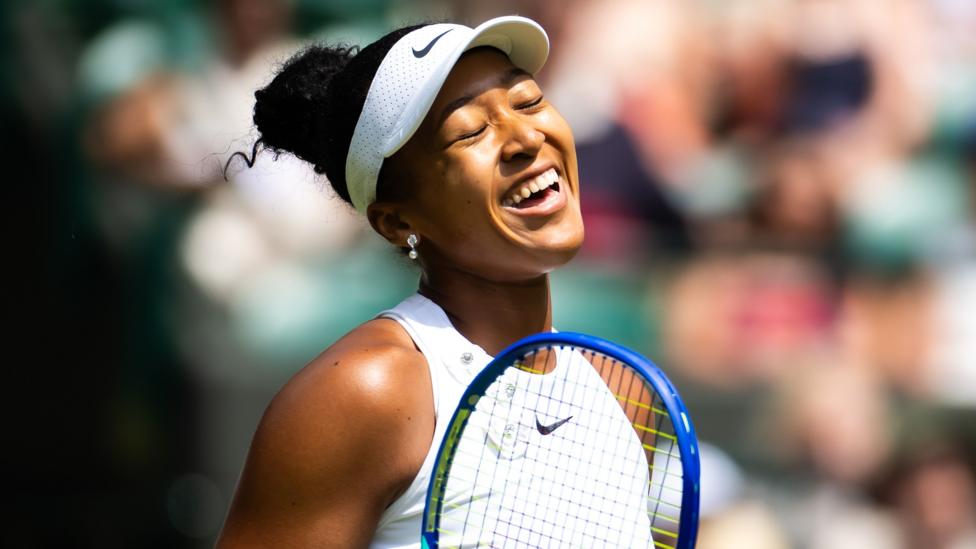
Osaka's Wimbledon Awakening: Freedom, Fire, and a Mother's Touch
A coaching shake-up and maternal comfort fueled Naomi Osaka's stunning Wimbledon upset over Aryna Sabalenka.

McEnroe's Wimbledon Podcast: Where Tennis Past Meets Present
John McEnroe broadcasting live from Wimbledon with guest Arthur Fery captures tennis as a living, breathing conversation across generations.