Tears and Tenacity: Swiatek Survives Opening-Round Wimbledon Scare Against Townsend
Iga Swiatek's title defence nearly derailed in round one as the world No. 1 battled tears and a fearless Taylor Townsend.
A Defence That Nearly Never Began
There is a particular cruelty to Grand Slam tennis that reveals itself in the opening round. The defending champion walks onto Centre Court draped in expectation, carrying the weight of a title that demands repetition, and is met not by ceremony but by an opponent with nothing to lose. Iga Swiatek discovered this the hard way on Monday, needing three gruelling sets to dispatch American Taylor Townsend and keep her Wimbledon crown alive. When the final ball landed, the Pole dissolved into tears, the kind of raw, unfiltered emotion that tells you everything about the pressure she has been carrying.
Rarely has a multiple grand slam winner been in floods of tears after winning a first round match at Wimbledon. Then again, Swiatek has always been a little out of the box — brilliant but introverted, fragile yet sublime.
This was not supposed to be complicated. Swiatek entered the Championships as the reigning champion, a player who conquered the grass-court question mark that had followed her career by lifting the Venus Rosewater Dish last summer. But tennis has a long memory, and so does Swiatek. Her relationship with the All England Club's lawns has always been uneasy, a surface mismatch that once seemed permanent before last year's breakthrough rewrote the narrative. A first-round wobble is a reminder that grass-court confidence is a fragile commodity, even for the best in the world.
Taylor Townsend: The Perfect First-Round Trap
If the draw gods were feeling mischievous, they could not have crafted a more uncomfortable opening assignment. Taylor Townsend is a throwback, a left-handed serve-and-volleyer who grew up idolising the net-rushing instincts of an earlier era. On grass, her style transforms from nostalgic curiosity into genuine threat. She cuts angles, rushes the return, and refuses to let opponents settle into the baseline rhythm that defines modern tennis.
For Swiatek, whose dominance is built on relentless topspin from deep behind the baseline, the geometry changes entirely against an opponent like Townsend. The American's willingness to charge forward compresses Swiatek's preparation time, forces half-volley responses, and disrupts the methodical point construction that has produced four French Open titles and a world No. 1 ranking spanning multiple seasons. On clay, Swiatek has time to breathe. On grass against a net-rusher, that breathing room evaporates.
Townsend's record may not scream danger on paper, but the stylistic matchup made her a landmine in the draw. Her left-handed delivery creates awkward angles on the ad court, the side where Swiatek's forehand typically dominates rallies. Every serve became a puzzle, every approach shot a question that demanded an answer Swiatek did not always have.
The Weight Behind the Tears
No sooner had last year's champion offered a victory fist to Centre Court after overcoming Townsend than the eyes began to water and her Wimbledon towel began to take a soaking. Yet afterwards Swiatek wasn't entirely able to explain why. When pressed, she offered a simple, heartfelt answer: "Last year the most amazing thing happened. So I felt it."
Swiatek's post-match tears were not simply about relief, though relief was certainly part of the equation. The 23-year-old has navigated a turbulent stretch that extends well beyond the grass-court season. She spoke afterward about enduring a tough couple of weeks, a candid admission that contextualises the vulnerability on display.
The specifics of that difficulty remain private, but the broader picture is visible to anyone who has followed her season. The relentless cycle of the WTA Tour, the constant travel, the scrutiny that comes with being the sport's dominant force, these are not abstract burdens. They accumulate. Swiatek has spoken previously about the mental toll of maintaining elite standards across every surface, every week, every tournament. The grass-court swing, historically her least comfortable period, arrives at precisely the moment when the season's fatigue begins to bite.
There is also the unique pressure of defending a Wimbledon title. Unlike the French Open, where Swiatek's clay-court mastery creates an expectation she can fulfil through sheer tactical superiority, Wimbledon demands adaptation. She must suppress her instincts, flatten her groundstrokes, shorten her backswing, and accept that rallies will be shorter and more chaotic. Last year she managed that transformation brilliantly en route to the title. This year, in round one, the adjustment looked incomplete.
How the Match Unfolded
The opening exchanges suggested a routine afternoon. Swiatek established control early, her return game finding its range against Townsend's serve and the baseline exchanges favouring the champion's depth and precision. The first set went according to script.
Then the match changed. Townsend elevated her aggression, committing fully to the net and finding success with angled volleys that pulled Swiatek wide on the grass. The American's shot selection became bolder, her confidence visibly growing as she sensed the champion was uncomfortable with the tempo. The second set slipped away from Swiatek, and suddenly the All England Club was witnessing something no defending champion wants to experience: a genuine fight for survival.
The decider was a test of nerve as much as skill. Swiatek's groundstrokes, so reliable on clay, produced moments of brilliance interspersed with uncharacteristic errors. The grass demanded precision she could not always deliver, and Townsend's persistent net pressure meant every point felt contested. Swiatek eventually found enough quality to close out the match, but the margin was thinner than her ranking or her reputation should permit.
Grass-Court Identity Crisis
The underlying question after a performance like this is structural rather than emotional. Can Swiatek mount a sustained title defence on a surface that continues to expose the limitations of her baseline-centric game?
The statistics from her grass-court career tell a complicated story. Her win percentage on grass remains significantly lower than her numbers on clay or hard courts. Last year's Wimbledon triumph was a breakthrough precisely because it defied the data, a tournament where Swiatek's adaptability and sheer competitive will overcame the tactical mismatch. The concern is whether that was an anomaly rather than a new baseline.
Against Townsend, the old vulnerabilities resurfaced. Swiatek's heavy topspin, the weapon that devours clay-court opponents, sits up invitingly on grass, giving net-rushers time to close and volley. Her movement, superb on slower surfaces where she can slide into position, looks less fluid on the low-bouncing grass. These are not fatal flaws, but they are friction points that opponents will continue to exploit.
What the Numbers Suggest
Swiatek's opening round produced a mixed statistical profile:
- First serve percentage dipped below her season average, limiting her ability to dictate with the serve
- Net approaches remained rare, a tactical conservatism that ceded the front of the court to Townsend
- Unforced errors crept upward as the match progressed, a sign of discomfort with the surface conditions
- Break point conversion kept her alive when it mattered most, the hallmark of a champion under duress
These numbers do not tell the story of a player in crisis, but they do reveal a player still searching for the right tactical formula on grass. The margins are smaller here, the room for error reduced, and the consequences of hesitation amplified.
The Psychological Dimension
Swiatek's tears also speak to something deeper than tactical discomfort. She is a player who wears her emotions visibly, and that transparency has always been part of her appeal. Unlike competitors who mask their struggles behind steely facades, Swiatek allows the public to see the toll. This vulnerability is not weakness; it is honesty.
The concern is whether such emotional expenditure in round one leaves her depleted for the challenges ahead. Grand Slams are marathons, and the psychological energy required to survive a scare like this is considerable. Swiatek will need to process this experience quickly, extract whatever confidence she can from the victory, and prepare for what will inevitably be a more straightforward second-round assignment.
Her coaching team will be working overtime to reinforce the tactical adjustments needed for grass. The serve needs to become a more potent weapon. The willingness to approach the net must increase. The forehand needs flattening. These are not overnight fixes, but incremental improvements that could determine whether this title defence extends beyond the opening week.
Looking Ahead
The draw will only get tougher from here. Potential opponents in the later rounds include players with the grass-court pedigree and attacking intent to punish the same vulnerabilities Townsend exposed. Swiatek's path to back-to-back Wimbledon titles now requires something more demanding than talent: it requires tactical evolution.
The next match becomes a diagnostic exercise. Can Swiatek implement the adjustments that round one demanded? Can she find the serve-plus-one patterns that create easy points on a surface that rewards aggression over patience? Can she move forward with conviction rather than retreating to the baseline comfort zone?
These are the questions that will define her tournament. The tears have dried. The relief has settled. What remains is the work of a champion who knows that surviving round one at Wimbledon means nothing if the lessons go unlearned.
Updated: 2026-06-30 — Added Swiatek's direct post-match quotes and details of her emotional reaction on court after defeating Townsend.
Editorial Integrity
This is an original SportPulse article written by our editorial team. All content is independently researched, written, and reviewed by our writers and editors before publication. We do not publish copied, aggregated, or syndicated content.
SportPulse is committed to original sports journalism. Read our editorial policy or contact us with any questions.
More Like This
All tennis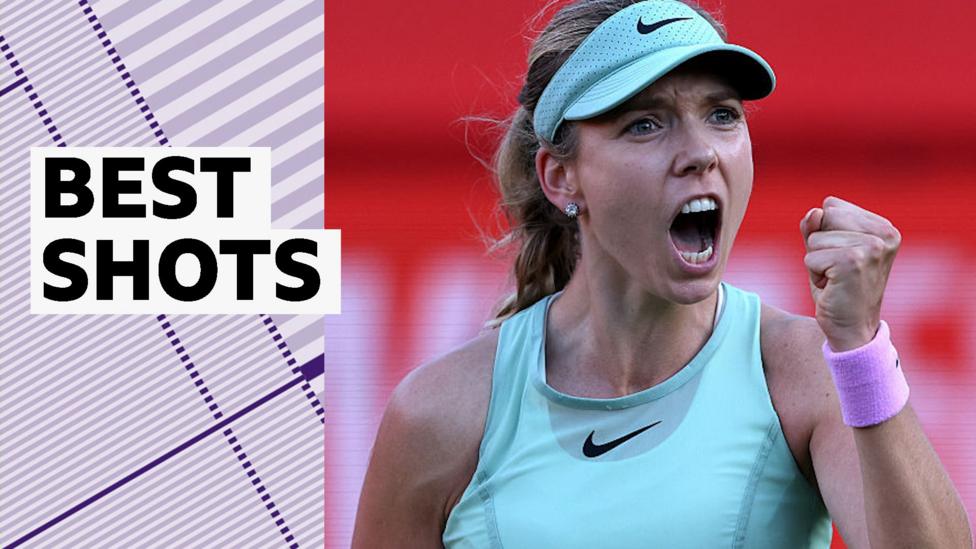
The Upset That Echoes: Boulter Shatters Rybakina's Queen's Campaign
Katie Boulter's stunning victory over top seed Elena Rybakina signals a seismic shift ahead of Wimbledon.
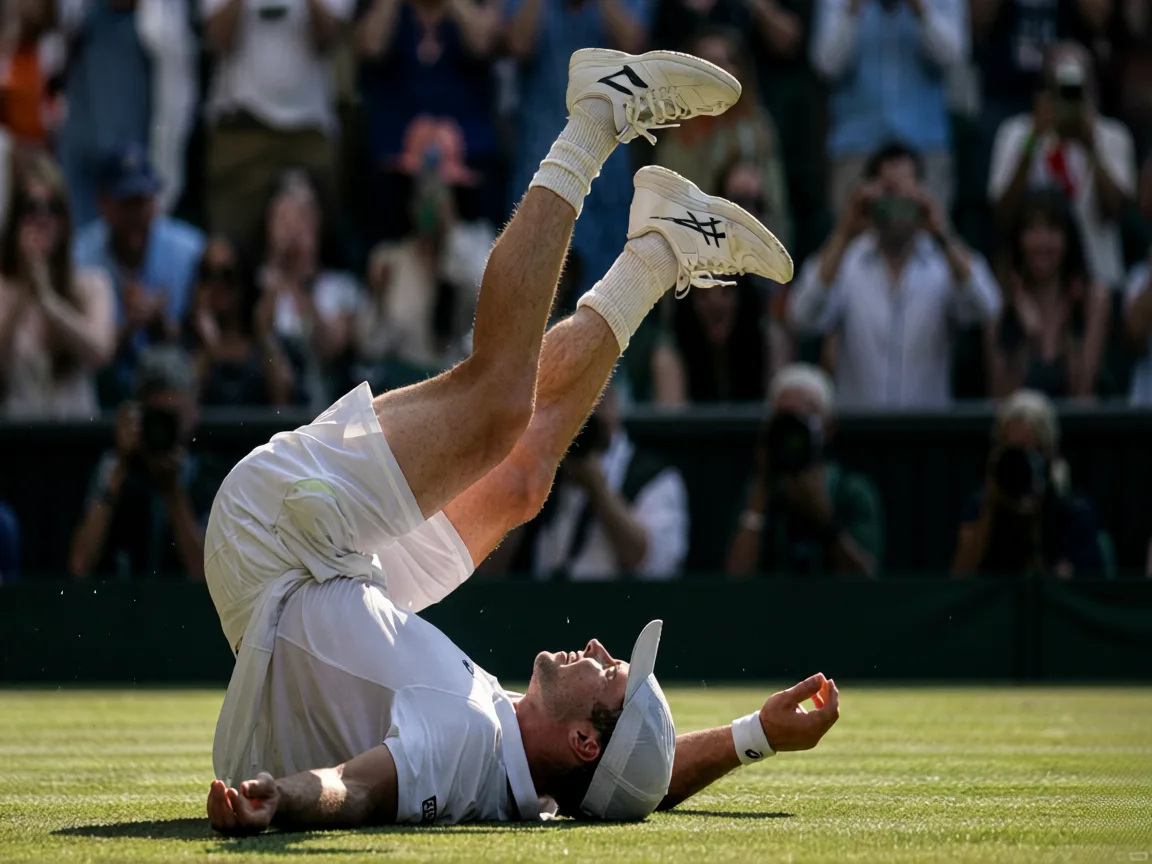
Wimbledon 2024: The Drama, Fashion and British Breakthroughs That Defined The Fortnight
From Centre Court drama to British successes, a fortnight of unforgettable moments deserves its own awards ceremony.
Osaka's Sabalenka Shock Lights Up Wimbledon's Second Monday
Naomi Osaka stunned Aryna Sabalenka while Jannik Sinner cruised as Wimbledon's revamped second week delivered blockbuster drama.