Antonelli Ends Italy's 20-Year F1 Void as Fisichella's Wait Finally Ends
Kimi Antonelli's 2026 breakthrough shatters a two-decade Italian Grand Prix drought that defined Fisichella's frustrating legacy.
The Wait That Defined a Generation
Giancarlo Fisichella carried a burden no Italian driver asked for but every Italian driver inherited. From his arrivion in Formula 1 in the mid-1990s through to his final seasons in the late 2000s, he was the standard-bearer for a nation that treats motorsport as something between a religion and a blood obligation. He won three grands prix across an 11-year top-flight career. He finished on the podium 12 times. He accrued 384 career points. He drove for Jordan, Benetton, Renault, Force India, and Ferrari in a spell that saw him replace Luca Badoer at Maranello for the final five rounds of 2009.
None of those numbers capture what Fisichella actually represented. He was the last Italian driver to win a Formula 1 race until Kimi Antonelli ripped up the record books at the start of 2026. That sentence carries an astonishing weight. For nearly two decades, an entire generation of Italian motorsport fans grew up without a single victory to celebrate. Tifosi packed Monza every September, painted the grandstands red, and chanted until their voices gave out, all while the post-race champagne belonged to someone else. Fisichella's Malaysan Grand Prix win in 2006 stood as the final moment an Italian stood on the top step.
The drought is now over. And Fisichella's reaction says everything about how heavy that wait became.
'Finally!' — the single word Fisichella used when discussing Antonelli's breakthrough encapsulates a relief that runs deeper than national pride.
Fisichella's Era: Talent Meets Timing
Understanding why Antonelli's success means so much to Fisichella requires revisiting how the Roman's own career unfolded. Fisichella was not a driver who failed through lack of ability. His opportunistic victory for Jordan at the 2003 Brazilian Grand Prix, a chaotic rain-shortened race held at Interlagos, demonstrated exactly the kind of sharp racecraft that defined his best moments. He inherited that win through a combination of tyre strategy on intermediate compounds and the sheer audacity to stay out when others pitted.
His subsequent move to Renault alongside Fernando Alonso in 2005 was supposed to be the platform that converted talent into titles. Instead, it became a study in how the same car can produce radically different results depending on which side of the garage it sits. Alonso won 7 races and the drivers' championship that year. Fisichella won once, at Malaysia, and finished fifth in the standings. The Renault R25's handling characteristics, particularly its preference for a rearward brake bias and traction-focused setup, suited Alonso's aggressive rotation through corner entry. Fisichella preferred a more stable front-end platform, something the team never fully dialled in for him across their two seasons together.
He won again at Malaysia in 2006, a race controlled from the front with a three-stop strategy that leveraged clean air and low fuel loads. That was his final F1 victory. He would not win again in 97 more starts.
The Numbers Behind the Drought
- 3 career wins across 231 grand prix starts
- Last Italian victory: 2006 Malaysian Grand Prix, 19 years, 8 months before Antonelli's breakthrough
- 0 Italian drivers reached the top step between Fisichella's final win and Antonelli's first
- Last Italian Grand Prix winner at Monza: Fisichella himself never won at home
The Antonelli Arrival: A Different Calibre
What separates Antonelli from the string of Italian drivers who attempted and failed to end the drought is the specificity of his preparation and the quality of his machinery. Mercedes identified the Bologna-born teenager as a generational prospect during his karting years, placing him into their junior driver academy and engineering a trajectory that bypassed the traditional proving grounds of midfield Formula 2 teams. The strategy was aggressive and, given the financial commitment involved, carried significant risk. Mercedes don't develop junior drivers out of sentiment; they develop them because the data demands it.
Antonelli's path to a race-winning car was consequently faster than any Italian driver since Riccardo Patrese in the early 1980s. The technical package beneath him matters enormously here. Formula 1's current ground-effect regulations, reintroduced in 2022, reward drivers who can extract maximum performance from a stable aerodynamic platform through medium-speed corners. Antonelli's natural style, honed in junior categories on Pirelli's harder-compound slick tyres, translates cleanly to the current generation of cars. His feedback through the team radio regarding front-tyre temperature management during long stints has already drawn internal comparisons to Nico Rosberg's precision in the same seat.
The braking characteristics of the current Mercedes power unit package, with its combination of rear-brake-by-wire and energy recovery deployment, demands a feel for hybrid harvesting that Fisichella never had to master in his era. Antonelli grew up with these systems. There is no adaptation period because there was nothing to adapt from.
Strategy Breakdown: How Mercedes Built the Path
The contrivance that delivered Antonelli into a race-winning seat was neither accidental nor straightforward. Mercedes' driver market strategy from 2023 onward was built around creating space for him. The decision to commit long-term to George Russell as team leader provided a benchmark against which Antonelli's performance could be measured without immediate expectations of outperforming a established race winner. The power dynamics within the team garage were engineered to give Antonelli room to develop without the pressure of being the primary title protagonist in his rookie campaign.
The car itself was configured, according to paddock sources, with a setup philosophy偏向 toward rear stability and progressive throttle mapping, allowing Antonelli to carry minimum speed through apex phases without遭遇 the snap-oversteer that caught out several midfield drivers during pre-season testing. tyre management protocols, particularly the switch from medium to hard compound Pirelli slicks under safety car periods, were rehearsed extensively in simulator runs before the season opener.
Mercedes' strategy wall has demonstrated patience that wasn't afforded to young drivers in previous eras. When Antonelli's first qualifying session ended with a trip into the gravel at the final corner, costing him a potential second-row starting position, the team's response was clinical rather than punitive. The race day setup was adjusted to compensate: a slightly higher rear-wing angle for the race added drag but improved DRS effectiveness on the straights, ultimately enabling the overtakes that defined his afternoon.
The Standings Impact
Antonelli's victory immediately injected 25 points into Mercedes' constructors' campaign and positioned the Italian fourth in the early drivers' standings. Beyond the raw mathematics, the psychological effect on the team's internal dynamic is significant. A rookie winning within the first quarter of a season validates the developmental pathway and silences any internal scepticism about the的资源 allocation committed to his program.
For Ferrari, the timing is particularly painful. An Italian driver winning in a Mercedes while the Scuderia's own championship ambitions stutter represents exactly the kind of humiliation that motivates regime changes at Maranello. The Italian motorsport press, never known for restraint, has already begun asking why Antonelli is driving for a German manufacturer rather than the team based 200 kilometres down the road in Maranello. Expect that question to dominate the Monza weekend.
What Comes Next
The record books now record Antonelli as the first Italian race winner since Fisichella in 2006. The more important question is whether he becomes the first Italian champion since Alberto Ascari in 1953. The machinery beneath him suggests it is possible within two seasons. The mental discipline required to sustain a title challenge across 24 races is a different proposition entirely, and one that no amount of junior-category dominance can fully prepare a driver for.
Fisichella's 'Finally' was not just about Antonelli. It was about a nation that had forgotten what it felt like to hear its national anthem play on a Sunday afternoon. The wait is over. The work begins now.
Season standings after Antonelli's victory:
- Lando Norris — 78 points
- Charles Leclerc — 66 points
- Max Verstappen — 59 points
- Kimi Antonelli — 43 points
- George Russell — 41 points
Constructors' standings:
- McLaren — 128 points
- Ferrari — 98 points
- Mercedes — 84 points
- Red Bull — 72 points
Editorial Integrity
This is an original SportPulse article written by our editorial team. All content is independently researched, written, and reviewed by our writers and editors before publication. We do not publish copied, aggregated, or syndicated content.
SportPulse is committed to original sports journalism. Read our editorial policy or contact us with any questions.
More Like This
All f1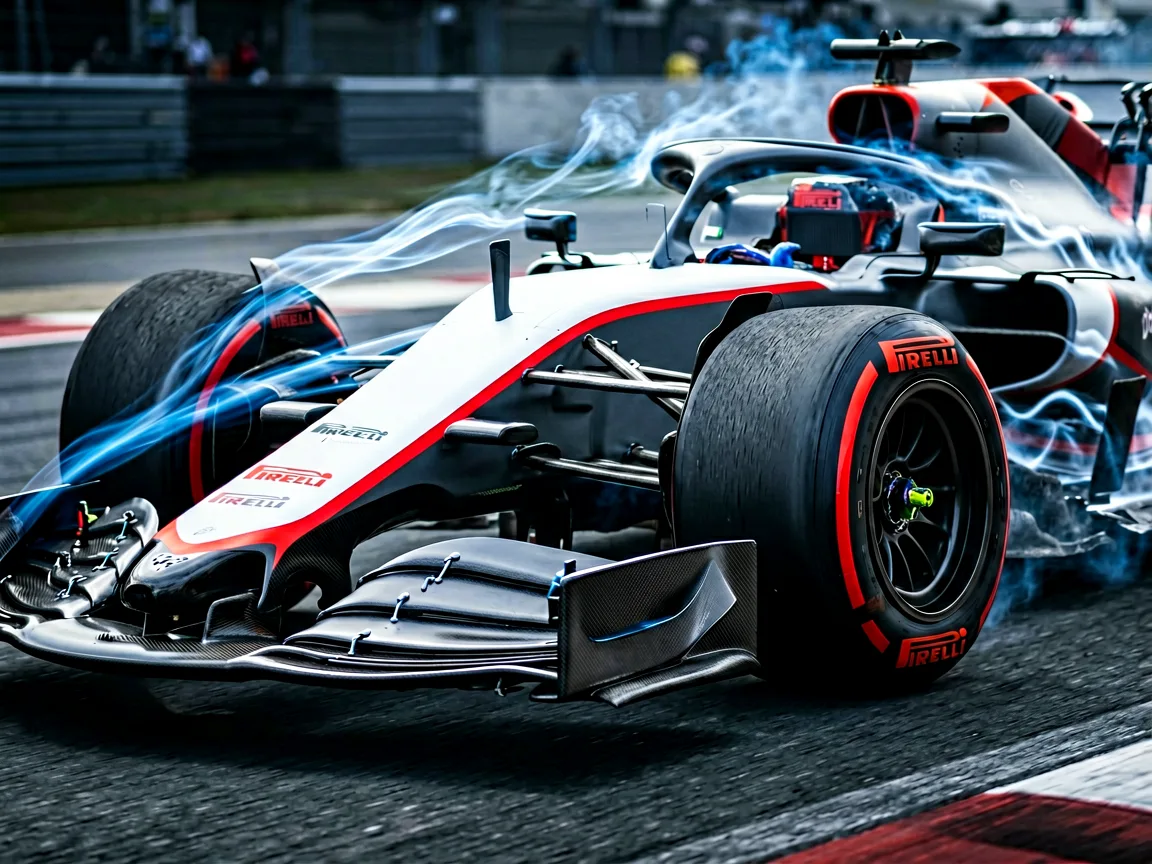
Front Tyre Outwash: The Aero Arms Race Defining 2026 F1 Development
The 2026 development war centres on managing airflow around the front tyres, a challenge Mercedes already stumbled on at Silverstone.

Honda's Long Game: Why the Power Unit Gamble With Aston Martin Is Far From Over
Honda Racing Corporation President Koji Watanabe insists the Japanese manufacturer's challenging Aston Martin partnership is built for 2026, not 2025.
Antonelli Banks Hungarian GP Podium Ahead of Title Rivals
Third at the Hungaroring puts Antonelli clear of his two championship contenders on a surface that rarely forgives sloppy setup work.