Argentina Mourns but Celebrates as World Cup Dream Ends Against Spain
Argentinian media rallies behind Scaloni's men after a 1-0 final loss to Spain, hailing the team as the nation's pride despite Messi's likely farewell.
A Nation Reacts Not With Anger But With Embrace
Argentina fell 1-0 to Spain in the World Cup final on Sunday, a result that extinguished dreams of back-to-back global crowns. Yet the reaction from Buenos Aires to Rosario carried none of the venom that typically follows a championship defeat. Instead, the nation's newspapers urged grief and gratitude in equal measure.
The country's best-selling newspaper, Clarín, led the response. Its front page carried a photograph of Lionel Messi in tears beneath a headline that doubled as a national sentiment: "They gave it their all: there is nothing to blame them for." It was an immediate signal that the media narrative would not turn on the players.
La Nacion, another heavyweight voice in the Argentine press, went further with its praise. The outlet declared Lionel Scaloni's squad the "pride of the nation," framing the defeat not as a collapse but as the final chapter of a cycle that demanded respect. The tone represented a sharp departure from the fiery discourse that has followed previous Argentine disappointments on the global stage.
Spain Prove the Better Side
There was no denial from the Argentine press about the tune of the match. Multiple outlets acknowledged that the European side had controlled the tempo and territory for long stretches. Spain dictated possession with the sort of crafted passing that mirrors the Argentine game but operates with a colder efficiency.
The single goal told the story of fine margins. In a tournament defined by moments, Spain manufactured the one that separated the two sides. Argentina pushed, probed, and ultimately could not break down a defensive block that held firm when it mattered most.
Clarín's editorial captured the complexity of the loss, stating that the better football team won on the night. It was a concession that would have been unimaginable in past eras, when blame was distributed liberally and struggles were dismissed as failures of character rather than tactical execution.
The Messi Question Looms Over Everything
The soul of the tournament for Argentina was the possibility that this would be Messi's last World Cup appearance. The assumption shaped every narrative, every substitution, and every touch of the ball from the eight-time Ballon d'Or winner. When the final whistle sounded his emotional curtain, the lens through which the team would be judged shifted completely.
Argentina's last World Cup triumph in 2022 cemented Messi's legacy in undoubted terms. This return to the final, against a Spain side that arrived with a tournament pedigree of its own, added a layer rather than diminishing his story. The Argentine coverage reflected that nuance, avoiding the temptation to frame the defeat as a failure.
Clarín's editorial went deep into the emotional bond between the team and its public. It noted that beyond the final result, and setting aside the strictly sporting aspects, there was a special bond between the people and their national team unlike anything the country had seen in recent memory.
In past tournaments, distance between the squad and supporters was a persistent theme. Players were criticized for lacking passion or commitment. The current group, led by Scaloni and anchored by Messi, has spent four years building trust through public engagement and visible emotional investment.
Scaloni Sculpted a Team the Nation Could Love
The coach deserves immense credit for shaping the environment that produced such a dignified exit. Scaloni inherited a fractured squad after the 2018 World Cup and constructed not just a winning team but a lovable one. His willingness to embrace the country's footballing identity while modernizing tactical approach earned him a rare privilege: the benefit of the doubt.
When Argentina lost the 2022 final to Saudi Arabia in their opening group match, Scaloni recalibrated without panic. When they won the tournament, he did not lose his grip on reality. That measured approach defined the post-match atmosphere in the changing room on Sunday.
In the defeated silence of the post-match changing room, Scaloni moved slowly from player to player. He placed a hand on the shoulder of each man, some crying, others staring. The coach said little, his face raw with the same emotion, letting the weight of what they had built over four years speak in the silence between them.
"They are the pride of the nation. There is nothing to blame them for."
"They gave it their all."
The contrast with previous regimes was plain. After the failure of 2014 and the chaos of 2018, the Argentine federation needed a unifier, not a tactician. Scaloni proved to be both, and the media's response to this defeat was as much a tribute to him as it was to the players.
The Stat Sheet Shows Spain's Control
The numbers reinforce the narrative emerging from the Argentine press. Spain held the ball for prolonged periods, forcing Argentina into reactive shape. The attacking trio that had blazed through earlier rounds found space limited and chances rare.
Argentina managed just one shot on target in the second half, a clear indicator of Spanish defensive discipline. Messi touched the ball in the opposition box only three times after the break. The supply lines were cut, and the rhythm that defined earlier performances was conspicuously absent.
Spain completed 631 passes to Argentina's 427. The gap was not extreme but pointed to a side comfortable in control, content to provoke rather than chase. Argentina's usual press lacked its normal venom.
The goal itself was a study in patience. It came from a sequence of seventeen passes, the kind of constructed attack that Argentina had used to such effect in earlier rounds but could not execute under Spanish pressure.
What It Means
This defeat marks the end of a golden cycle for Argentine football. The team that won the 2022 World Cup and reached the final again four years later has established a standard that will define expectations for decades. Scaloni's legacy is secure, regardless of whether he continues in the role.
The immediate question is succession. If Messi steps away, and Alexis Mac Allister and Enzo Fernández become the next generation's spine, the future remains bright. The infrastructure Scaloni leaves behind is built for continuity, not just reliance on a single generational talent.
For now, Argentina grieves without recrimination. The media's response reflects a maturity that the footballing culture has often lacked. The team that returned home on Monday did so as the pride of a nation, a rare tribute in a sport where defeat typically invites scorn rather than reflection.
The bond Clarín wrote about was evident in the streets of Buenos Aires. Fans gathered outside the team hotel not to protest but to applaud. That image, more than any tactical analysis, captured the shift in Argentine football: a country that learned to love its team even in defeat.
Editorial Integrity
This is an original SportPulse article written by our editorial team. All content is independently researched, written, and reviewed by our writers and editors before publication. We do not publish copied, aggregated, or syndicated content.
SportPulse is committed to original sports journalism. Read our editorial policy or contact us with any questions.
More Like This
All football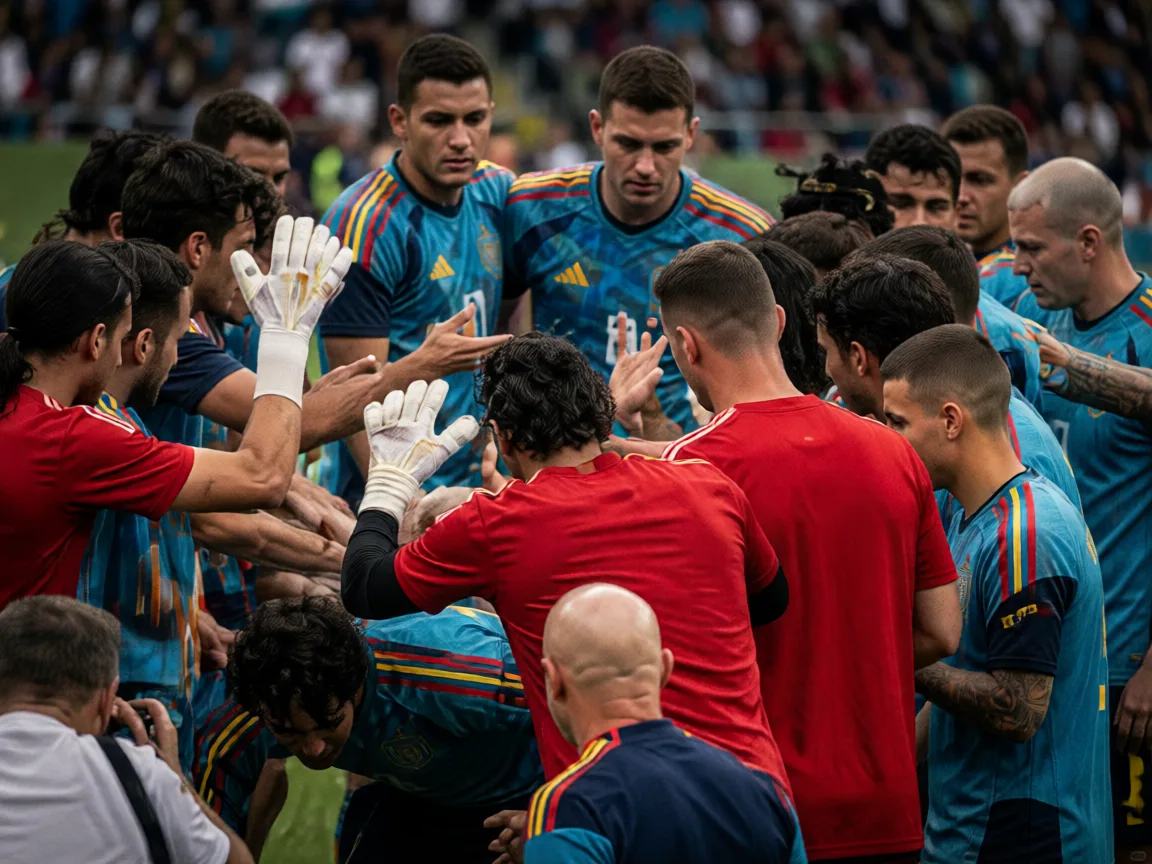
World Cup 2026 Semi-Finals: Football's Heavyweight Week Meets American Reality
Four titans, two cities, one chaotic week as World Cup 2026 semi-finals expose the logistical demands and security realities of hosting football's grandest stage.
Behind the Broadcast Curtain: How the 2026 World Cup's TV Picks Really Work
The expanded 2026 World Cup brings a new round of 32 and a scheduling puzzle that broadcasters are racing to solve.

Chelsea hijack WSL rivals again: Malard signals title, not rebuild
Chelsea's capture of Melvine Malard from Manchester United is a calculated squad-arms move that deepens rotation options while weakening a direct rival.