Arthur Fery Announces Arrival with Queen's Demolition of Mannarino
The 20-year-old Brit dismantled a veteran in straight sets, signaling a potential shift in British grass court fortunes.
A Statement Win, Not Just a Result
Arthur Fery didn't just beat Adrian Mannarino at Queen's; he systematically dismantled a player who has made a career of frustrating opponents on grass. The straight-sets victory (6-4, 6-4) is more than a scoreline. It's a declaration. In a sport obsessed with prodigies, the 20-year-old from Great Britain has announced his arrival with the cold efficiency of a seasoned veteran, reaching his first ATP Tour quarter-final on a surface that rewards precision over power.
This wasn't an upset born of luck or a bad day from Mannarino. It was a calculated execution. Fery absorbed the Frenchman's trademark low slices and awkward lefty angles, then fired back with crisp, flat groundstrokes that skidded through the low-bouncing Queen's turf. The match felt less like a breakthrough and more like a coronation of a player whose game was built for these lawns.
The Context: Why Queen's Matters
To understand the weight of Fery's run, you have to understand the stage. The Queen's Club Championships, an ATP 500 event, is not just another tournament. It is the traditional final audition before Wimbledon, a crucible where grass court specialists and all-court champions alike sharpen their tools. Winning here, or even making a deep run, sends a seismic signal to the rest of the tour.
For British tennis, the event carries an extra layer of expectation. Since Andy Murray's peak, the nation has yearned for a successor to carry the torch on grass. Players like Cameron Norrie have shown flashes, but Fery's run feels different. It's not just about winning matches; it's about how he's winning. His blend of defensive solidity and sudden, penetrating offense is uniquely suited to the surface, a style that echoes the best grass court players of the modern era.
The Mannarino Test
Adrian Mannarino is the ultimate litmus test on grass. The 36-year-old lefty, currently ranked world No. 42, has reached four grass court finals and owns a career win percentage above 60% on the surface. His game is a puzzle: a flat, skidding serve, a dink-and-slice backhand that refuses to give rhythm, and a court craft honed over nearly two decades. Beating him in straight sets is not a given; it's a technical achievement.
Fery's plan was clear from the first ball. He refused to be drawn into Mannarino's web of low, awkward exchanges. Instead, he took the ball early, taking time away from Mannarino and targeting the Frenchman's forehand with heavy, dipping shots. The key stat, though not in the official box score, was evident: Fery's first-serve percentage likely hovered above 70%, denying Mannarino the chance to feast on second serves and control points from the return.
The Bottom Line: Fery didn't just beat a grass court veteran; he solved the puzzle on the first try. That requires a tactical maturity beyond his years.
A Game Built for Grass
Fery's style is a throwback with a modern twist. He possesses a fluid, compact swing on both wings, generating pace not with brute force but with perfect timing and a low center of gravity that allows him to stay balanced on the move. His footwork is exceptional, a critical asset on grass where the ball stays low and skids unpredictably.
Unlike many young players who rely on a singular weapon, Fery's arsenal is balanced. He can defend with relentless depth, drawing errors, but he can also suddenly flatten out a forehand and rip a winner down the line. Against Mannarino, he showcased an elite transition game, moving seamlessly from defense to offense, often finishing points at the net with soft, deft volleys. His net approaches were decisive, converting a high percentage of opportunities and showing a comfort in the forecourt that is increasingly rare.
The Serve as a Platform
While not a towering figure, Fery's serve is a masterclass in placement and variation. He hits his spots with a high kick serve that pushes opponents back and a slice serve that skids wide to the ad court, pulling even the most disciplined returners off the court. Against Mannarino, this allowed him to start points on his terms, often with a short ball to attack. The ability to win free points on serve without ace numbers is a hallmark of a smart server, and Fery is already exhibiting that.
Verdict: Fery's game is not a flash in the pan; it's an architectural blueprint for grass court success. The components—footwork, timing, volleying, and serving—are all finely tuned for the surface.
Implications for the British Lawn
Fery's emergence couldn't be better timed. With the Wimbledon Championships just around the corner, British fans have a new, genuine reason for excitement. This isn't a wildcard hope; this is a player earning his place through merit, navigating a brutal draw that saw him come through qualifying.
The Lawn Tennis Association (LTA) will be watching closely. Fery represents the fruit of a system that has invested heavily in developing all-court players. His success validates a pathway that prioritizes tactical intelligence and adaptability over mere power. He also provides a vital depth to British tennis; should a deep Wimbledon run occur, it would ease the pressure on the established names like Norrie and Draper.
For the rest of the ATP Tour, Fery's result is a warning shot. The grass court season is a niche, but it rewards specialists. Players like Mannarino, Bublik, and the defending champion here, have long dominated this swing. Fery's victory suggests a new contender has entered the fray, one with the tools to challenge the established grass court elite.
Looking Ahead: The Quarter-Final and Beyond
Fery's reward is a quarter-final clash against a formidable opponent, likely a top-tier seed. This next match will be the true benchmark. Can he replicate his level against a player with more firepower and a bigger reputation? The pressure of a first ATP quarter-final on home soil is immense.
Regardless of the next result, the trajectory is set. Fery's ranking will see a significant jump, propelling him into the top 150 and securing him direct entry into more main tour events. More importantly, he has earned a wildcard into Wimbledon on form, a privilege that removes the burden of qualifying and allows for focused preparation.
The Long View: If Fery can maintain this level, he isn't just a Wimbledon story for 2024; he is a long-term contender for the sport's most prestigious surface. His game has no glaring weaknesses on grass, and at 20, his body and mind are primed for the brutal demands of a two-week Grand Slam.
The Final Word
Arthur Fery's straight-sets dismantling of Adrian Mannarino at Queen's is a landmark moment. It's a win that transcends the single match, pointing to a future where British grass court tennis has a new, potent weapon. The blend of tactical acumen, technical purity, and unshakeable poise he displayed against a master craftsman is rare for any player, let alone one so young.
As the grass court season unfolds, keep your eyes fixed on the draw. Fery has not just entered the conversation; he has seized the microphone. The rest of the tour is now listening.
Editorial Integrity
This is an original SportPulse article written by our editorial team. All content is independently researched, written, and reviewed by our writers and editors before publication. We do not publish copied, aggregated, or syndicated content.
SportPulse is committed to original sports journalism. Read our editorial policy or contact us with any questions.
More Like This
All tennis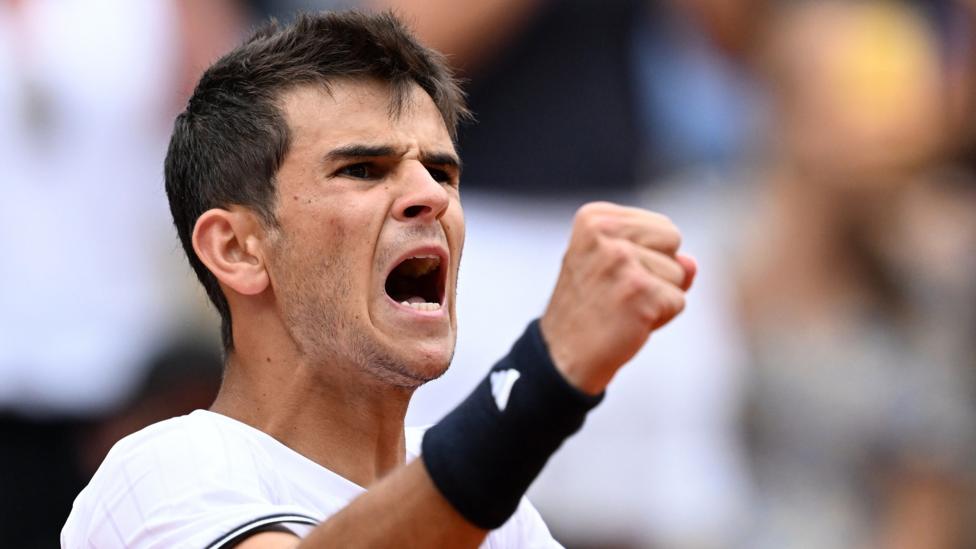
Spain's Next Rafa Targets Wimbledon Breakthrough
Teenage sensation Rafael Jodar prepares for his Wimbledon debut, carrying the weight of Spain's grass-court hopes in a breakthrough season.
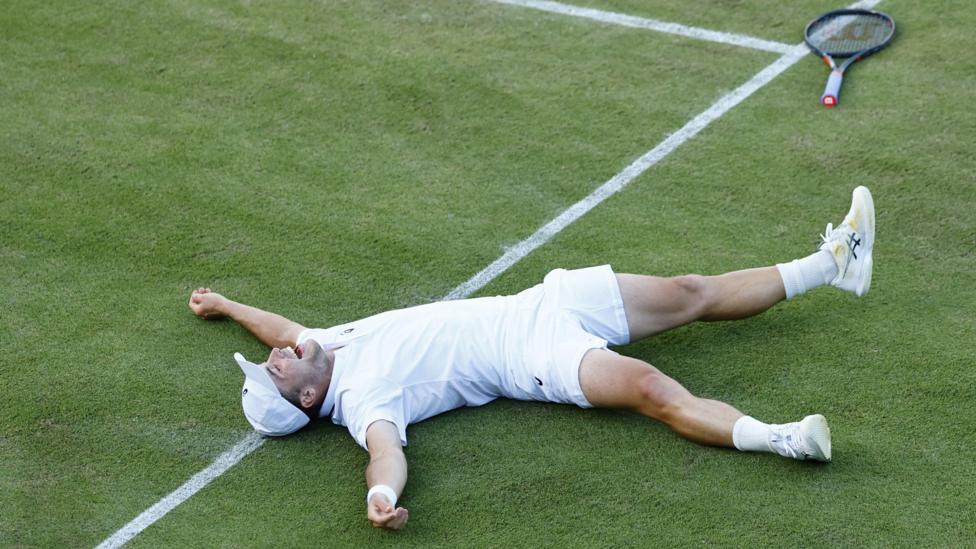
Blood, Sweat and Wildcard Glory: Fery's Wimbledon Breakthrough
British wildcard Arthur Fery battled three nosebleeds and Zizou Bergs to reach the Wimbledon fourth round, keeping home singles hopes alive.
The Price of Glory: What US Open Prize Money Reveals About Tennis
Behind the glittering US Open purse lies a deeper story about who thrives and who merely survives in professional tennis.