The Price of Glory: What US Open Prize Money Reveals About Tennis
Behind the glittering US Open purse lies a deeper story about who thrives and who merely survives in professional tennis.
There is a particular cruelty embedded in the architecture of tennis. A solo sport played in a glass cathedral, where the roar of twenty-three thousand strangers replaces the comfort of teammates, where a single bad afternoon can erase months of labor. And nowhere is that tension between spectacle and solitude more vivid than at the US Open, where the prize money pool has swollen to historic proportions, yet the distribution of that wealth tells a story far more complicated than any headline figure suggests.
The US Open has long positioned itself as the people's Grand Slam, the raucous counterpoint to Wimbledon's hushed propriety. Flushing Meadows is where the sport lets its hair down, where the crowds spill beer on the concourse and the matches bleed past midnight into something resembling collective delirium. But beneath the carnival atmosphere lies a financial machine of extraordinary scale. The total prize money at the 2024 US Open exceeded $65 million, making it the richest Grand Slam in tennis history. The singles champions, both men and women, each pocketed approximately $3.6 million.
Those are numbers designed to make headlines. They also obscure the ground-level reality of professional tennis economics.
The Surface Numbers
Every August, the USTA announces the year's prize money breakdown, and every August, the same breathless reporting follows. The total purse is up again. A new record. The champions will earn more than any tennis player has earned for a single fortnight's work. And these facts are true. The US Open has been remarkably aggressive in growing its prize money over the past two decades, roughly quadrupling the total pool since the early 2000s.
The singles champion's check of $3.6 million is a staggering sum for two weeks of competition, but it represents only about 5.5% of the total purse. The real story of Grand Slam economics is not at the top. It is in the middle tiers, the second and third rounds, where players ranked between 50 and 150 in the world are fighting not for glory but for survival.
A first-round loser at the US Open takes home roughly $100,000. That sounds generous until you account for the costs: flights, hotels, coaching staff, physiotherapy, stringing fees, agent commissions, and taxes. A player ranked 100th in the world who loses in the first round of all four Grand Slams in a season earns perhaps $400,000 before expenses. After taxes and costs, they might clear $150,000 in a year. From the Slams alone. Without accounting for the months of qualifying, early-round losses at smaller events, and the relentless travel that defines the tour.
Where the Money Actually Flows
The USTA has positioned itself as a progressive force in prize money distribution. Unlike some tournaments that heavily weight the top of the draw, the US Open has made a deliberate effort to increase payouts for early-round losers and qualifying participants. First-round qualifying losers now receive more than $20,000, a figure that has grown substantially over the past decade. This is not charity. It is recognition that a healthy ecosystem requires more than just stars.
But the economics of tennis remain brutally hierarchical. The gap between the first round and the final is a chasm measured in millions. Consider the progression: a player who loses in the first round earns roughly $100,000. A semifinalist earns over $1 million. The champion earns $3.6 million. The curve is not gentle. It is a cliff face, and the players who scale it are those who have already accumulated the resources to train, travel, and compete at the highest level.
This creates what economists might call a compounding advantage. The richest players earn the most prize money, which funds better coaching, better facilities, better recovery programs, which in turn produce better results. Carlos Alcaraz and Iga Swiatek are not just the best players in the world. They are the beneficiaries of a system that rewards excellence with the tools to sustain it.
The Broader Prize Money Landscape
The US Open does not exist in isolation. Its prize money decisions are shaped by competitive pressure from the other three Grand Slams and, increasingly, from the sport's broader political economy.
Wimbledon, traditionally the most conservative of the majors, has been forced to match or exceed US Open figures to maintain its prestige. The Australian Open and French Open have similarly escalated their purses. The result is a Grand Slam arms race in which the total prize money across all four majors now approaches $250 million annually.
"The players deserve every dollar. They are the product. Without them, there is no show." — A sentiment echoed across the sport's governing bodies
Yet this growth exists in tension with the sport's fragmentation. The ATP and WTA tours operate independently, with their own sponsorship deals, television contracts, and prize money structures. The Grand Slams, which generate the overwhelming majority of tennis's commercial revenue, retain the lion's share of that revenue for themselves. Players and their advocates have long argued that the percentage of Grand Slam revenue directed to prize money remains too low relative to the sport's overall earnings.
The numbers support this claim. The US Open generates hundreds of millions in revenue through ticket sales, broadcasting rights, corporate hospitality, and sponsorship deals. Prize money, even at $65 million, represents a fraction of that income. The USTA reinvests heavily in infrastructure, grassroots programs, and administrative costs, but the fundamental tension between the players who generate the spectacle and the institutions that capture the revenue remains unresolved.
What Prize Money Means at Different Altitudes
For the sport's elite, Grand Slam prize money is almost secondary. Top players like Novak Djokovic, Jannik Sinner, and Aryna Sabalenka earn far more from endorsements than from on-court earnings. Djokovic's career prize money exceeds $180 million, but his lifetime endorsement portfolio dwarfs that figure. Prize money at the top is a scorecard, not a paycheck.
For the middle class of professional tennis, the calculus is different. A player ranked 60th in the world might earn $500,000 to $1 million in annual prize money, but after coaching fees, travel, and taxes, the net income can be modest. These players are not struggling in any conventional sense, but they are operating in a financial environment where a few bad months, an injury, or a coaching change can tilt the balance from comfort to anxiety.
And for the players ranked outside the top 150, the prize money at Grand Slams represents a lifeline. These are the athletes who play qualifying rounds, who spend their weeks at Challenger events earning $5,000 to $15,000 for a week's work, who subsidize their careers with teaching jobs or savings from previous seasons. For them, a first-round appearance at the US Open is not a disappointment. It is a financial event that can sustain months of competition.
The Gender Question
The US Open has been a leader in pay equity among the Grand Slams. Flushing Meadows was the first major to offer equal prize money to men and women, a policy established in 1973 after the advocacy of Billie Jean King and others. Today, all four Grand Slams offer equal purses, but the broader tour remains unequal. WTA events typically offer lower prize money than their ATP equivalents, and the financial gap between the men's and women's tours extends beyond prize money into sponsorship, broadcasting, and commercial opportunities.
The Grand Slams' commitment to equal prize money is a statement of values. It is also, pragmatically, a reflection of the fact that women's Grand Slam matches draw significant audiences and generate substantial revenue. The US Open, in particular, has benefited from the star power of players like Serena Williams, Coco Gauff, and Naomi Osaka, whose appeal transcends the sport's traditional boundaries.
The Road Ahead
The trajectory of US Open prize money is almost certainly upward. The USTA has invested billions in transforming the Billie Jean King National Tennis Center, and those investments generate returns that flow, at least in part, to the players. The new Louis Armstrong Stadium, the expanded grounds, the improved media facilities, all serve a commercial engine that grows more powerful each year.
But the deeper question is whether the sport's economic structure will evolve to support not just the stars and the Grand Slam contenders, but the hundreds of players who make up the professional circuit's middle and lower tiers. Prize money at the US Open can set a standard, but it cannot, on its own, solve the financial precariousness that defines life for most professional tennis players.
The sport needs systemic reform: revenue sharing between Grand Slams and the tours, a more equitable distribution of broadcast income, and perhaps a minimum earnings floor for players who commit to the full professional calendar. These are conversations that have been happening for years, with incremental progress but no fundamental transformation.
What the US Open prize money ultimately reveals is not just the wealth of professional tennis, but its contradictions. A sport that generates billions in revenue, played by athletes who risk everything on individual performance, in an ecosystem where the gap between the summit and the base grows wider each year. The checks at Flushing Meadows are bigger than ever. Whether that wealth reaches the players who need it most remains the sport's most pressing question.
Editorial Integrity
This is an original SportPulse article written by our editorial team. All content is independently researched, written, and reviewed by our writers and editors before publication. We do not publish copied, aggregated, or syndicated content.
SportPulse is committed to original sports journalism. Read our editorial policy or contact us with any questions.
More Like This
All tennis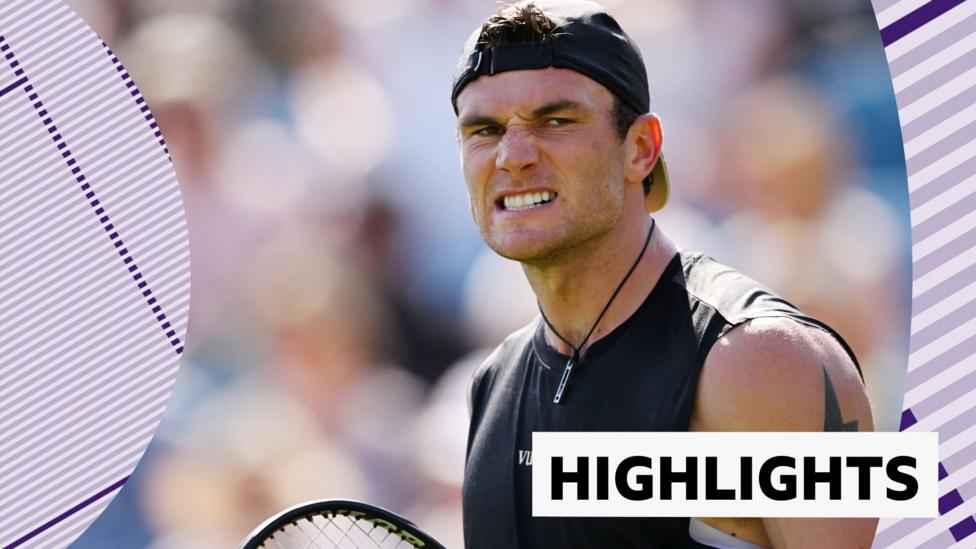
Draper Signals Intent With Gritty Eastbourne Return
Jack Draper shook off a two-month knee injury absence to grind past Marcos Giron, setting up a fiery all-British clash.

Keys Blasts Past Anisimova: The Bazooka Forehand Deciding Wimbledon's All-American War
Madison Keys' bazooka forehand dismantled Amanda Anisimova in a Wimbledon fourth-round clash that shifted the American tennis hierarchy.

The Ceasefire at SW19: How Tennis Stepped Back from the Brink
Crisis talks defuse a player protest that threatened to reshape Wimbledon's opening week and redefine the sport's power dynamics.