The Last Brit Standing: Arthur Fery's Wimbledon Awakening
Wildcard Arthur Fery faces Grigor Dimitrov as the last British singles player left at Wimbledon, ignoring the noise.
The walk from the locker rooms at the All England Club to the match courts is only a few hundred metres, but for a wildcard entry who had never won back-to-back matches at a Grand Slam, it can feel like crossing an ocean. On Monday, Arthur Fery will make that walk not as a hopeful prospect, but as the last remaining British singles player at Wimbledon. It is a reality that even the most optimistic British tennis insiders did not see coming.
Fery's run through the first week at SW19 has been nothing short of a paradigm shift for a player who had never previously passed the second round of a Grand Slam championship. He rolled through three consecutive wins, including a gruelling, come-from-behind Wimbledon epic against Belgium's Zizou Bergs, saving the tournament's British singles hopes almost single-handedly.
Now, he faces a different level of scrutiny entirely.
A Masterclass in Emotional Control
The modern tennis player is never truly alone. Between points, between games, and certainly between matches, the noise of social media, fan expectations, and national press builds an invisible wall of pressure. Fery, displaying a maturity that belies his relative inexperience at this level, has made a conscious decision to detach from the hysteria.
He stated plainly this weekend that he will not pay attention to the social media hype surrounding his breakthrough run. For a young player operating in the blinding spotlight of a home Grand Slam, this is a sophisticated psychological tactic. The British tennis public, starved of a deep homegrown run, naturally generates immense hype. But Fery is insulating himself from the dopamine of early praise and the crushing weight of sudden expectation.
"I am ready for the elevated attention, but I won't be paying attention to the social media side of it. It's about keeping the process the same."
That process-oriented mindset is the hallmark of someone who understands that the skill set required to survive qualifying or early rounds is different from the mental endurance needed to mount a deep run in the second week of a major. By muting the external noise, he preserves the mental bandwidth necessary for tactical execution.
The Tactical Shift: Surviving the First Week
Fery did not simply luck into the second week; he fought for every inch of grass. The victory over Bergs was a defining moment, a match that demanded both physical resilience and tactical adaptability.
Tennis at the lower tour levels and the early rounds of majors is often a baseline contest of consistency. Whoever blinks first loses. But as a player advances through the draw, the dynamics shift dramatically. Opponents serve bigger, return deeper, and construct points with far more malice. Fery's ability to adjust mid-match, particularly when pushed to the brink, signals a rapid evolution in his court IQ.
He had to fight back against Bergs, demonstrating a crucial asset for any tour professional: the ability to win when not playing your best tennis. It is a trait that separates those who peak at World No. 250 from those who claw their way into the top tier.
The Dimitrov Dilemma
Standing across the net on Monday will be former World No. 3 Grigor Dimitrov.
Dimitrov is one of the most naturally gifted players of his generation. When his backhand is clicking and his movement is fluid, he plays a brand of tennis that is almost unplayable on grass. He has the experience of deep major runs, the weapons to hit anyone off the court, and the pedigree of a champion.
For Fery, this represents a monumental step up in class. Dimitrov will not merely engage in a baseline hitting contest. He will stress the British wildcard's movement, pull him off the court with acute angles, and rush his preparation with explosive first-strike tennis. Fery will need to serve at a high percentage and look to neutralize the Bulgarian's Feuerwerk power.
The challenge for Dimitrov, conversely, is managing the crowd. Against a British player on Centre Court or Court No. 1, the atmosphere transforms into a hostile environment for the opponent. Fery must weaponize that energy without becoming consumed by it.
The British Tennis Landscape
Fery's run comes at a period of transition for British tennis. With the golden era of Sir Andy Murray firmly in the rearview mirror and other higher-ranked British singles players exiting the draw, the narrative naturally pivots to the next generation.
Becoming the last remaining British singles player in the second week of Wimbledon is a heavy crown. The British media and the public crave a homegrown hero, and Fery has inadvertently been thrust into the role of standard-bearer. It is a position that can elevate a player's profile overnight, attracting sponsorships and main-draw wildcard entries for the next twelve months. It can also, if not managed carefully, derail a player who is not emotionally equipped for the spotlight.
This is precisely why his stance on social media is so critical.
By actively choosing to ignore the hype, Fery is protecting his development curve. He is treating this Wimbledon run not as a career pinnacle, but as a stepping stone. A deep run at a major provides a massive rankings boost, crucial ranking points, and the financial security to invest in a better coaching team, travel, and rehabilitation. Yet the real prize is the belief that he belongs at this level.
What Monday Means
Editorial Integrity
This is an original SportPulse article written by our editorial team. All content is independently researched, written, and reviewed by our writers and editors before publication. We do not publish copied, aggregated, or syndicated content.
SportPulse is committed to original sports journalism. Read our editorial policy or contact us with any questions.
More Like This
All tennis
Wimbledon's Semi-Final Stage Where Talent Meets Its Master
At Wimbledon 2026, four men stand two wins from immortality. The barrier between them is not skill but the architecture of the mind.
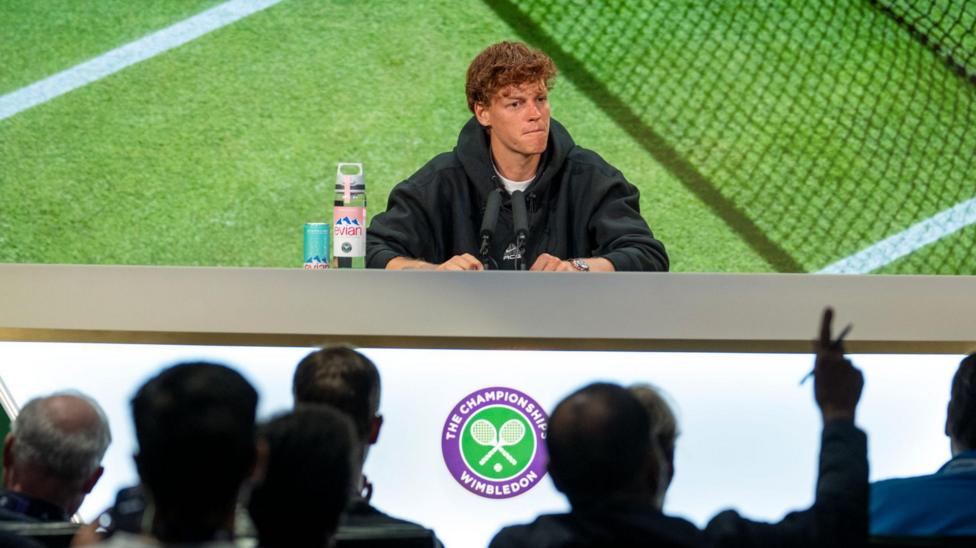
Wimbledon Faces Player Revolt Over Prize Money
Tennis stars are escalating their prize money protest at Wimbledon, exposing a staggering revenue divide that threatens the sport's credibility.
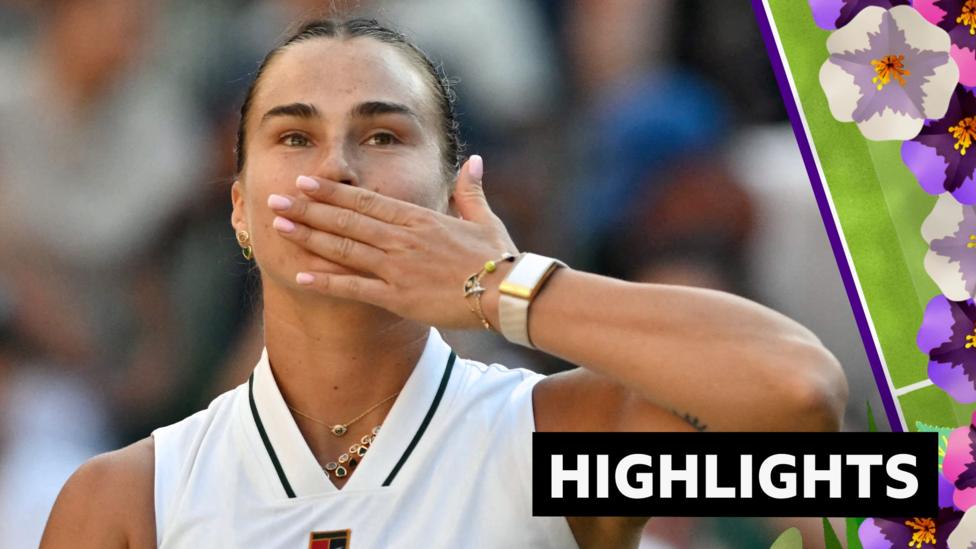
Sabalenka Subdues Ostapenko to Power Into Wimbledon Last 16
Aryna Sabalenka dismantled Jelena Ostapenko in straight sets to reach the Wimbledon fourth round and edge closer to her maiden All England Club title.