Wimbledon's Semi-Final Stage Where Talent Meets Its Master
At Wimbledon 2026, four men stand two wins from immortality. The barrier between them is not skill but the architecture of the mind.
The Grass Beneath the Weight of Everything
There is a particular silence that descends on Centre Court in the minutes before a Wimbledon semi-final. It is not the absence of noise but the presence of anticipation so dense it acoustically alters the air. The grass, already worn to a mosaic of green and brown by a fortnight of footwork, holds the scuff marks of every champion who has crossed this terrain. On Friday, that sacred turf will bear the weight of four men separated from tennis immortality by a mere two victories.
The 2026 semi-finals present a canvas of startling contrasts. Arthur Fery, the British qualifier, faces Alexander Zverev in a match no seeding chart predicted. The other semi-final pits Jannik Sinner against Novak Djokovic in a collision of present dominance against historical inevitability. Two matches, four careers, and the entirety of professional tennis's psychological spectrum compressed into a single afternoon in SW19.
What separates these four men is not the quality of their forehands or the precision of their serves. Those are the price of admission, not the ticket to the trophy.
The Currency That Cannot Be Coached
The difference between athletes who ascend to this stage and those who watch from the sofa is not talent. This is a truth deeply uncomfortable for the talentless to accept, but the evidence is overwhelming. More people possess world-class physical gifts than the scoreboard reveals. Junior circuits across the globe are cemeteries of unfulfilled potential, filled with players who could hit a ball as cleanly as any grand slam champion for exactly thirty minutes at a time before the architecture of their concentration collapsed.
The talent gets you to the practice court at dawn. It gets you through the rankings to the edge of relevance. Then it stops mattering. What takes over from there is a quality that resists quantification, something coaches describe in hushed tones and sports psychologists build entire careers trying to systematise without ever quite capturing its essence. We call it mentality, but the word is too small for what it actually represents.
Fery and the Audacity of the Unburdened
Arthur Fery's presence in a Wimbledon semi-final is the kind of anomaly that tennis, for all its rigid hierarchies, still occasionally permits. The British player arrived at this tournament unburdened by expectation and has ridden that freedom farther than any projection model would have dared to suggest.
The danger for Fery is that freedom has a half-life. Every round won converts a fraction of that liberation into something heavier. The quarter-final victory was a fairy tale. The semi-final is a referendum on belonging. The grass under his feet is the same grass, but the question it asks has changed entirely.
Can he walk onto Centre Court against one of the most physically imposing players in the sport's history and still swing with the abandon of a man with nothing to lose? The answer to that question is not a matter of technique. It is a question of emotional engineering, of whether Fery's internal system can process the magnitude of the moment without allowing it to dictate the rhythm of his shoulders.
Everyone is struggling with something that relates to emotional regulation and letting big feelings manage us instead of the other way around.
Zverev Between the Giant and the Ghost
Alexander Zverev occupies one of tennis's most psychologically complex positions. Physically, he is a colossus, a man whose serve and baseline artillery should have produced multiple grand slam titles by now. The game has rarely been the obstacle. The obstacle has been everything that surrounds the game.
The German arrives at this semi-final carrying the particular burden of a player whose talent has always exceeded his trophy cabinet. Every deep run at a major is shadowed by the question of whether this will be the tournament where ability and achievement finally reconcile or whether the gap between them will widen into something permanent and defining.
Against Fery, Zverev faces a specific psychological challenge that is almost the inverse of his own. He must not defeat a player. He must defeat his own expectation that he should defeat the player, which is a fundamentally different and often more treacherous adversary. The qualifier across the net is not the threat. The threat is the version of Zverev that has, throughout his career, allowed moments of emotional turbulence to become matches, then tournaments, then narratives.
Sinner and Djokovic: The Present Against the Eternal
The other semi-final operates on a different register entirely. Jannik Sinner has spent the season building a case that the era of Serbian dominance is entering its twilight phase. His numbers are those of a player who has decoded the geometry of modern tennis and is now playing with coordinates others cannot see. The ball moves where he intends it because his intention and his execution have achieved a synchronisation that borders on the mechanical.
Novak Djokovic arrives at this stage as something approaching a philosophical problem rather than a tennis challenge. The Serbian's twenty-four grand slam titles are no longer merely records. They have become a gravitational force that bends the psychology of every opponent who faces him, regardless of current form or ranking. The greatest players of the current generation have spoken openly about the strange sensation of approaching a Djokovic match the way medieval soldiers approached a castle they knew was fortified against every weapon they possessed.
Sinner's task is not to outhit Djokovic. He has the tools for that. His task is to resist the accumulating weight of history, the sense that Centre Court belongs to someone else and that he is merely renting it for the afternoon.
The Art of Letting the Storm Pass
The central drama of Friday's semi-finals is not tactical. Within the first few games of each match, patterns will establish themselves, adjustments will be made, and the tennis will settle into its characteristic flow. What happens after that, what determines who holds the trophy and who stands in the rain wondering why it slipped away, is emotional regulation.
Feeling the magnitude of the moment is necessary. Suppressing it is a strategy that fails under pressure with the reliability of a physical law. The competitors who survive semi-final Fridays at Wimbledon are those who can acknowledge the arrival of dread, note the acceleration of their heartbeat, permit the awareness of what is at stake, and then let that wave of sensation pass through them without carrying away their capacity to execute a second serve down the T.
When the Match Becomes the Self
The four men who walk onto Centre Court on Friday bring different tennis and different psychologies. Fery brings the lightness of the unexpected. Zverev brings the weight of unresolved destiny. Sinner brings the confidence of ascending empire. Djokovic brings the serene authority of a man who has turned this court into an extension of his living room.
What unites them, in that suspended silence before the first ball is struck, is that each will face a version of the same test. The test is not whether they can play. They have proven that beyond any rational doubt. The test is whether they can feel everything that this moment contains, the glory and the terror of it, and still hit the ball to the place their opponent cannot reach.
By Friday evening, two of them will have passed that test and two will have discovered, as players before them have discovered on this exact patch of grass, that talent and mentality are not the same thing. The consolation for those who fall is that the difference is not a character flaw. It is simply the hardest thing in sport. And on Centre Court, under a sky that has watched a century of this particular human struggle, it always has been.
Editorial Integrity
This is an original SportPulse article written by our editorial team. All content is independently researched, written, and reviewed by our writers and editors before publication. We do not publish copied, aggregated, or syndicated content.
SportPulse is committed to original sports journalism. Read our editorial policy or contact us with any questions.
More Like This
All tennis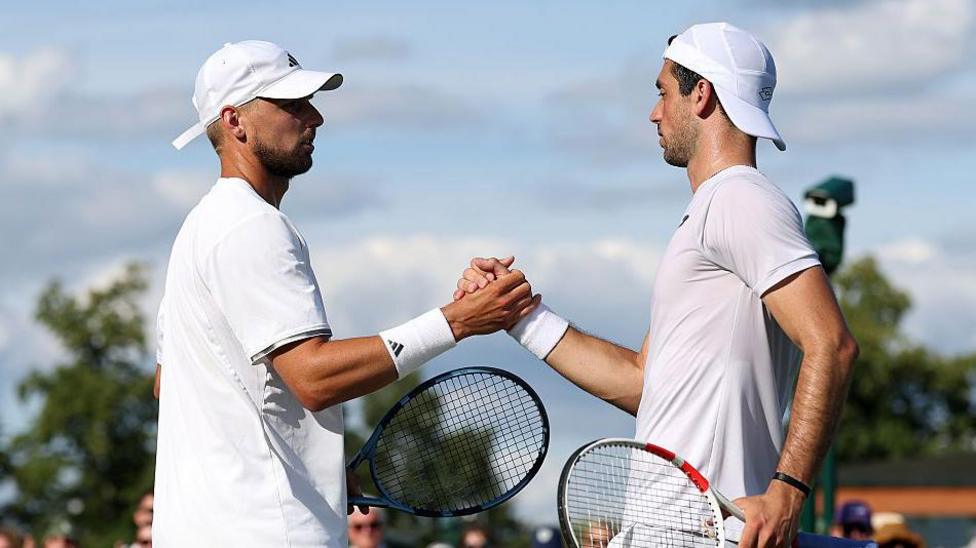
Cash & Glasspool Chase Wimbledon Doubles History
Britain's Julian Cash and Lloyd Glasspool march into Wimbledon's third round, chasing a historic doubles title defence on home soil.
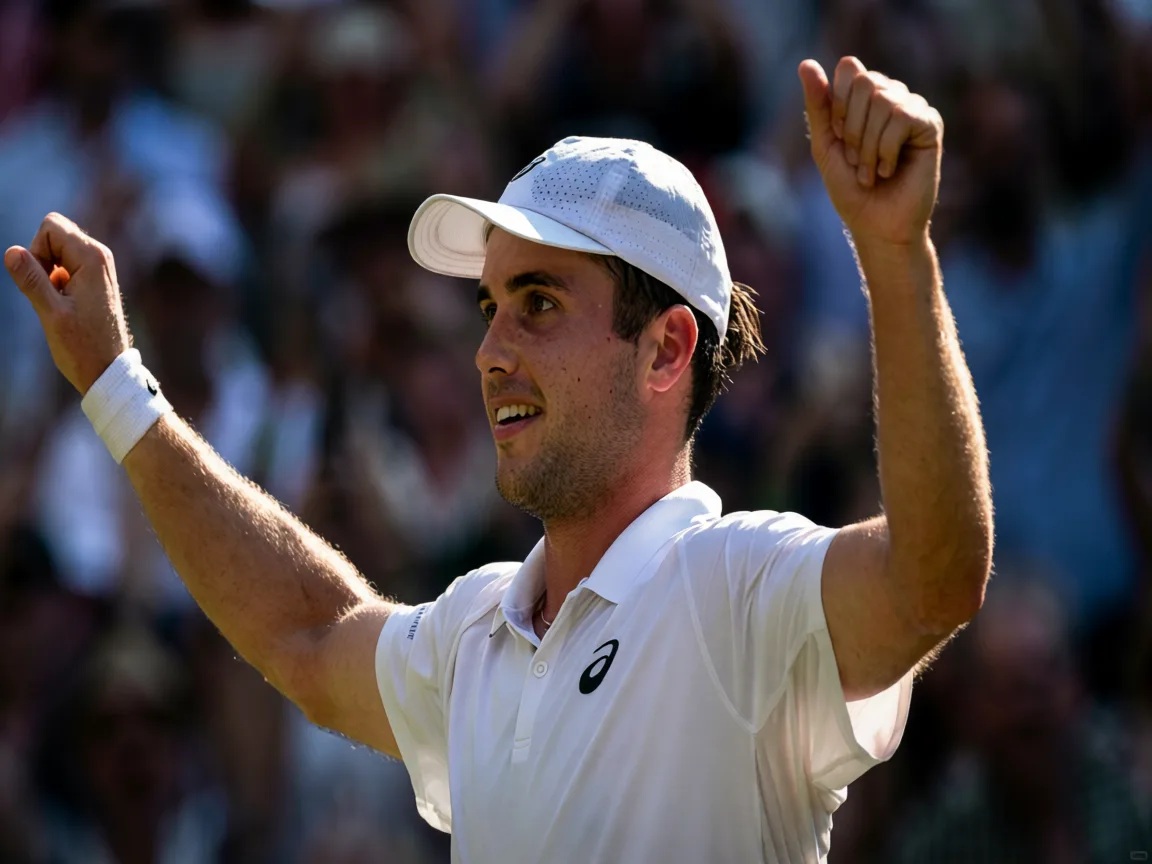
The Wildcard Who Cracked the Code: Fery's Wimbledon Fairytale
Arthur Fery's wildcard rampage past Flavio Cobolli has Wimbledon breathless, one match from an unthinkable final.
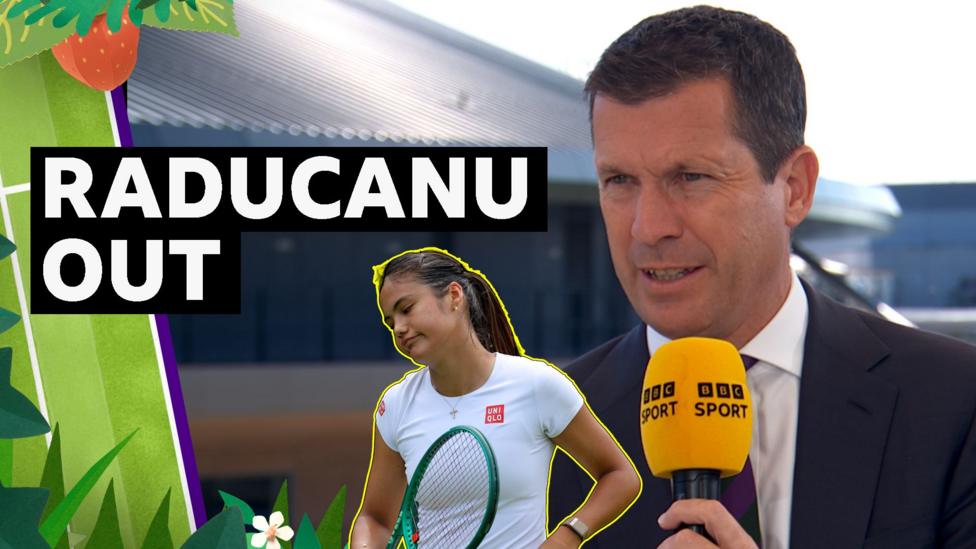
Raducanu's Wimbledon Dream Shattered by Stress Fracture on Eve of Championships
Britain's brightest tennis hope withdraws from Wimbledon with a leg stress fracture, leaving Centre Court's roar waiting for another year.