Arthur's Seat: How Fery Stormed Into Wimbledon's Last Four
Britain's newest tennis sensation faces Alexander Zverev in a Wimbledon semifinal that could redefine the nation's relationship with the sport.
There is a particular sound that Wimbledon makes when a British player is threatening something historic. It is not the polite, Pimm's-soaked murmur that accompanies a well-struck volley. It is a roar that builds from deep within the grounds, rolling across the outfield courts and swelling against the walls of Centre Court like a wave hitting a seawall. On Thursday afternoon, that sound belonged to Arthur Fery.
The 21-year-old from London had just secured his place in a Wimbledon singles semifinal. On Friday, he will face the German No. 2 seed Alexander Zverev for a place in the final.
It is a sentence that, even a fortnight ago, would have been dismissed as fantasy. British tennis, in the years since Andy Murray's body began to betray him, has been searching for an heir. A succession of promising talents have been handed the baton, only to fumble it in the glare of expectation. Kyle Edmund burned brightly and briefly. Cameron Norrie reached the Wimbledon semifinals in 2022 but has since been hampered by injury and inconsistency. Jack Draper carries the weight of the nation's hopes but has struggled to stay on court long enough to bear them.
Fery was never supposed to be the one. Not this soon.
The Rise of Arthur's Seat
The grassy mound to the west of Centre Court has been a barometer of British tennis for three decades. It was christened Henman Hill in the late 1990s, rebranded Murray Mount during the golden years of 2012 to 2016, and has spent the years since searching for a new tenant. On Thursday, the crowds gathered there spent their afternoon debating what to call it next.
They rejected Fery Field outright. Too American, too contrived. Someone suggested Arthur's Arena, which was dismissed as premature. The name that stuck, as Fery-mania swept across SW19 and the country at large, was Arthur's Seat
The name carries a resonance that extends beyond the player himself. Arthur's Seat is the ancient volcanic peak that looms over Edinburgh, a place of pilgrimage and myth. For British tennis fans, it now represents something equally elemental: the possibility that the long wait for a homegrown champion might, finally, be approaching its end.
On Friday, the hill will be packed hours before the first ball is struck. They will come with flags and painted faces and the kind of nervous hope that British sports fans know better than anyone. They will watch on the giant screen as Fery walks out to face one of the most formidable players in the world.
Zverev and the Scale of the Task
Alexander Zverev is not a sentimental obstacle. The German stands at 6'6**, possesses one of the most devastating serves in the men's game, and has been a permanent fixture in the world's top five since 2021. He has won 22 ATP titles, reached a Grand Slam final at the 2020 US Open, and carries the kind of clinical ruthlessness that dismantles fairy tales for sport.
Zverev represents the established aristocracy of the ATP. Fery, for all his dramatic progress, is still a young man whose ranking does not yet reflect his talent. The German's serve alone could be the defining factor in this semifinal. On grass, where the surface rewards placement and power in equal measure, Zverev is capable of going through entire service games without conceding a meaningful rally. If Fery is to win, he will need to produce something extraordinary.
But grass is a surface that rewards belief perhaps more than any other in tennis. It is the great equalizer, the surface where a big serve and a fearless return can compress the gap between a top seed and an unproven talent from London. Fery has shown, across this fortnight, that he possesses both.
A British Star Unlike His Predecessors
Fery was raised in London, the son of a French mother and a British father. He spent two years at Stanford University, one of the most prestigious college tennis programs in the United States, and that experience has shaped the player and the person he has become.
American college tennis is a different world from the European academy system that produces most elite players. It demands discipline, resilience, and a willingness to fight in front of small crowds on hard courts in university towns. It instills a work ethic, an ability to grind out results in conditions that are far from glamorous, and a perspective about the sport that guards against the kind of entitlement that can accompany early success.
Fery's game is built on aggression and court sense. He is a natural attacker, someone who looks to move forward and finish points at the net. His backhand, a shot that he hits with remarkable fluency, is his most damaging weapon. On grass, where balls skid through low and points are short, that combination of aggression and precision is lethal.
But it is his temperament that has marked him out. Across this Wimbledon, Fery has played with a composure that belies his age and experience. He has not been rattled by the big stages, the bigger names, or the mounting expectation.
"I don't know if I'm a prodigy. I just know that I love playing on these courts, in front of these people. That's what drives me."
Those close to Fery speak of a player who has managed the rare feat of holding onto his sense of self amid the chaos of a breakthrough Grand Slam run. The attention, the cameras, the growing crowd on the hill, the sudden recognition in the streets of SW19
Fery-mania and the Weight of a Nation
The frenzy that has built around Fery is not just about tennis. It is about something that British sport does better than perhaps any other nation: the collective embrace of an unlikely hero. From Virginia Wade to Sue Barker, from Tim Henman to Andy Murray, the British tennis public has always gravitated toward players who feel like one of their own.
Fery, in his quiet intensity, has become the latest focus of that affection. The signs are everywhere in SW19. Freshly painted proclamations on windows. Crowds clustering around practice courts for a glimpse of the unconventional swings that have carried him this far. And along Henman Hill, the debates about what to call the thing next.
The weight of that affection can be both a source of energy and a dangerous burden. Andy Murray carried it for over a decade and it made him great and it nearly destroyed him. Tim Henman bore a version of it for years and was never quite able to deliver the Grand Slam that the British public craved. The examples of players who have been crushed by the expectation are too numerous to list.
Fery, to this point, has seemed immune. Whether that is because of his time in the American college system, where anonymity was the norm, or simply because he is too young to understand the gravity of what he is doing, remains to be seen. But the pressure will only increase from here.
The Semifinal and What Lies Beyond
On Friday afternoon, Arthur Fery will walk onto one of tennis's grandest stages and face a player who has been there many times before. The match will be a study in contrasts: established power against emerging talent, clinical efficiency against emotional momentum, a man who has been here before against one who is discovering it all in real time.
"I don't think about legacy right now. I think about the next ball."
If Fery wins, Arthur's Seat will not just be a clever name. It will be a monument to the moment when British tennis found its next chapter. And Henman Hill will have a new name to go with a new hero.
If he loses, he will still have achieved something remarkable. He will have reached a Wimbledon singles semifinal at 21, announced himself to the world, and given a nation a reason to believe again.
But British tennis fans are not thinking about that on Thursday night. They are thinking about Friday. They are thinking about the serve, the returns, the points that will decide whether Arthur's Seat becomes more than a clever play on words.
The hill will be there either way. It has survived Henman, survived Murray, and survived the years in between. But it has not had a moment like this in a long time. And the crowd that will gather there on Friday knows it.
They will watch, and wait, and hope. And if Arthur Fery can do what no British man has done since 2016, they will know exactly what to call the place where they stood when it happened.
Career by Numbers
- Age: 21: The youngest British man to reach a Wimbledon singles semifinal in the modern era
- 2 years at Stanford: Where he developed the resilience and court craft that have defined his breakthrough
- 0 previous Grand Slam semifinals: Before this Wimbledon, Fery had never been beyond the early rounds of a major
- 1 mountain to climb: Alexander Zverev, the German No. 2 seed, stands between Fery and a place in the Wimbledon final
- 3 names for one hill: Henman Hill, Murray Mount, and now, potentially, Arthur's Seat
Editorial Integrity
This is an original SportPulse article written by our editorial team. All content is independently researched, written, and reviewed by our writers and editors before publication. We do not publish copied, aggregated, or syndicated content.
SportPulse is committed to original sports journalism. Read our editorial policy or contact us with any questions.
More Like This
All tennis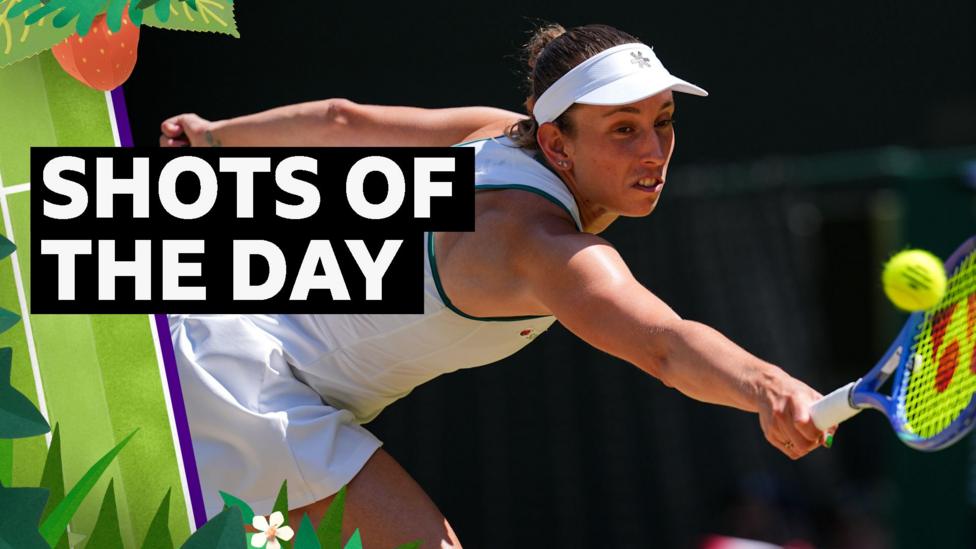
Wimbledon Day Ten: Mertens' Precision Meets Fery's British Audacity
Day ten at Wimbledon delivered a masterclass in contrast: Mertens' surgical grass-court craft against Fery's raw, hometown defiance.
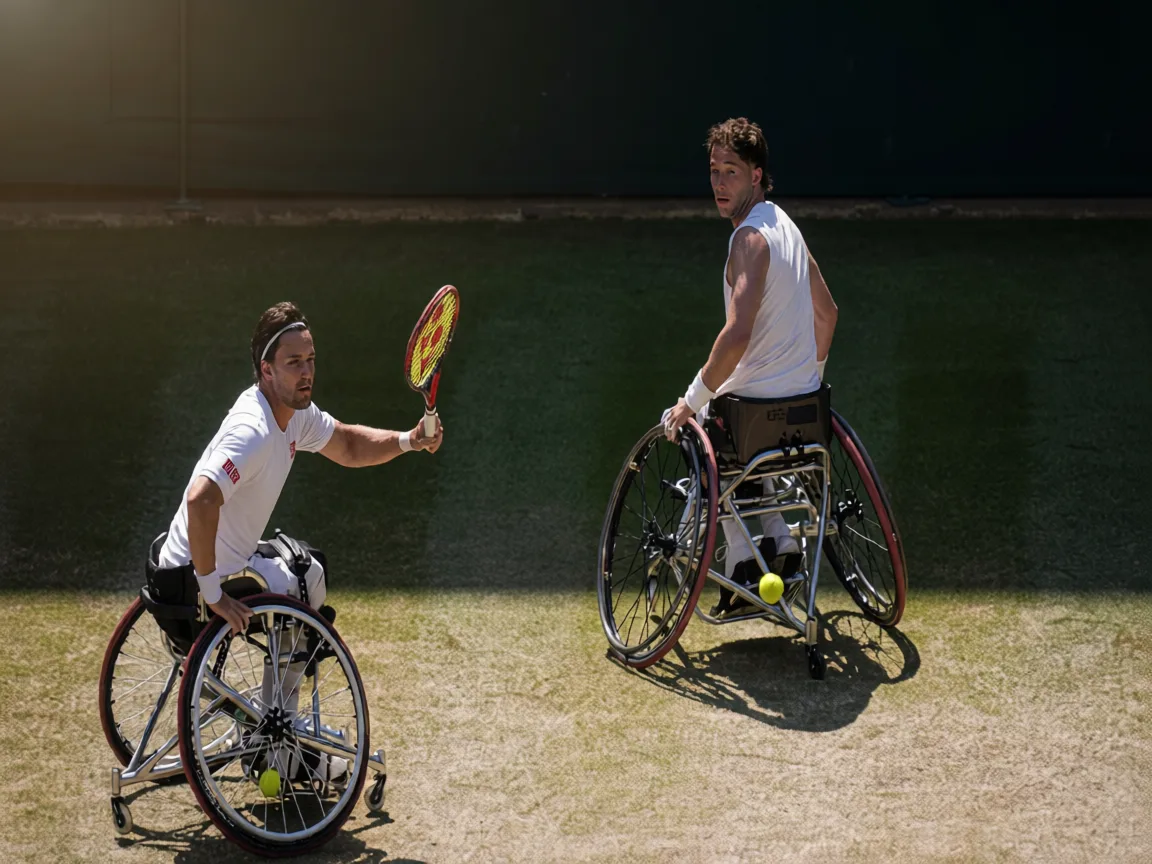
Hewett and Reid Crowned Kings of SW19 Once More
Seven Wimbledon titles. One unbreakable bond. Alfie Hewett and Gordon Reid redefine doubles dominance on Centre Court.
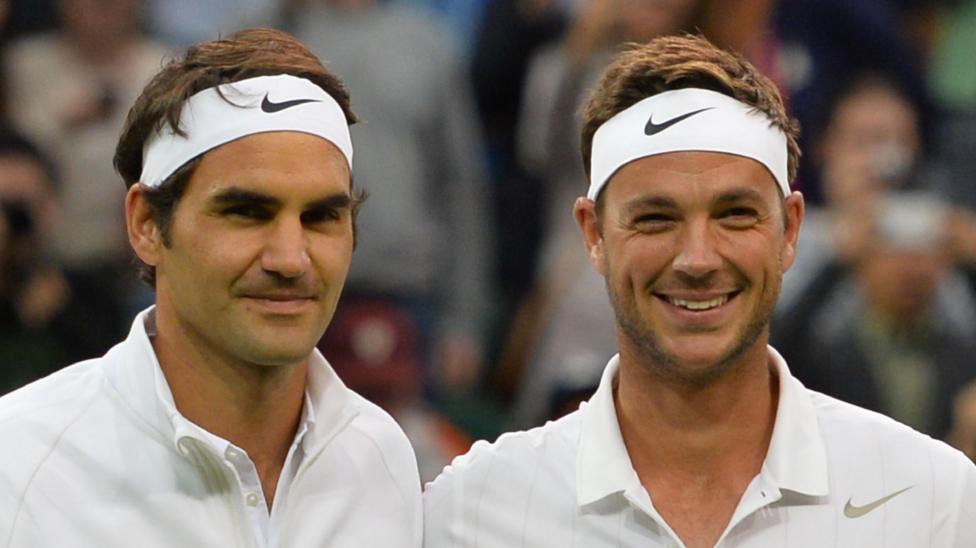
The Lob That Changed Everything: Marcus Willis Returns to Wimbledon on His Own Terms
Ten years after facing Federer on Centre Court, Marcus Willis is back at Wimbledon refusing to be a one-moment wonder.