Asante Warns Women's Football Becomes First Casualty of FIFA Agenda
Former England defender Anita Asante frames Gianni Infantino's reform plans as an existential threat to the developing women's game.
Asante's Warning: Women's Football as "First Casualties" of FIFA's Calendar Expansion
Former England international Anita Asante has delivered one of the most pointed critiques of Gianni Infantino's FIFA presidency, warning that women's football will become "the first casualties" of the governing body's strategic direction.
The language is deliberate. Casualties are not collateral damage in a well-managed operation. They are the predictable outcome of decisions taken with full knowledge of their consequences. Asante spent two decades inside the professional game and finished her career at Aston Villa. That institutional record gives her assessment a weight that generic punditry lacks.
"Fifa's president Gianni Infantino's plans will make women's football 'the first casualties.'"
The comments arrive while the women's professional structure across Europe is still consolidating. England's Women's Super League has completed its transition to independent governance. Spain's Liga F continues to work through internal fractures. Germany's Frauen-Bundesliga is moving toward full professionalisation. National associations have committed resources, but the financial base remains narrower and more fragile than the men's equivalent at comparable developmental stages.
The Expanded Men's Calendar and What It Crowds Out
The mechanism Asante identifies as dangerous is not one isolated tournament proposal. It is the compounding effect of a men's international calendar that has absorbed additional fixtures without relinquishing existing domestic commitments. The 2026 World Cup will expand to 48 teams and 104 matches, requiring an extended tournament window. The 2025 Club World Cup, a 32-team competition staged across June and July, will pull elite male players into a fixture block that previously served as mandatory rest and preseason preparation.
For domestic women's leagues, the consequence is twofold. Broadcast windows become harder to negotiate when the men's football footprint leaves no clear summer corridor. Commercial partners who had begun treating July and August as prime women's football property, particularly around major tournaments, now face a saturated market. The space the women's game benefited from, precisely because the men's product was absent, is shrinking.
There is also a competitive integrity dimension. Women's leagues that share stadiums, training facilities, medical staffing and operational infrastructure with men's clubs are subject to a resource cascade when the men's calendar intensifies. A men's squad returning from a summer Club World Cup places direct pressure on the same medical, performance analysis and groundstaff networks that women's first teams rely on. Facilities are not infinitely elastic. When the men's side arrives back late into preseason, the women's side's preparation is the first budget line that loses dedicated hours.
Asante's term "casualties" is analytically precise here. The threat to women's football is not a single policy decision. It is a structural byproduct of a calendar architecture designed around the revenue capacity of elite men's competitions, with the women's game left to absorb the displacement costs.
Infantino's vision, as repeatedly articulated at FIFA Congress sessions, frames expansion as redistribution, with promised increases in development funding tied to revenue growth from enlarged men's tournaments. The logic is internally consistent. It is also self-serving. It positions the women's game as a beneficiary dependent on maximising the very commercial operations that squeeze its operating space.
European Federations and the Limits of FIFA Dependency
European women's football does not depend on FIFA tournament revenue to survive. The federations that have built viable domestic structures, England, Germany, France, Spain, Sweden, have done so through a combination of national association allocation, domestic broadcast deals and, increasingly, ownership-level investment from parent clubs. FIFA's financial distributions matter at the margin and to developing federations. They are not the structural foundation of the professional game in established markets.
Infantino's expansion strategy can therefore proceed without directly crippling the women's game in Europe. What it does is narrow the growth runway. Every additional men's fixture in June and July is a weekend of women's football that receives reduced media attention, weaker commercial positioning and less standalone audience capacity. The damage is cumulative rather than immediate, which is what makes it politically difficult to counter.
The Spanish example is instructive. The dispute between the RFEF and the players' union over Liga F's commercial independence was not resolved by FIFA intervention. It was resolved through domestic negotiation, eventually producing a collective bargaining agreement that established minimum wages and structural standards. The European federations that have built genuine professional foundations have done so despite FIFA's strategic priorities, not because of them. The risk Asante identifies is that the gap between federations with autonomous institutional capacity and those dependent on FIFA's governance will widen further.
For clubs operating combined men's and women's programmes, the tactical response to calendar expansion is straightforward and unappealing. Resources follow revenue. When the men's first team requires additional staffing for an extended preseason, the women's first team's operational budget does not grow proportionally. The same physiotherapist who covers women's training on Tuesday and Thursday covers the men's recovery session on Friday. Shared infrastructure means shared constraint. FIFA's governance documents do not acknowledge this operational reality.
June and July 2025: The First Measuring Stick
The concern Asante raises, without fully elaborating, is that FIFA's planning architecture treats women's football as an adjacent product rather than an integrated responsibility. When the men's calendar expands, the women's calendar is expected to accommodate. When broadcast windows overlap, the women's product is expected to demonstrate flexibility. That assumption of accommodation, repeated across successive scheduling cycles, is what produces structural fragility.
Infantino's presentation of expanded men's competitions as universally beneficial, a revenue generator that funds the entire football ecosystem, does not survive contact with the operational reality Asante describes. If the women's professional game across Europe is consistently required to adjust its own calendar, accept reduced facility access, and compete for media space against a permanently active men's football market, the cumulative effect is not investment. It is extraction.
Asante's intervention is distinctive because it refuses the premise that growth in men's revenue automatically benefits women's football. The structural argument she advances, based on a career spent inside academies, international camps and club boardrooms, is that the relationship between FIFA's commercial expansion and the women's game's operational health is adversarial, not complementary. Until FIFA's calendar architecture treats the women's football season as a fixed constraint rather than a flexible variable, that assessment is difficult to dismiss.
The first concrete test arrives with the inaugural 32-team Club World Cup in June and July 2025. European women's leagues that traditionally conclude their seasons in May will not be directly affected. Domestic associations that run summer competition windows, including Sweden's Damallsvenskan and parts of the NWSL, will find their fixtures competing directly with a men's tournament FIFA will promote as its flagship club property. The women's game's share of audience, broadcast attention and commercial oxygen during that period will be the measurable indicator of whether Asante's warning proves prescient or overstated.
Editorial Integrity
This is an original SportPulse article written by our editorial team. All content is independently researched, written, and reviewed by our writers and editors before publication. We do not publish copied, aggregated, or syndicated content.
SportPulse is committed to original sports journalism. Read our editorial policy or contact us with any questions.
More Like This
All football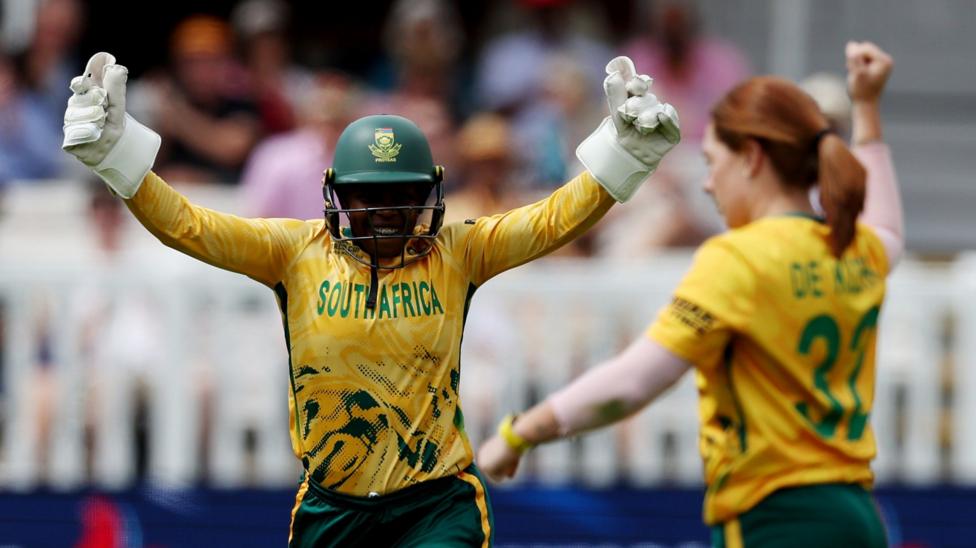
South Africa Stutter Past Bangladesh to Turn Heat on India
South Africa overcame their own dysfunction at Lord's to edge Bangladesh, shifting the T20 World Cup semi-final pressure squarely onto India.

The Socceroos' Tactical Identity Is Finally Catching Up to Their Ambition
Australia stand on the brink of knockout qualification at the 2026 World Cup, with a defining USA clash looming.
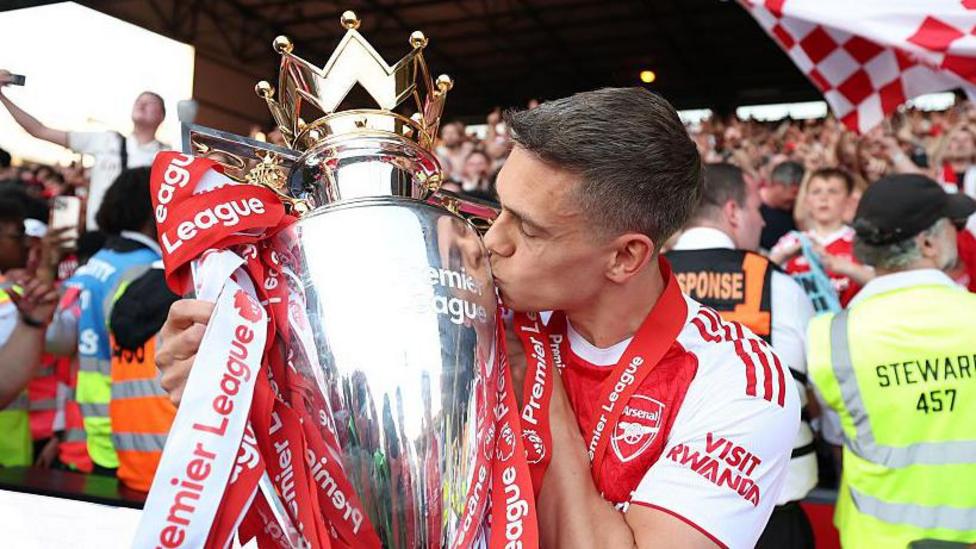
Trossard to Besiktas: Arteta Sacrifices Depth for Arsenal Evolution
Arsenal sanction Trossard's Besiktas move, betting that tactical evolution outweighs keeping a beloved but limited super-sub.