The Scottish Set-Piece Guru Plotting Portugal's World Cup Glory
Austin MacPhee vaulted from Aston Villa's dead-ball mastermind to Portugal's tactical weapon for the 2026 World Cup.
From Villa Park to the Global Stage
Austin MacPhee is the Scotsman quietly engineering Portugal's route to the 2026 World Cup. The specialist coach who helped transform Aston Villa's dead-ball fortunes now sits at the right hand of Roberto Martinez. His mission is simple. Turn marginal gains into the ultimate prize.
MacPhee's journey from the Scottish lower leagues to international football's top table is a masterclass in specialization. He is not a conventional coach. He is a set-piece architect. In an era where tournaments are decided by inches, the Portuguese Football Federation decided they needed the man who calculates those inches better than anyone.
The numbers during his Villa tenure demanded attention. Under MacPhee's guidance, Villa transformed from a mid-table afterthought at dead-ball situations into one of the Premier League's most lethal operations. The club recorded 18 set-piece goals in the 2023-24 campaign, fueling their dramatic push for European qualification. His impact came in expected goals plus and cold, hard points on the board.
The Anatomy of a Dead-Ball Guru
MacPhee operates in the shadows, but his work is violently visible on matchday. He maps out blocking routines that would make an NFL offensive coordinator proud. He scripts movement patterns that turn chaos into choreography. Every angle is measured. Every run is timed to a fraction of a second.
His methodology strips away the romanticism of the beautiful game. Set pieces are not luck. They are geometry, physics, and repetition. MacPhee studies thousands of hours of footage to spot defensive vulnerabilities most managers never notice. He found that the human eye misses what the video camera exposes.
The statistics validate the obsession. Teams employing MacPhee's principles consistently outperform their Expected Goals (xG) from dead-ball situations. It is a systematic edge that compounds over a grueling 38-game season or a high-stakes international tournament. When open play stagnates, the set-piece becomes the decisive currency.
Villa's dramatic Conference League run was littered with MacPhee's fingerprints. Crucial knockout goals came directly from meticulously rehearsed routines. The difference between advancing and going home often came down to a single block or a perfectly timed near-post run.
The Portugal Project
Roberto Martinez made a bold statement by bringing MacPhee into the national team setup. International football is notoriously rigid. Managers rarely cede control to specialists, preferring generalists who align with their overarching philosophy. Martinez broke that mold because he recognized the brutal reality of modern tournament football.
At the 2022 World Cup, set pieces accounted for roughly 30 percent of all goals scored in Qatar. The tournament was a graveyard for teams that neglected dead-ball preparation. Portugal crashed out to Morocco in the quarterfinals, a game where their set-piece delivery and movement lacked any real invention or venom.
Martinez needed a cure for that sterility. In MacPhee, he found a surgeon. The Scotsman immediately began implementing his elaborate routines, focusing on maximizing the aerial threat of Cristiano Ronaldo, Ruben Dias, and Joao Cancelo. The goal is to turn every corner and wide free kick into a genuine scoring opportunity rather than a hopeful cross.
Inside the Portugal dressing room, the reception has been intense and focused. Sources close to the camp describe training ground sessions where MacPhee halts play repeatedly to adjust a blocker's stance by a mere few inches. The players respond to the precision. Elite athletes respect expertise, and MacPhee's viral video catalog provides instant credibility.
"Set pieces are the most controllable part of football. You know exactly where the ball is going, where your players are, and what the defender will do. It is pure execution. If you get the details right, the goals follow."
Tactical Edge in Tournament Football
International tournaments are famously low-event environments. Teams play tight, risk-averse football, terrified of making the first mistake. Spaces between the lines shrink. Creative players find fewer pockets to exploit. In this environment, set pieces become the primary weapon for breaking the deadlock.
Portugal boasts an embarrassment of technical riches. Bernardo Silva, Bruno Fernandes, and Rafael Leao can dismantle any defense in open play on their day. But tournament knockout matches rarely offer the space to dance through. Defensive blocks are regimented and organized. The margin for error shrinks to zero.
This is where MacPhee's value skyrockets. A dangerous free kick from Fernandes in the 82nd minute of a tied knockout game is no longer a hopeful punt into the penalty area. It is a practiced sequence, a specific trigger that unleashes a pre-planned wave of movement designed to exploit the opposition's structural weaknesses.
MacPhee also brings a psychological edge. When opponents know a team possesses elite set-piece routines, it creates anxiety. Defenders step back instead of stepping up. Goalkeepers hesitate on their line. That hesitancy bleeds into open play, subtly altering the entire rhythm of the contest. The mere threat of the dead-ball weapon softens the defense for the attackers.
What It Means
MacPhee's appointment signals a permanent shift in how elite international teams construct their backroom staffs. The days of the manager's loyal lieutenant doing a bit of everything are dying. Specialization is the new competitive advantage. Portugal is betting that a Scottish coach obsessed with trigonometry and blocking schemes is the missing piece for a golden generation running out of time.
The 2026 World Cup in North America will be the ultimate test of this specific thesis. If Portugal lifts the trophy, the narrative will rightfully highlight the brilliance of their generational attackers. But behind the celebration, in the tactical annals of the game, it will represent a massive victory for the specialist. It will prove that the finest margins are not decided by chance. They are dictated by preparation.
For MacPhee, it is the culmination of a deeply unconventional career path. From writing tactical manuals in Scotland to plotting World Cup glory on the Iberian Peninsula. The stage does not get any bigger. The stakes do not get any higher. The set-piece revolution is here, and Portugal is hoping it delivers them the world.
Editorial Integrity
This is an original SportPulse article written by our editorial team. All content is independently researched, written, and reviewed by our writers and editors before publication. We do not publish copied, aggregated, or syndicated content.
SportPulse is committed to original sports journalism. Read our editorial policy or contact us with any questions.
More Like This
All football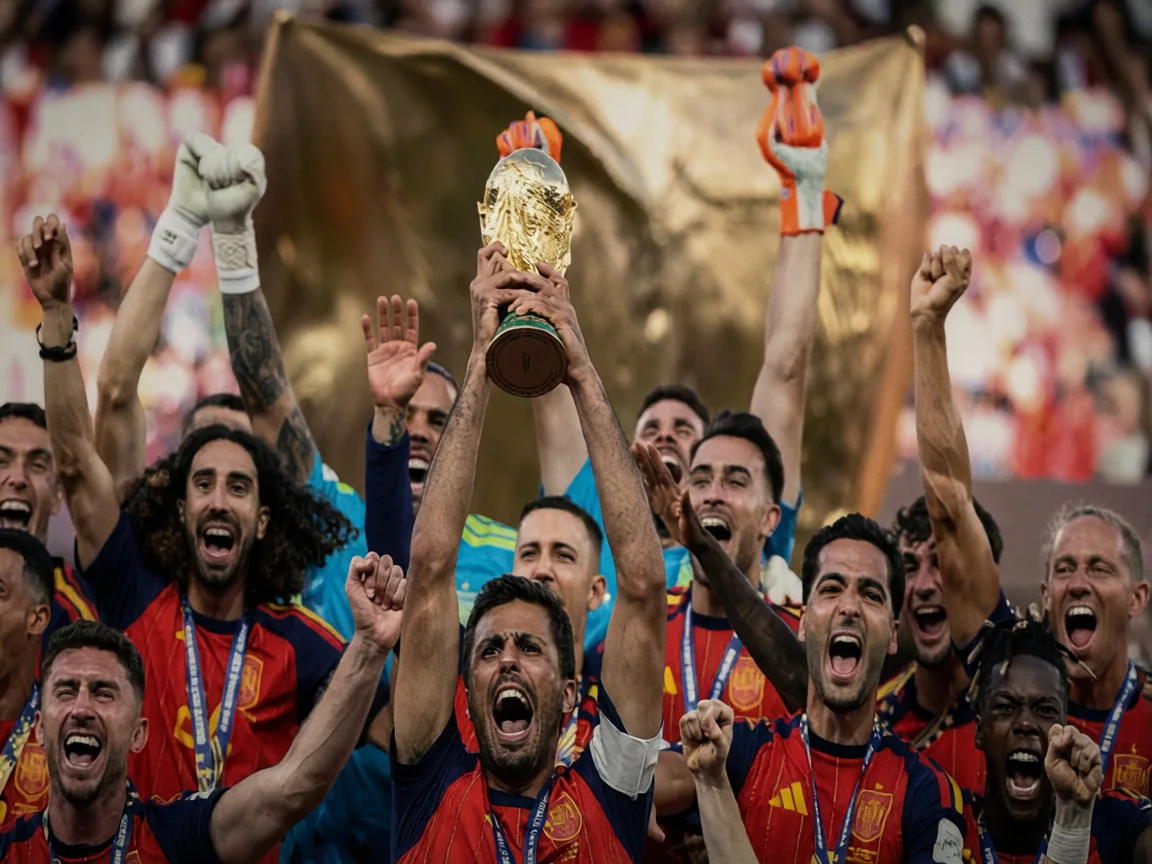
15.8 Million Witnesses: Spain's World Cup Crown Captivates a Nation
Spain's World Cup final triumph drew 15.8 million peak viewers on BBC, proving women's football now commands prime-stage audiences.

Shearen Backs Tuchel: England Boss Deserves Time After World Cup Heartbreak
Alan Shearer defends Thomas Tuchel, insisting the England manager's World Cup semi-final defeat doesn't define his tenure.

Messi's Record Night Masks Argentina's Tactical Pivot Against Cape Verde
Lionel Messi's 30th World Cup appearance headlines a last-32 clash, but Argentina's tactical reshuffle and Cape Verde's structured underdog approach demand deeper scrutiny.