From Wimbledon to Clairefontaine: The Bartoli-Deschamps Bond
A Wimbledon champion and a World Cup-winning coach share a friendship built on leadership, resilience, and the solitude of command.
The Architecture of an Unlikely Alliance
When Marion Bartoli speaks about Didier Deschamps, the vocabulary she reaches for belongs not to the manicured grass of the All England Club but to the dressing rooms and tactical boards of international football. Their friendship, blossoming quietly over years, represents something profoundly rare in modern sport: a genuine, cross-discipline bond between two individuals who have shouldered the crushing weight of national expectation from entirely different vantage points. Bartoli, the 2013 Wimbledon champion, and Deschamps, the architect of France's 2018 World Cup triumph, operate in parallel universes of sporting pressure. Their connection offers a window into how elite competitors process the psychology of command, isolation, and ultimately, redemption.
The genesis of this friendship lies in a shared understanding that transcends the technical specificities of their respective sports. Bartoli's career was defined by an idiosyncratic style: the two-handed forehand, the unorthodox service motion, the relentless intelligence that compensated for physical limitations. Deschamps' managerial philosophy, forged in the crucible of French national team expectations, similarly prizes structural pragmatism over aesthetic indulgence. Both figures, in their prime and beyond, have been subjected to a uniquely French sporting criticism that demands not merely victory, but victory achieved with a particular ideological purity.
The Weight of the Tricolore
Carrying French sporting ambition is an inherently lonely pursuit. Bartoli understands this intimately. Her Wimbledon triumph arrived after years of being told her game was insufficient for the sport's biggest stages. Deschamps, despite his medal-laden career, has endured parallel skepticism from a French footballing intelligentsia often more interested in stylistic orthodoxy than tournament efficiency. Their 1-0 wins and attritional victories are frequently dissected as failures of ambition rather than celebrated as demonstrations of competitive intelligence. In Deschamps, Bartoli sees a kindred spirit: a leader whose methods are constantly questioned even as the resultsaccumulate with undeniable consistency.
This shared experience forms the bedrock of their friendship. When Bartoli discusses the French national team manager, she speaks with the authority of someone who has walked an analogous path. The tennis calendar, with its individual isolation, seems a world away from the collective machinery of international football management. Yet both domains demand an extraordinary psychological resilience from those who occupy their summit. The solitude of the tennis court, where decisions are made in split seconds without consultation, mirrors the isolation of the technical area, where a manager's substitutions and tactical shifts are scrutinized by millions.
Tactical Pragmatism as a Shared Language
Deschamps' approach to managing France has always been rooted in a sophisticated understanding of risk mitigation. His preferred 4-2-3-1 formation, which frequently morphs into a 4-3-3 in possession, prioritizes defensive structure and transitional efficiency. The dual pivot of his midfield, often anchored by the disciplined positioning of players like N'Golo Kanté and Adrien Rabiot, provides a platform that allows individual brilliance to flourish within a clearly defined collective framework. This is not the swashbuckling, expressive football that French purists crave, but it is a system engineered for tournament survival.
Bartoli, during her playing days, adopted a remarkably similar philosophy. Her game was constructed on reducing unforced errors, extending rallies, and imposing an intellectual rhythm on opponents who possessed greater raw power. The parallel is striking. Both figures built their greatest successes on a foundation of structural discipline.
The Psychology of Championship Moments
The most compelling dimension of the Bartoli-Deschamps friendship lies in what they recognize about the anatomy of a championship run. Each athlete grapples with a singular moment of决心, a moment when internal doubt must be suppressed and conviction must override analysis. Bartoli's Wimbledon campaign in 2013 was a masterclass in psychological escalation. She did not merely defeat opponents; she systematically dismantled their rhythm through relentless variety and unwavering intensity. Across 7 matches, she dropped only 1 set, a statistical dominance that underscores the totality of her focus during that fortnight.
"I was playing chess while they were playing checkers."
This assessment, whether apocryphal or authentic, captures the essence of her approach. Deschamps operates with a similar grand strategic vision. The 2018 World Cup campaign was not a series of individual matches but a meticulously managed continuum, where energy was conserved, risks were calculated, and every tactical adjustment served a broader tournament narrative.
The Isolation of Command
What Bartoli's perspective on Deschamps illuminates most vividly is the profound loneliness of sporting leadership. A tennis player at the peak of their powers stands entirely alone. The crowd, the coach, the support team: all are silenced by the geometric inevitability of the match. A national team manager occupies a similar emotional space, albeit surrounded by thousands. The decisions are singularly attributable. The blame is personal. The praise is often qualified.
The Limits of Individual Agency
Bartoli's career ended prematurely due to physical considerations that she could not control, despite her tactical ingenuity. This was a reminder that sporting brilliance always operates within constraints. Deschamps, in his role, confronts similar limitations. The availability of players, their physical condition, their psychological readiness: all these factors constrain even the most sophisticated tactical planning. The beauty of the Bartoli-Deschamps friendship is that it acknowledges these constraints without surrendering to them.
- 2 Grand Slam finals for Bartoli in her career
- 1 major trophy: the 2013 Wimbledon title
- 1 final appearance at the 2007 Wimbledon Championships
- Coach Deschamps has overseen 150+ matches as France manager
These numbers, drawn from vastly different sporting contexts, speak to the same fundamental truth: at the highest level, success is measured not by the accumulation of appearances but by the capture of the moments that define careers.
Reciprocal Influence
Friendships in elite sport are frequently transactional, built on mutual commercial benefit or shared representation. The Bartoli-Deschamps bond appears substantively different. It is rooted in a dialogue about leadership that enriches both participants. Deschamps' experience of managing egos within a squad, of balancing tactical discipline with the creative freedom required to unlock stubborn defenses, provides a collective dimension.
Between Wimbledon Grass and the Stade de France
The friendship between Marion Bartoli and Didier Deschamps ultimately speaks to a truth that sporting discourse frequently obscures. The methodologies of different sports are separated by technical specifics. The psychology of victory is universal. Both individuals have confronted the same fundamental question: how to impose one's will upon a contest when the margin between triumph and catastrophe is measured in millimeters and milliseconds.
Looking Forward: France's Next Chapter
As France prepare for their next competitive engagements, Deschamps continues to refine his system. The emergence of younger talent within the French squad presents the familiar challenge of integrating individual quality without disrupting collective structure. The 4-2-3-1 may evolve. New pressing schemes may be introduced. The personnel will shift.
The tactical questions facing France in their upcoming fixtures revolve around the balance of their midfield construction and the integration of their attacking trident. How Deschamps configures his team against opponents who will sit deep and deny the transitional spaces France exploit so ruthlessly will be a defining narrative. Bartoli, watching from the stands or from the commentary booth, will recognize the patterns. The setup, the calculated patience, the willingness to endure uncomfortable passages for the sake of a larger strategic design: these are the signatures of a sporting philosophy that transcends code and surface.
In an era of increasingly specialized sporting discourse, the friendship between a Wimbledon champion and a World Cup-winning coach offers a necessary corrective. It reminds us that the most interesting conversations in sport happen not within the boundaries of individual disciplines but in the spaces between them, where the universal grammar of competition is spoken most clearly.
Editorial Integrity
This is an original SportPulse article written by our editorial team. All content is independently researched, written, and reviewed by our writers and editors before publication. We do not publish copied, aggregated, or syndicated content.
SportPulse is committed to original sports journalism. Read our editorial policy or contact us with any questions.
More Like This
All football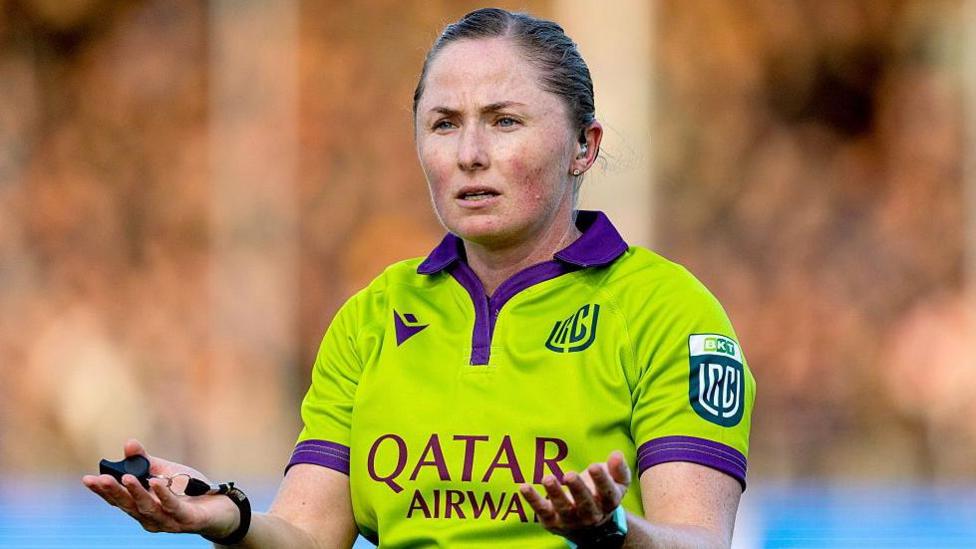
Pioneer Aimee Barrett-Theron Steps Down After Cancer Diagnosis
World Rugby's top female referee Aimee Barrett-Theron puts her whistle down to fight breast cancer, halting a trailblazing career.
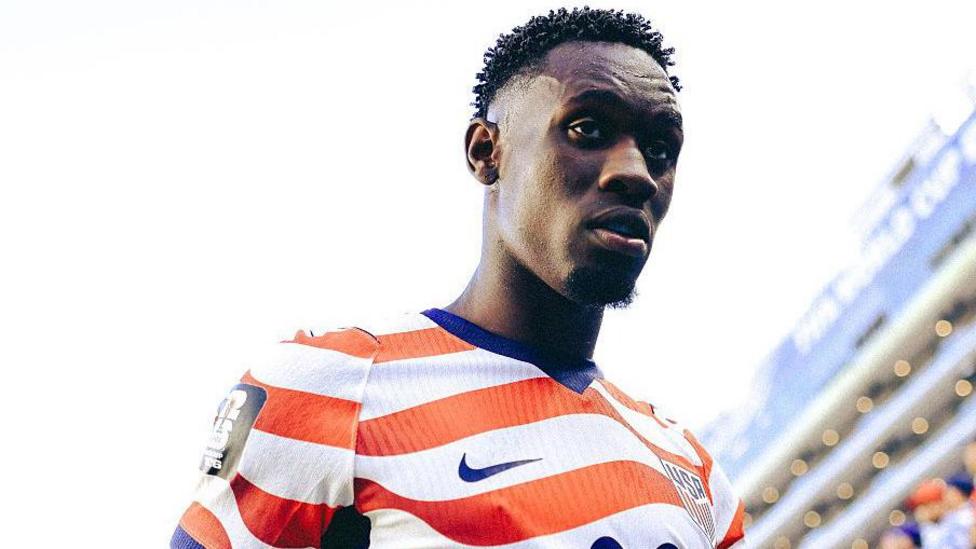
Balogun Braced for Storm After FIFA Waives World Cup Ban
Folarin Balogun admits FIFA's shock decision to waive his one-game ban brought controversy and nerves to the USMNT camp.

Scottish Lower Leagues: Ross County, East Kilbride & League Two Chaos
Ross County scramble for survival, East Kilbride chase promotion dreams, and League Two descends into beautiful anarchy.