Spa's High-Speed Chess: Five Tactical Battlegrounds Defining the Belgian GP
Spa-Francorchamps demands precision across aerodynamics, tire thermodynamics, and strategic timing. Five technical battlegrounds will decide the Belgian Grand Prix.
The Ardennes Canvas
Spa-Francorchamps sits as the ultimate aerodynamic proving ground on the Formula 1 calendar. At 7.004 kilometers, it remains the longest circuit on the schedule, demanding a uniquely compromised setup that blends low-drag straight-line efficiency with enough downforce to tackle the sweeping medium-speed corners through the Ardennes forest. The forecast introduces the first variable: ambient temperatures hovering around 18 degrees Celsius with a 60% chance of precipitation scattered across the region. That weather canvas shapes everything from tire warm-up protocols to the strategy wall's contingency planning.
The track surface itself offers moderate grip characteristics, evolved gradually by the relentless passage of other series throughout the weekend. Pirelli has allocated the three hardest compounds in its range: the C1 (hard, white sidewall), C2 (medium, yellow), and C3 (soft, red). This conservative allocation reflects Spa's abrasive tarmac and the colossal lateral loads generated through sectors one and two. Expect most of the field to default to a medium-to-hard one-stopper, though the weather could shred that blueprint entirely.
Five Battlegrounds That Will Decide the Race
1. Eau Rouge-Raidillon and the Compression Factor
The iconic uphill complex remains Spa's defining physical challenge. Cars bottom out at the apex of Eau Rouge with an estimated 5g vertical compression before climbing toward Raidillon and the flat-out run to Les Combes. The uphill exit demands a stable aerodynamic platform; a loose rear under that compression translates directly into a spin into the barriers. Teams spend significant simulation time mapping this specific ride-height window, balancing the plank wear against the need to keep the floor producing maximum downforce. If a driver arrives at Raidillon without full commitment, they lose three to four tenths before the braking zone at Les Combes.
2. The DRS Aerodynamic Chess Match
Spa runs a single DRS activation zone, positioned along the Kemmel Straight after Raidillon. The detection point sits just before Eau Rouge, meaning the attacking driver must carry momentum through the complex to position themselves for a pass. Thetow effect at Spa is amplified by the long straights and high altitude; the thinner air at roughly 450 meters above sea level naturally reduces engine power and aerodynamic drag. The defending team faces a strategic dilemma: run a higher-downforce rear wing for cornering stability and surrender straight-line speed, or trim out for the Kemmel straight and struggle through sector two.
3. Tire Temperature and the Thermal Window
The C2 medium compound carries the strategic load this weekend. At a track where surface temperatures rarely climb above 30 degrees under cloud cover, keeping the front tires in their operating window becomes a persistent engineering headache. The long dictatorship of sector two, featuring Pouhon and Fagnes, stresses the left-front tire relentlessly. A driver struggling with front-end warm-up loses the apex commitment needed through the high-speed direction changes. Look for teams to run elevated front tire pressures to combat the carcass deformation under lateral load, the trade-off being a smaller contact patch and reduced mechanical grip in the slow right-hander at La Source.
4. The Safety Car Probability and the Pit Window
The historical statistics at Spa are merciless. The Belgian Grand Prix has a 70% probability of a Safety Car deployment across the last decade, driven by the sheer difficulty of recovering stranded cars from the gravel traps at Raidillon, Les Combes, and Stavelot. The strategic consequence is profound: a VSC or full Safety Car typically condenses the field and offers a cheap pit stop, cutting the stationary time penalty from roughly 22 seconds to under 14 seconds. The strategy wall will model their pit windows around this probability, potentially delaying the first stop to lap 18-22 in anticipation of a race interruption.
5. Lap One and the La Source Bottleneck
The run down to La Source at race start is the most consequential braking event of the afternoon. Cars funnel from the wide grid formation into a tight right-hander after a full-throttle run exceeding 300 km/h. The first-lap chaos at this specific corner has historically eliminated front-running contenders, most recently demonstrated in mixed conditions where visibility drops to nearly zero in the spray kicked up by the leading cars. The defending driver at the front controls the pace through the final corner onto the main straight; the chasing pack must anticipate the launch timing while managing tire and brake temperatures, all while the brake bias shifts under the fuel-load differential.
Strategy Breakdown: The Pit Wall's Decision Tree
The race engineers face a remarkably layered decision matrix at Spa. The fundamental choice between a one-stop and a two-stop strategy hinges entirely on tire degradation data harvested from Friday practice. If the C2 medium demonstrates a degradation curve below 0.05 seconds per lap, a one-stop window opens around lap 16 to 20, transitioning onto the C1 hard for a 44-lap final stint. That scenario is cleaner and removes traffic management from the equation, but it requires precise tire management through the high-speed sector two corners.
The two-stop alternative offers pace and aggression but demands overtaking execution. The core tradeoff: flat-out pushing on newer tires risks getting stuck behind a midfield DRS train, effectively neutralizing the performance advantage. If the C1 hard proves at least 0.3 seconds per lap faster than the C3 soft, teams will abandon the soft entirely and run medium-hard-hard, using the final stint on fresh hards to attack. The strategy wall is also closely monitoring the undercut potential: pitting before the car ahead and exploiting clean air to bank a rapid out-lap, which at Spa is worth roughly 1.8 seconds of track position.
The Kemmel Straight Question
Aerodynamic efficiency at Spa is not a single setup choice but a compromise. A lower-downforce configuration yields top speeds exceeding 340 km/h on the Kemmel Straight, improving overtaking chances into Les Combes. The cost arrives in the twisty second sector, where the car lacks the necessary front-end bite to carry minimum speed through Pouhon. Teams that nail this compromise give their drivers a raceable package. Those who misjudge it produce a car that is either a sitting duck on the straights or a handful through the corners.
The radio message from the pit wall tells you everything about how the strategy is unfolding. A calm, measured call to box this lap means the plan is working. A panicked call to box now, box now, means the undercut is destroying their race.
Points Positioning
The championship mathematics add a layer of conservatism to the strategic aggression. Every position gained or lost at Spa translates directly into points under the current scoring system, which weighs heavily across a 24-round calendar. A driver fighting for P4 instead of P5 collects an additional 3 points. Over a season, that margin separates championship contenders from the midfield. The strategy wall will be acutely aware of the standings; a driver in a tight points battle may be instructed to settle for a guaranteed position rather than risk everything for a single overtake into Les Combes. The post-race standings shuffle will reflect this strategic caution.
The Final Word
The Belgian Grand Prix rewards precision engineering and punishes strategic guesswork. The team that reads the conditions, manages the tire thermal window, and positions its cars around the Safety Car probability leaves Spa with the maximum points haul. Those that gamble without the underlying data will find the Ardennes a cold and unforgiving environment.
Editorial Integrity
This is an original SportPulse article written by our editorial team. All content is independently researched, written, and reviewed by our writers and editors before publication. We do not publish copied, aggregated, or syndicated content.
SportPulse is committed to original sports journalism. Read our editorial policy or contact us with any questions.
More Like This
All f1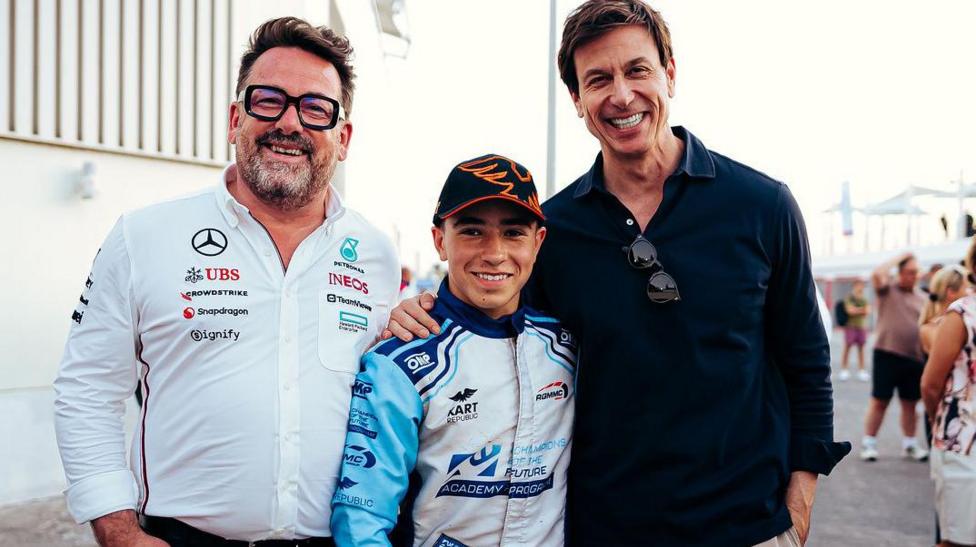
Mercedes Losves Star Scout to Red Bull: What It Means for Both Teams
Red Bull poaches Mercedes' driver discovery architect behind Kimi Antonelli, reshaping the talent pipeline battle.
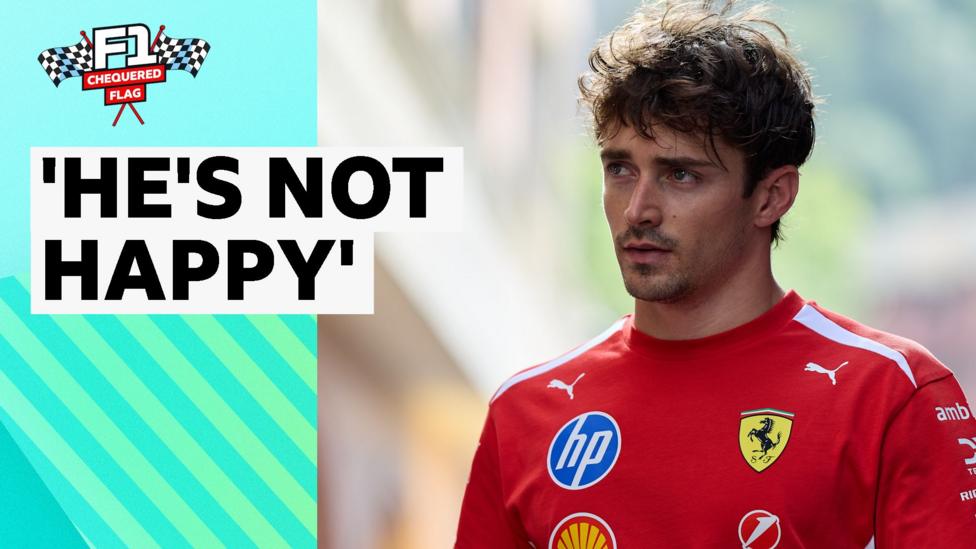
Leclerc Slams 'Borderline Dangerous' Ferrari After Brake Failure Shatters Monaco Podium
Three out of four brakes failed on Leclerc's SF-24, sending him into the barriers while running for a podium at his home race.

FIA Ratifies 2027-2028 Rule Changes: Shaping F1's Next Era
The FIA WMSC ratifies regulatory overhauls for 2027 and 2028, layering new technical and financial constraints onto the 2026 foundation.