Ben Askren's Near-Death to Comeback: Wrestling's Most Remarkable Return
Ben Askren returns to competition Saturday, just one year after a medical crisis nearly killed him.
Ben Askren has never been an athlete who trades in sentimentality. The man built a career on an almost insolent level of self-belief, suffocating opponents with a grappling game so starkly effective it bordered on the artistic. Yet even by the standards of a fighter who once leaped across a cage to assault an opponent before a bell rang, the story now unfolding is extraordinary. Twelve months after a medical crisis brought him to the very edge of his existence, Askren is preparing to compete again.
This Saturday, Askren is scheduled to return to competition in a wrestling match, completing a recovery that defies the typical arc of athletic resilience and ventures into the territory of sheer, improbable human survival.
The Anatomy of a Crisis
The details of Askren's brush with death are essential context for understanding the magnitude of this weekend's return. In the summer of 2024, Askren was hospitalized in what can only be described as a critical, life-threatening condition. The former UFC welterweight and ONE Championship titleholder required urgent medical intervention, including a stay in the intensive care unit and the placement of a ventilator to support his breathing system, after his lungs failed him entirely.
For a man whose professional identity was forged in the crucible of physical dominance, the reversal was total. Askren, who captured the world's attention with a collegiate wrestling career that included two NCAA Division I championships at the University of Missouri, was suddenly engaged in the most desperate scramble of his life—and there was no opponent to submit, only his own failing biology.
It is a peculiar cruelty of combat sports that the athletes who spend years conditioning their bodies to absorb and inflict damage can be undone by internal failures that no amount of training can prevent. The ventilator was not a temporary precaution. It was a lifeline.
The Statistical Improbability of Return
What makes Askren's return genuinely remarkable is the timeline, compressed and aggressive.
- June 2024: Hospitalized, placed on ventilator support, condition described as critical
- Recovery period spanning the latter half of the year, involving pulmonary rehabilitation
- 2025: Clearance to return to competitive athletic activity
- Saturday: Scheduled wrestling match, marking competitive return
The window between losing the ability to breathe unassisted and stepping onto a wrestling mat to face a geared opponent is approximately one year.
To contextualize this, consider that pulmonary recovery from severe respiratory failure typically requires extensive rehabilitation, with full lung capacity restoration often taking 18 to 24 months in patients without prior athletic baselines. Askren is attempting to compress that timeline while simultaneously returning to a sport where cardiovascular demand is extreme.
This is not a nostalgia tour. This is a man betting that his body, and lungs that were failing twelve months ago, will hold against a competitive athlete who has spent the entire year training without interruption. The audacity is staggering, even for a competitor nicknamed "Funky."
From Funky to Probable: The Askren Arsenal
To understand why Askren would risk this, one must understand him. Ben Askren is not a generalist. He is a specialist of the most rigid and effective kind. His wrestling, honed under the legendary Brian Smith at Missouri, is characterized by an aggressive, pummeling style that breaks opponents down methodically before applying devastating pinning combinations.
His transition to MMA was successful, if ultimately truncated by injury. In theoctagon, he compiled a professional record of 19 wins and 2 losses, capturing belts in Bellator and ONE Championship before a brief but spectacular stint in the UFC. His undefeated streak lasted nearly a decade, ending лишь when he faced opponents in Jayebwongido and Jorge Masvidal in bouts that highlighted both his grinding strengths and the limitations of his striking game.
That MMA career, however, was always an extension of his wrestling. Askren never pretended to be a kickboxer. He was a wrestler who happened to fight, and his return this weekend is to the discipline that formed him, the sport where his self-belief was always most justified.
The Strategic Question: Can the Body Match the Will?
The tactical narrative for Saturday's match is deceptively simple. Askren's path to victory remains what it always was: close the distance, secure a grip, establish dominant position, and force the stoppage. His wrestling IQ remains elite, his scrambling ability largely instinctive.
But the unseen variable, the factor that no amount of film study or mental preparation can account for, is oxygen.
Wrestling is a sport of lactic acid management. Matches are short, intense bursts of maximum exertion during which the body's demand for oxygen spikes precipitously. For Askren, the question is not whether his technique has eroded—the neural pathways of a two-time NCAA champion are etched deep. The question is whether his cardiovascular system, rebuilt from a state of catastrophic failure, can deliver the oxygen his muscles will scream for.
If his lungs hold, Askren's grappling superiority makes him a favorite against nearly any opponent not currently competing for an Olympic berth. If they do not, Saturday will be a short, painful education in the limits of human will.
The grappling community has long held Askren in reverence, not merely for his accolades but for the purity of his approach. He is, in many ways, the last of wrestling's true thinkers, a man who articulated the geometry of the sport with the clarity of an engineer. To see him return is to see a master potentially confront his own physical ceiling.
What Saturday Means Beyond the Match
Askren's return carries weight that extends beyond his personal narrative. He is a symbol for wrestling's grassroots, proof that the sport's culture of relentless return can produce moments of genuine human drama. But it also raises uncomfortable questions about the pressure, internal and external, that drives athletes to compete.
His legacy is already secure. He is a Hall of Famer in every sense, a man who captured titles across multiple major promotions and did so with a style that was both dominant and deeply idiosyncratic. His return is not about legacy. It is about something more primal.
Ben Askren, a year after almost dying, simply wants to compete. In a world where athletic comebacks are often manufactured narratives, this one is authentic and dangerous.
The Bottom Line: Saturday is not about whether Askren can win. It is about whether the human body, pushed to the brink of failure and dragged back, can be trusted under pressure again. The answer will determine whether this is a comeback or an epilogue. Either way, it is a story that commands attention, from a man who has never_accepte any alternative.
Editorial Integrity
This is an original SportPulse article written by our editorial team. All content is independently researched, written, and reviewed by our writers and editors before publication. We do not publish copied, aggregated, or syndicated content.
SportPulse is committed to original sports journalism. Read our editorial policy or contact us with any questions.
More Like This
All long-reads
Ecclestone Etches Name Into Lord's History
Sophie Ecclestone becomes the first English woman on Lord's honours board with a five-wicket demolition of India.
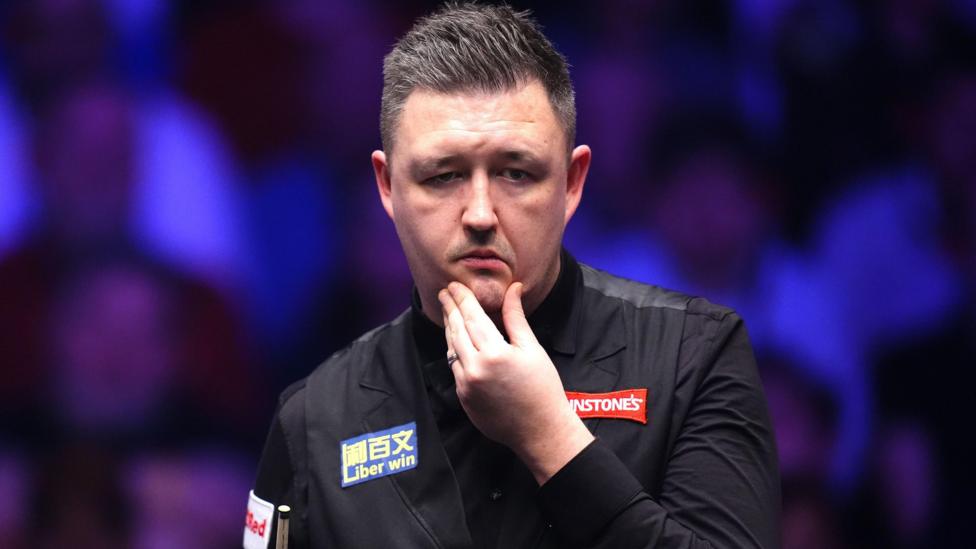
Cancer Charity Cash Stolen From Kyren Wilson's Home During Leicester Event
Thieves targeted Kyren Wilson's home, making off with cash raised for cancer charities while the snooker star competed in Leicester.

Silivri Is Cold: Erdoğan's Rival Behind Bars
Ekrem İmamoğlu won Istanbul, eyed the presidency, and now faces a trial that could drag on for 12 years inside Europe's largest prison.