Silivri Is Cold: Erdoğan's Rival Behind Bars
Ekrem İmamoğlu won Istanbul, eyed the presidency, and now faces a trial that could drag on for 12 years inside Europe's largest prison.
There is a phrase that echoes through newsrooms and political backrooms in Istanbul, spoken in a half-whisper and always with a sideways glance. Silivri soğuktur. Silivri is cold. It is not a meteorological observation. It is a warning. For journalists, activists, and any politician bold enough to criticize President Recep Tayyip Erdoğan, Silivri represents a frostbite of the political kind. It is the endpoint of dissent, a sprawling complex where months can pass before detainees see the inside of a courtroom and where politically inconvenient futures are quietly deep-frozen.
For decades, Silivri was something else entirely. It was known as a sayfiye yeri, a place for country cottages and summer homes. All around the notorious prison complex today, small family-run farms and private villas with swimming pools dot the landscape. Guard dogs bark behind perimeter fences, a surreal contrast to the razor wire and surveillance towers that have swallowed the surrounding landscape. Construction of the Marmara Prison complex began in 2005 and was completed three years later. It comprises eight closed correctional institutions alongside an open prison where the court is located. Today, this coastal getaway hosts Europe's largest prison complex.
The Mayor Who Refused to Lose
Ekrem İmamoğlu arrived in this unlikely setting not through a summer vacation but in the back of a state vehicle. Originally a construction magnate from a wealthy family, he built his political career on a simple, effective persona: the affable, approachable local leader. He was the mayor of Istanbul's Beylikdüzü district, part of the secularist Republican People's Party (CHP), when the Erdoğan government suddenly made him the most significant political outsider in Turkey.
His ascent was meteoric and fueled by Erdoğan's own miscalculations. In March 2019, İmamoğlu won the Istanbul mayoral election by a narrow margin. Rather than concede, Erdoğan's AK Party challenged the result, citing irregularities. The electoral authority annulled the vote and ordered a rerun in June. This time, emboldened opposition voters turned out in force. İmamoğlu won by a landslide, securing 777,856 more votes than his AKP rival. This victory broke Erdoğan's monopoly on the mayorship of Istanbul, a historic post famously cited as a launchpad to national power.
İmamoğlu himself is acutely aware of this. Residents of the city often speak of his bold persona and refrain from antagonizing opponents. While the late Mayor of Istanbul, Kadir Topbaş, was a notably moderate figure, İmamoğlu understands the game.
This process has turned into a form of torture.
That was how İmamoğlu described his legal ordeal. His crime-of-the-century trial, with charges including fraud and organized crime, could theoretically drag on for 12 years.
The Architecture of Deference
The charges against İmamoğlu feel labyrinthine to many observers. He faces allegations related to municipal tenders dating back to his time as mayor of Beylikdüzü, alongside a bizarre charge of insulting election officials—a case rooted in his sharp critique of those who annulled the initial March 2019 vote. The legal mechanics are complex, but the political narrative is stark. To his supporters, this is the systematic neutralization of a democratically elected official.
The charge of insulting officials is particularly illustrative of the systemic deference built into the Turkish judiciary. Erdoğan's government insists the courts are independent. Critics note the structural reality of appointment mechanisms, where loyalty often appears to be a prerequisite for elevation. When İmamoğlu stood before a judge, the atmosphere was less a legal proceeding and more a cautionary tale for any ambitious provincial mayor.
Turnbull Abdi, a former British diplomat and Turkey expert, says Western governments increasingly see İmamoğlu as the most realistic opposition figure in Turkey. However, they remain cautious about backing him too publicly, wary of providing ammunition to pro-government media eager to cast him as a foreign agent.
The Dissident Playbook
The use of lengthy pretrial detention and drawn-out legal proceedings against opposition figures is well-documented. In 2013, leading dissident Osman Kavala was initially detained on charges related to the Gezi Park protests, and a later indictment added a staggering life sentence without parole, relating to the failed 2016 coup. The former co-chair of the pro-Kurdish HDP, Selahattin Demirtaş, spent years behind bars before being released recently.
The pattern reveals a strategic philosophy. You do not need to secure quick convictions to neutralize a political threat. The system merely needs to make it impossible for the target to travel, campaign, or communicate with their base. A trial that spans a decade is not a judicial process. It is an exile.
The 2028 Calculus
The timing of İmamoğlu's legal battles is not coincidental. Turkish law prohibits individuals from seeking the presidency while serving a criminal sentence. By saddling the Istanbul mayor with a sprawling case that could last 12 years, the current administration effectively removes him from contention for the 2028 presidential election. Even if he is ultimately acquitted, the bleeding of time and resources severely damages his political momentum.
Erdoğan himself has navigated this landscape before. In 1997, as mayor of Istanbul, he was prosecuted for a public reading of a poem and banned from office. That decision, rather than ending his career, became a rallying cry for his supporters. Erdoğan later leveraged this martyrdom into a broad national coalition, eventually assuming the prime ministership and later the presidency.
İLÍThis history is not lost on the İmamoğlu camp. They hope their candidate can follow a similar path, from persecuted local figure to national standard-bearer. Yet the strategic defiance that today's Turkish opposition must display is complicated by the cold efficiency of Silivri.
Beyond the Concrete Walls
The physical structure of Silivri tells a story of modern political containment. It is no longer enough to simply exile a leader to a remote island or place them under house arrest. The Marmara complex creates multiple forms of isolation simultaneously. There is the physical confinement within the prison walls. There is the legal confinement imposed by travel bans and bail conditions. There is the digital confinement, where access to media interviews and public statements is rigorously controlled by prison authorities.
This is what makes İmamoğlu's situation so instructive for those seeking to understand modern Turkish politics. The opposition leader remains popular, his narrative unmatched. When he stepped out in Istanbul this year and scolded government officials, his support base roared with approval. The suffocating legal pressure is a testament to his effectiveness. If he were truly spent as a political force, the regime would not invest such effort in keeping him behind the walls of Europe's largest prison complex.
The immediate future for İmamoğlu involves hearings, appeals, and the grinding passage of time. Western diplomats continue to watch closely, aware that Turkey's geopolitical significance renders its domestic politics impossible to ignore. Yet, beyond the diplomatic compound, the people of Istanbul still look for their elected mayor on the public stage. They understand the meaning of the phrase Silivri soğuktur. The pressing question is whether the cold will deter a nation, or ignite a wider warmth around a figure who refused to stand down.
Editorial Integrity
This is an original SportPulse article written by our editorial team. All content is independently researched, written, and reviewed by our writers and editors before publication. We do not publish copied, aggregated, or syndicated content.
SportPulse is committed to original sports journalism. Read our editorial policy or contact us with any questions.
More Like This
All long-reads
Possession Orthodoxy Meets Pragmatic Revolt: Europe's Tactical Crossroads
Across Europe's top leagues, coaches are abandoning possession dogma for adaptive, transition-based systems that redefine modern football.
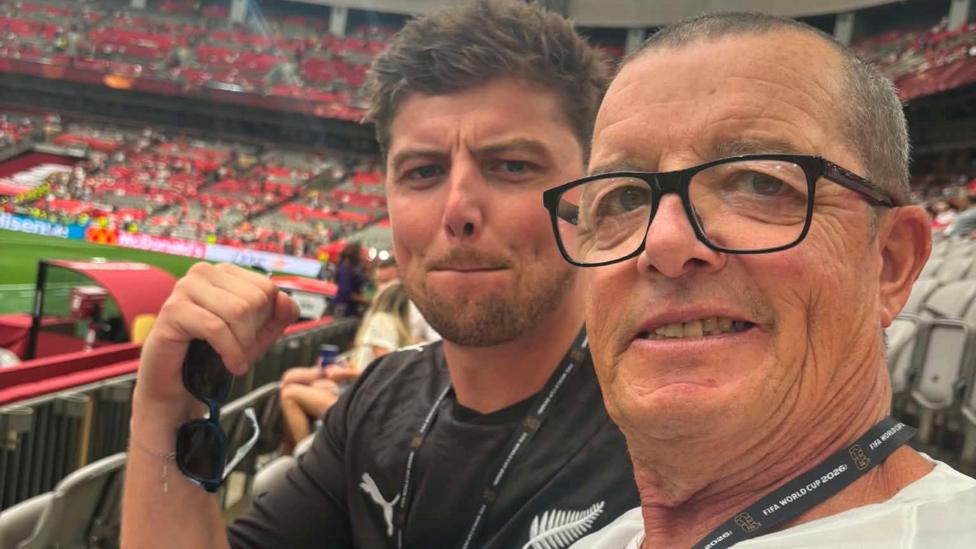
6,500 Miles for 13 Minutes: The Elliot Family's World Cup Gamble
Callan Elliot's family crossed 6,500 miles from Annan to watch him play 13 minutes for New Zealand at the World Cup.

Paro Seizes IBF Welterweight Crown With Masterful Points Win Over Crocker
Liam Paro outpoints Lewis Crocker in Brisbane to claim the IBF welterweight title and announce himself on the world stage.