Ben Stokes Retires: The Headingley Miracle That Redefined Possible
Stokes' retirement closes the book on Test cricket's most combustible match-winner, immortalised by 135 not out at Headingley.
The End of a Supernova
Ben Stokes has retired from Test cricket, and with him exits the most electrifying force the longest format has seen in a generation. No obituary of his red-ball career can be written without landing squarely at Headingley, August 2019, where a man whose body was broken and whose team was humiliated authored what Sir Alastair Cook called "the greatest innings ever played by an Englishman."
Cook was not exaggerating. He was, if anything, underselling it.
Stokes' unbeaten 135 off 219 balls against Australia in the third Ashes Test was not merely a great innings. It was a full-scale assault on the known laws of probability, a performance so outrageous that the word "miracle" barely covers the ground. England were dead and buried at 286 for 9, chasing 359 for victory, and Stokes dragged them across the line in a last-wicket stand of 76 with Jack Leach, who contributed a nerve-shredding 1 not out from 17 balls.
England won by one wicket. Read that again.
How It Unravelled Before It Was Rebuilt
The context makes the achievement even more staggering. England had been skittled for 67 in their first innings, their lowest Ashes total in over seven decades. Australia's seamers had made the ball talk on a green-tinged pitch, and the series stood at 1-0 to the visitors. A defeat at Headingley would have meant England could no longer reclaim the urn. The Ashes were slipping away on home soil, and the humiliation was turning existential.
Stokes, who had played a central role in the World Cup final triumph just weeks earlier, walked out with England's top order already back in the hutch. What followed was less a cricket innings and more a hostage negotiation with fate.
The Anatomy of Chaos
Stokes' innings can be dissected into two distinct phases, and the tactical shift between them reveals a cricketer of extraordinary cricketing intelligence, not just raw power.
The first phase was survival. Stokes dug in, defending resolutely, rotating the strike, refusing to panic as wickets tumbled around him. His strike rate in the early portion of the chase was barely above 40, and he played and missed repeatedly against Pat Cummins and Josh Hazlewood, who were extracting consistent movement. He was dropped by Marcus Harris at third slip on 34, a moment that would later be replayed millions of times with increasing disbelief.
The second phase was annihilation. Once Leach arrived as the last man, Stokes flipped a switch that shouldn't exist. He began attacking Nathan Lyon's off-spin with savage intent, reverse-sweeping with the kind of audacity that borders on contempt for the bowling. He slog-swept Lyon for six over mid-wicket. He reverse-swept him for four with the nonchalance of a man playing beach cricket.
He survived an agonising LBW review off Lyon when the ball was shown to be clipping the top of leg stump, the DRS delivering an "umpire's call" verdict that kept him alive by millimetres. The roar from the Headingley crowd when the screen flashed red was deafening.
Then came the moment. A full toss from Lyon, and Stokes launched it over mid-on for four. England had chased down 359. The ground erupted.
"I still don't know how I did it. I just kept thinking, one more ball. One more ball." — Ben Stokes, reflecting on the innings
What the Numbers Tell Us
Strip away the emotion and the narrative, and the statistics alone are staggering:
- 135 not out off 219 balls, with 11 fours and 8 sixes
- England's highest successful fourth-innings chase in Ashes history
- A last-wicket partnership of 76 runs, the highest match-winning last-wicket stand in a Test chase at that time
- Stokes faced 52.5% of the total deliveries during his partnership with Leach, shielding the tail-ender with calculated precision
- His scoring rate accelerated from roughly 42 in the first 100 balls to over 75 in the final 60 deliveries
The innings sits alongside Botham's 1981 Headingley Ashes performance as the defining moment in England-Australia cricket. But where Botham had Bob Willis to destroy Australia's second innings, Stokes had only himself and a bespectacled left-arm spinner who had been dropped for the previous Test.
The Tactical Breakdown
What made Stokes' innings tactically extraordinary was his management of the tail. He refused to farm the strike obsessively in the way many lower-order partnerships collapse into single-minded shielding. Instead, he trusted Leach to survive, gave him strike when the field was set deep, and then punished anything loose when Australia's bowlers inevitably lost their discipline.
Against Lyon specifically, Stokes' plan was devastatingly simple: he swept, reverse-swept, or advanced down the pitch on 19 of the 33 deliveries he faced from the off-spinner. Lyon's figures of 0 for 78 in the fourth innings told the story of a bowler who had been methodically dismantled by a man who had decided that no target was too large and no situation too dire.
Stokes also exploited Tim Paine's field placements ruthlessly. When Paine brought deep point up to save a single, Stokes carved through the vacant region. When mid-on went back, Stokes drove him over the top. Every captaincy decision was punished, every tactical gambit countered. It was chess played at 90 miles per hour.
Where It Sits in History
The context of Stokes' broader career amplifies the Headingley legend. He finishes his Test career with over 6,000 runs and more than 190 wickets, a genuine all-round record that places him among the finest to have played the game. But it is the innings he played under impossible pressure, twice in one English summer, that define his legacy.
The World Cup final against New Zealand at Lord's earlier that year saw Stokes bat through a nerve-shredding Super Over to deliver England's first 50-over World Cup. That was remarkable. Headingley, played just weeks later, was something else entirely. Back-to-back transcendent performances in high-stakes cricket had never been achieved in such rapid succession. Stokes did not merely rise to the occasion; he seemed to require the occasion in order to function at his highest level.
Cook's assessment remains the definitive one. "The greatest innings ever played by an Englishman" is a statement of extraordinary weight, delivered by a man who captained England in 59 Tests and scored 12,472 Test runs himself. Cook understood what he had witnessed because he understood the scale of the task. Chasing 359 on a wearing pitch, with your team shot out for 67 in the first dig, with your last partner averaging single figures with the bat, and winning by one wicket? The numbers simply should not add up.
The Verdict
Stokes' Headingley innings endures because it violated every rational expectation of what a cricket innings can achieve. It was not built on technical perfection or aesthetic beauty, though both were present in flashes. It was built on an almost pathological refusal to accept defeat, a psychological force that bent the match around him until Australia's bowlers, fielders, and captain were reduced to spectators at their own execution.
That is Stokes' greatest gift and the reason his retirement leaves a void that raw statistics cannot measure. He did not merely play cricket. He subjected it to his will.
What Stokes Leaves Behind
England's Test side will miss Stokes not just as a batter or a bowler, but as the embodiment of a mentality. Under his captaincy, the team adopted an ultra-aggressive approach that reshaped the sport's tactical landscape. But it was the moments of individual brilliance, the impossible rescues and the match-winning bursts, that made him irreplaceable.
No current England player possesses the same capacity to single-handedly rewrite a match. Harry Brook scores runs at breathtaking pace. Joe Root is a technical master. But neither has demonstrated the particular brand of controlled chaos that Stokes brought to the crease in moments of maximum peril.
The 2019 Ashes were ultimately drawn 2-2, with Australia retaining the urn. Without Stokes at Headingley, it would have been a 2-1 defeat and a lost home series. One innings, one man, one afternoon in Leeds. That is what separates the great from the historically significant.
The Bottom Line
Stokes' retirement does not close the book on Headingley 2019. That chapter will never close. It stands as a permanent monument to what happens when supreme talent meets unbreakable nerve in conditions that should have made both irrelevant. Future generations will watch the footage and ask the same question everyone asked at the time: how?
There is no satisfying answer. There never was. Ben Stokes simply decided, for one extraordinary afternoon, that losing was not an option. Test cricket was richer for having him. It will be poorer without him.
Editorial Integrity
This is an original SportPulse article written by our editorial team. All content is independently researched, written, and reviewed by our writers and editors before publication. We do not publish copied, aggregated, or syndicated content.
SportPulse is committed to original sports journalism. Read our editorial policy or contact us with any questions.
More Like This
All long-reads
From Hating Every Minute to World No. 1: Linsey Smith's Unlikely Rise
England's Linsey Smith despised international cricket at first. Now she sits atop the T20 bowling rankings.
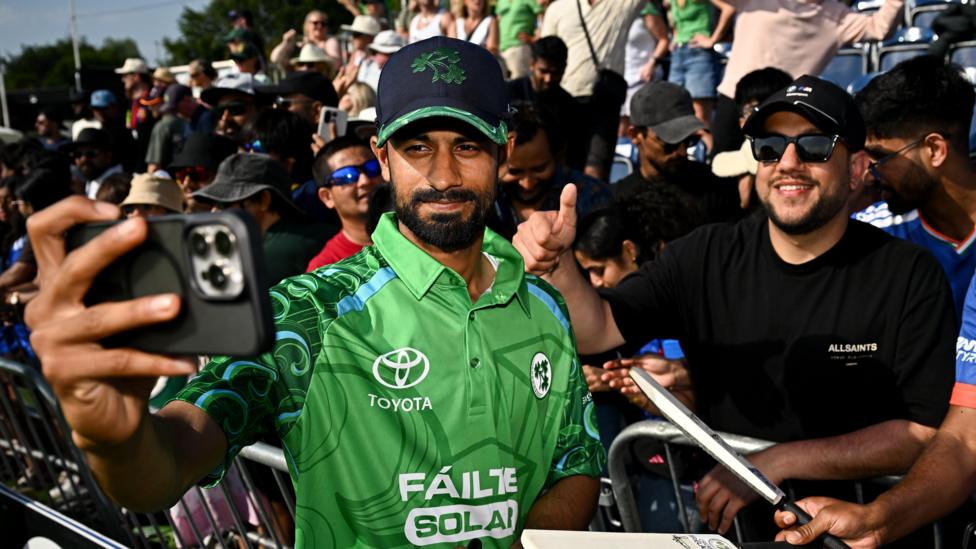
Moondra's Dream Delivery Powers Ireland's Seismic T20 Upset
India-born bowler Jai Moondra's heroics powered Ireland to a seismic T20 upset over cricket's reigning kings.

Tunnel Vision: The Rituals Shaping World Cup 2026's Elite
From Messi's timed maté to Kane's left-first kit routine, preparation rituals reveal the tactical psychology behind elite tournament performance.