Mourinho's Madrid Pull Off the Transfer Coup of the Summer
Bernardo Silva's free transfer to Real Madrid reunites him with Mourinho in a move that reshapes the Santiago Bernabéu midfield.
A Tactical Marriage Years in the Making
The Santiago Bernabéu rarely does quiet business, but the capture of Bernardo Silva on a free transfer from Manchester City is the kind of move that whispers dominance rather than shouts it. With José Mourinho now installed as Real Madrid's head coach, the Portuguese international becomes the first marquee piece of a rebuild that is as much philosophical as it is physical. No fee. No negotiation saga. Just a manager who knows exactly what he wants and a player who has spent years proving he belongs at the very summit of European football.
Silva's departure from the Etihad was not a surprise. The 30-year-old had been linked with moves away from Manchester for three consecutive summers, with Barcelona, Paris Saint-Germain, and Saudi Pro League clubs all circling at various points. What is surprising is the destination. Real Madrid, a club that typically chases galáctico signings with nine-figure price tags, have secured one of the most complete midfielders in world football without paying a single euro in transfer fees.
This is not a sentimental signing. It is a tactical one, and it tells you everything about where Mourinho intends to take this Madrid side.
What Silva Brings to the Bernabéu
For those who have followed Silva's trajectory from Benfica's academy through Monaco's thrilling 2016-17 Champions League run and into Pep Guardiola's City dynasty, the skill set is well documented. But context matters here, because the Silva arriving in Madrid is not the same player who left Lisbon as a wiry teenager.
At Manchester City, Silva evolved from a wide creator into arguably the most tactically versatile midfielder in the Premier League. Under Guardiola, he operated as a false winger, an interior midfielder, a deep-lying playmaker, and occasionally even a number 10 in more direct setups. His press resistance, spatial awareness, and ability to receive between the lines made him indispensable across multiple title-winning campaigns. He won six Premier League titles during his time in Manchester, along with the Champions League.
That breadth of experience is precisely what Mourinho covets. Unlike a specialist who thrives in one system, Silva is a system-agnostic talent. He can play in a 4-3-3, a 4-2-3-1, or a midfield diamond without any perceptible drop in output. For a manager whose tactical identity has always been rooted in adaptability rather than dogma, this is the ideal profile.
The Mourinho Factor
Mourinho's return to Real Madrid is itself a fascinating subplot. His first spell, from 2010 to 2013, was defined by a relentless counter-attacking identity, a fractious relationship with the dressing room, and a La Liga title in 2011-12 that broke Barcelona's domestic stranglehold. The football was often functional rather than beautiful, but it was devastatingly effective against possession-dominant opponents.
The question now is whether a more mature Mourinho, one who has learned from stints at Tottenham, Roma, and Fenerbahçe, will revert to those principles or evolve. Early indications suggest a hybrid approach: a compact defensive block that transitions quickly into structured build-up play, rather than the pure low-block-and-counter of his earlier career.
Silva is central to this vision. In a 4-2-3-1, he can operate as the advanced playmaker behind the striker, threading passes into the channels while pressing intelligently out of possession. In a 4-3-3, he slots in as the left-sided interior, drifting inside to create overloads while the left-back provides width. Either way, his role is to be the connective tissue between defence and attack, the player who makes the system coherent.
Tactical Shift: Why This Signing Changes Everything
The tactical implications of Silva's arrival extend far beyond his individual qualities. His presence fundamentally alters the balance of Madrid's midfield, and it creates a ripple effect across the entire squad.
Consider the existing options. Jude Bellingham has established himself as a force of nature arriving from deep, Federico Valverde offers engine and physicality, and Aurélien Tchouaméni provides defensive screening. What Madrid have lacked, particularly in Champions League knockout ties against disciplined low blocks, is a player who can unlock compact defences with a single touch or a disguised pass. Silva is that player.
More importantly, his arrival gives Mourinho the flexibility to rotate without sacrificing quality. The Spaniard can now manage Bellingham's workload, shift Valverde into a wider role when needed, and even deploy Silva alongside Tchouaméni in a double pivot for matches requiring more controlled possession. The Portuguese manager's preferred 4-2-3-1 suddenly has multiple credible configurations, each with a distinct tactical flavour.
There is also the pressing dimension. Silva's work rate off the ball is often understated, but his ability to read passing lanes and press triggers makes him an ideal fit for Mourinho's desire to win the ball high up the pitch. At City, Guardiola's system demanded constant pressing discipline, and Silva was one of its most reliable executors. That intelligence translates directly into a Mourinho setup that wants to be compact in midfield but aggressive in transition moments.
The Broader Context: A Statement of Intent
This signing also carries symbolic weight. Real Madrid have watched Barcelona undergo a painful financial restructuring while still managing to assemble a competitive squad through La Masia graduates and shrewd signings. Atlético Madrid, under Diego Simeone, continue to punch above their weight. The landscape of Spanish football is shifting, and Madrid's hierarchy clearly felt that passive squad management was no longer an option.
Bringing in Silva on a free does not just save the club a reported €60-80 million in transfer fees; it sends a message to the rest of Europe that Real Madrid can attract elite talent through prestige alone. In an era of inflated transfer markets and state-backed spending, that remains an extraordinary competitive advantage.
The financial dimension is worth dwelling on. Madrid have historically been cautious with wage structures relative to their revenue, and Silva's contract, while lucrative, represents excellent value when measured against his on-pitch contribution. Clubs across the Premier League are grappling with Profit and Sustainability Rules, while Madrid operate with the revenue base of the newly renovated Bernabéu driving commercial growth. This is shrewd business dressed up as a glamour signing.
What This Means for the Title Race
La Liga's competitive balance has been a talking point for years, but the reality is that Madrid and Barcelona remain the only realistic title contenders in most seasons. Silva's arrival tilts the needle further in Madrid's favour, particularly in the head-to-head fixtures that so often decide the championship.
Against Barcelona's high defensive line, Silva's ability to receive on the half-turn and play incisive passes into the channels could be decisive. Against Atlético's deep block, his close control and vision in tight spaces offer a solution that Madrid have intermittently lacked. These are not theoretical advantages; they are the specific qualities that have defined Silva's career at the highest level.
Barcelona's coaching staff will have taken note. The tactical chess match between the two Clásico fixtures next season just gained an additional layer of complexity.
Looking Ahead: Pre-Season and the Tactical Blueprint
The immediate focus shifts to pre-season integration. Mourinho will need to bed Silva into his tactical structure quickly, building the automatisms and positional relationships that underpin any functioning system. The early friendlies will be instructive, not for the results but for the shape of Madrid's attacking patterns.
Keep an eye on how Mourinho uses Silva in the opening weeks. Does he start centrally and stay there, or does he roam across the front line as he did so effectively at City? Does Mourinho trust him in a deeper role, or does he prefer to deploy him closer to the opposition box? The answers to these questions will define Madrid's tactical identity for the season ahead.
One thing is certain: this is not a signing made for the sake of optics. Mourinho identified a specific tactical need and filled it with a player he knows, trusts, and has worked with before at international level. Bernardo Silva is not a gamble. He is a solution. And in a summer defined by financial excess and speculative recruitment across Europe, that clarity of purpose may prove to be Real Madrid's most valuable asset of all.
Editorial Integrity
This is an original SportPulse article written by our editorial team. All content is independently researched, written, and reviewed by our writers and editors before publication. We do not publish copied, aggregated, or syndicated content.
SportPulse is committed to original sports journalism. Read our editorial policy or contact us with any questions.
More Like This
All football
New York's Diaspora Turns the World Cup Into a Home Game
In a city of 3 million immigrants, the World Cup doesn't just visit — it belongs.
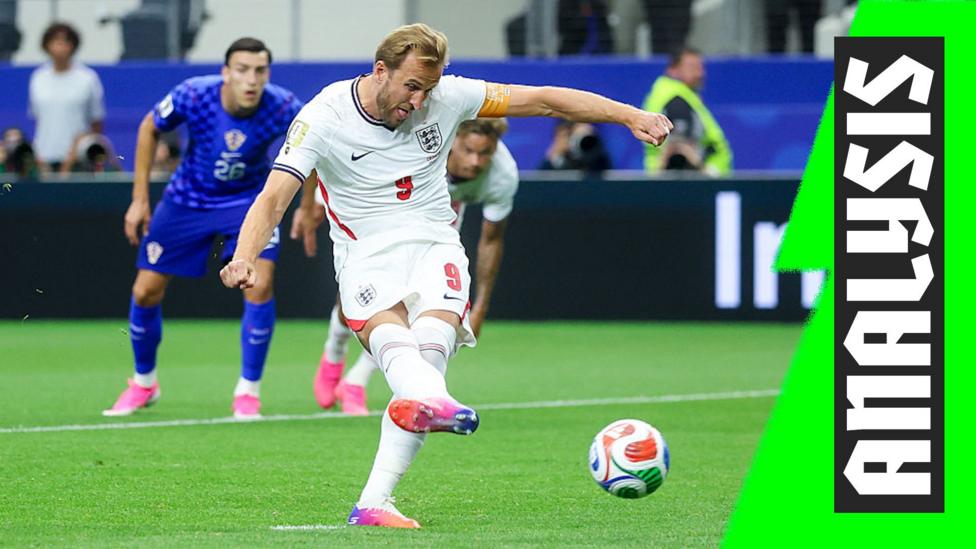
Kane's Penalty Evolution: The Anatomy of a Set-Piece Savage
Harry Kane's penalty technique transformation reveals a masterclass in mechanical refinement and opposition profiling.
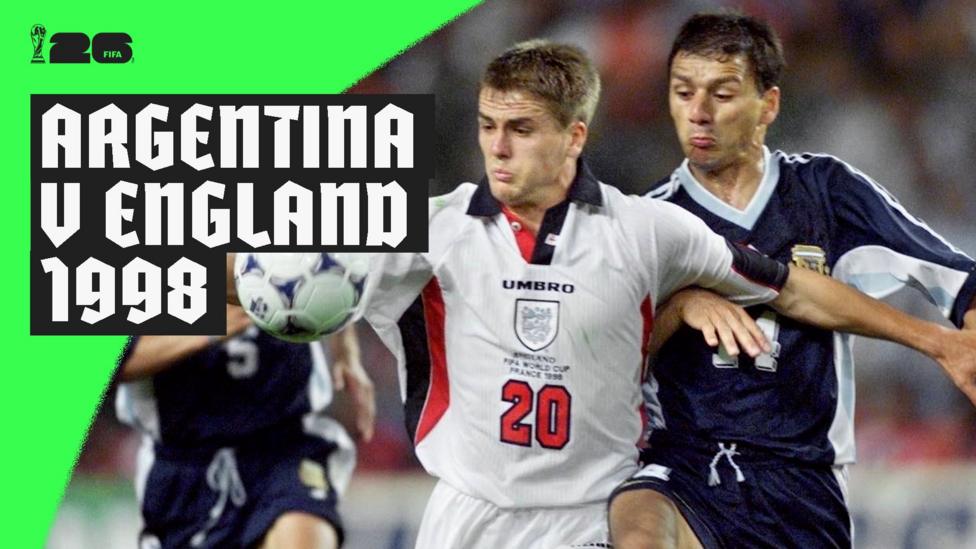
Owen's Rise, Beckham's Fall: England's 1998 World Cup Heartbreak
A night of genius and madness in Saint-Étienne that defined careers and revealed the beautiful game's cruelest theatre.