Berrettini's Grass-Court Savvy Silences Feisty Fils on Centre Court
The former Wimbledon finalist dismantled France's great hope in four sets, extending a 43-year French Grand Slam drought.
Centre Court Bows to Berrettini
The roof was open, the sky was grey, and Centre Court was buzzing with the particular electricity that only arrives when a crowd senses it's witnessing something volatile. Matteo Berrettini strode out looking every inch the grass-court predator he's proven himself to be. Across the net stood Arthur Fils, France's brightest young talent, stepping onto Centre Court for the very first time, carrying the weight of a nation's 43-year Grand Slam drought on his 22-year-old shoulders.
What followed was exactly the kind of combustible, high-quality affair that Centre Court was built for. Berrettini, the 2021 Wimbledon finalist, prevailed 6-4, 7-5, 3-6, 6-3 in a match that crackled with tension, breathtaking shotmaking, and more than a few heated exchanges with umpires and coaching boxes alike.
A Match That Erupted in Stages
The opening set was Berrettini at his most clinical. His serve, one of the most potent weapons in men's tennis, carved open angles that Fils could only admire. The Italian broke early and never looked threatened, closing out the set 6-4 with the quiet authority of a man who knows exactly how grass-court tennis should be played.
The second set tightened considerably. Fils began to find his range, unleashing forehands that cracked through the court with startling pace. He pushed Berrettini to deuce multiple times, but the Italian's composure under pressure remained a fortress. At 5-5, Berrettini manufactured the decisive break and served out the set 7-5, pumping his fist toward his box with controlled fury.
Then came Fils' riposte. The third set belonged entirely to the Frenchman. Playing with the freedom of a man with nothing left to lose, he attacked Berrettini's second serve with venom and moved to the net with startling confidence for someone who had spent eight months on the sidelines. He took the set 6-3, and for a brief, breathless passage of play, the match felt genuinely in the balance.
The crowd roared. Fils' coaches shouted encouragement. The umpire had already been drawn into multiple disputes. Centre Court had its drama.
But Berrettini has been here before. He's played the big points on this court, against Djokovic, against the deafening roar of expectation. The fourth set was a masterclass in veteran savvy. He tightened his first-serve percentage, refused to give Fils any rhythm on return, and broke at the crucial moment to take the set 6-3 and seal the match.
What the Numbers Tell Us
Berrettini's grass-court pedigree is no secret, but the statistical contrast between the sets tells the story of this match:
- Berrettini won 78% of first-serve points across the match, rising to 85% in the fourth set
- Fils committed 41 unforced errors, many of them from the baseline during high-pressure rallies
- Berrettini converted 4 of 9 break points, while Fils managed just 2 of 7
- The Italian hit 14 aces and faced only 3 break points in the entire match
- Fils struck 38 winners, but the unforced error count undermined their impact
The numbers reveal a player in Berrettini who understands how to manage a match on grass. He doesn't need to dominate every rally. He needs to serve big, pick his moments, and punish short balls with that monstrous forehand. That's precisely what he did.
The French Drought Deepens
The context surrounding Fils' defeat makes it sting all the more. France hasn't produced a male Grand Slam champion since Yannick Noah won Roland Garros in 1983. That's 43 years of waiting, hoping, and watching other nations hoist trophies.
Fils was supposed to be the one to change that narrative. Before his back injury at last year's French Open, he was ranked inside the top 20 and drawing comparisons to the very best young players on the circuit. His explosive power, his comfort on multiple surfaces, and his fearless temperament had the tennis world whispering about a genuine Sinner-Alcaraz challenger.
But the stress fracture robbed him of eight months. He arrived at Wimbledon without the match fitness, the rhythm, or the confidence that comes from sustained competition. What he showed against Berrettini was flashes of his extraordinary potential interspersed with the rust of a player still rebuilding.
"I gave everything I had out there. Centre Court was incredible. But against a player like Berrettini on grass, you need to be at your absolute best for four or five sets, and I'm not there yet. The body is coming back, but the sharpness takes time." — Arthur Fils, post-match
France's other remaining hope, Arthur Rinderknech, faces Novak Djokovic in the third round on Friday. The odds of ending the drought at this Championships are vanishingly slim.
Berrettini's Second Life on Grass
The Italian's own journey deserves recognition. Berrettini has battled a cascade of injuries over the past three years: hand surgery, abdominal tears, and recurring ankle problems that saw his ranking plummet outside the top 100 at various points. There were legitimate questions about whether he'd ever return to the level that carried him to the 2021 Wimbledon final, where he lost to Djokovic in four sets.
This performance suggested those questions are being answered. His serve remains elite. His forehand still generates angles that few on tour can replicate. And crucially, his movement on grass, a surface that rewards the slice backhand and the willingness to come forward, looked sharp and purposeful.
The Grass-Court Specialist
Berrettini's relationship with grass is almost anachronistic in the modern game. In an era of baseline dominance, he plays a brand of attacking tennis that belongs to another generation. The wide serve to the ad court, the forehand ripped into the open court, the slice backhand that skids low and stays low. It's a formula that has produced a career grass-court win rate above 75%.
Against Fils, every element of that formula was working. The Frenchman tried to counter with pace and depth, but Berrettini's court craft on this surface is simply superior right now.
"I love this court. Every time I walk out here, I feel like I belong. The injuries have been tough, but days like this remind me why I keep fighting." — Matteo Berrettini, post-match
Flare-Ups and Fire
The match wasn't without controversy. Fils was involved in two heated exchanges with the umpire over line calls and time violations, the kind of outbursts that reveal both the competitive fire and the frustration of a young player who knows he's not yet at full capacity. His coaching box was also a theatre of animated discussion, with hand signals and shouted instructions punctuating the tense moments.
Berrettini, by contrast, was the picture of calm. The 30-year-old's experience in these situations was evident. While Fils simmered, the Italian simply went about his work, letting his racquet do the talking.
Looking Ahead
Berrettini advances to the third round, where the draw opens up intriguingly. If his body holds, and that remains the great caveat with any Berrettini campaign, he has the game to go deep at this tournament. The serve, the forehand, the grass-court instincts: they're all still there.
For Fils, the focus shifts to the hard-court swing and the US Open. He needs matches, he needs reps, and he needs to trust that his back will hold up through the rigours of the second half of the season. The talent is undeniable. The question is whether the body will cooperate.
As for France's Grand Slam drought, it stretches on. 43 years and counting. The search for the next Noah continues, and while Fils remains the most promising candidate, patience will be required. Greatness doesn't arrive on a schedule, and a four-set loss to a rejuvenated Berrettini on Centre Court is no disgrace.
This Championships, though, belongs to the men who are fit, sharp, and ready. Berrettini proved today he checks all three boxes. The question now is how far that combination can carry him.
Editorial Integrity
This is an original SportPulse article written by our editorial team. All content is independently researched, written, and reviewed by our writers and editors before publication. We do not publish copied, aggregated, or syndicated content.
SportPulse is committed to original sports journalism. Read our editorial policy or contact us with any questions.
More Like This
All tennis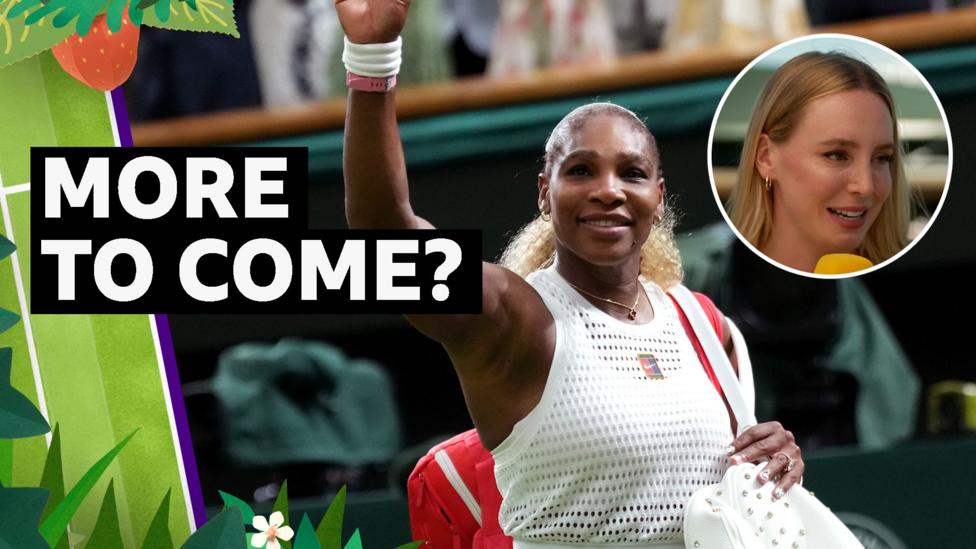
Serena's Comeback: A Quest Clocked at 3,649 Days
Serena Williams' Wimbledon return sparks debate: will the 23-time major champion chase Grand Slam No. 24 beyond the All England Club?
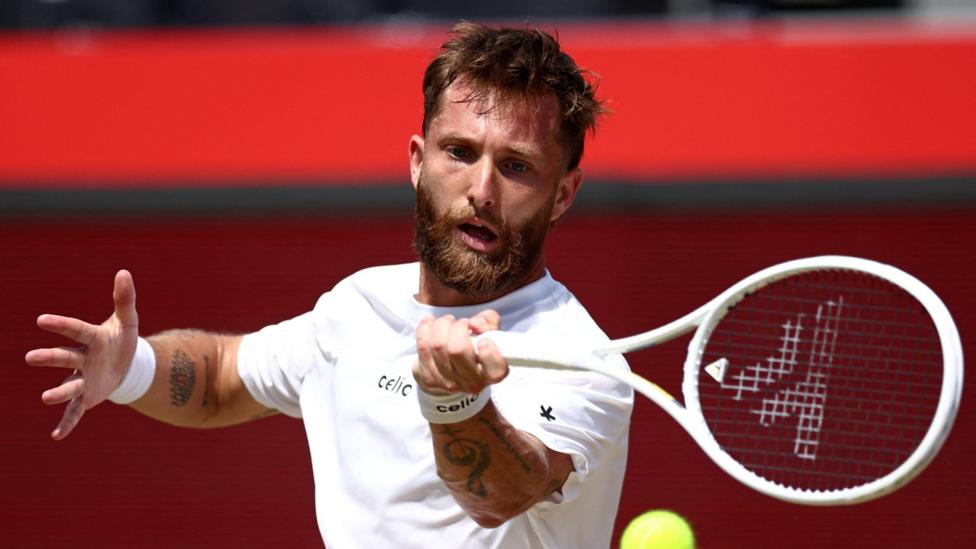
Seven Swear Words, $40,000 Gone: Moutet's Queen's Costly Meltdown
Corentin Moutet's fiery BBC interview at Queen's wiped out nearly his entire prize money in a single on-air outburst.
The Fearlessness of Youth: Jodar's Five-Set Statement at Wimbledon
Rafael Jodar, 19, erased a two-sets-to-one deficit to stun Carrenño Busta in a match that refused to end on day one.