Can We Kick It? How a Black Lens Reframes US Soccer's Structural Blind Spots
Akbar Majeed's documentary interrogates the pay-to-play model and cultural barriers blocking Black American participation in the world's game.
A Documentary as Structural Diagnosis
Akbar Majeed's Can We Kick It? arrives at a crossroads moment for American soccer. Between a home World Cup in 2026 and a national team still searching for a coherent identity, the feature-length documentary does something the US soccer press rarely attempts: it reads the sport's stagnation through the lens of race, class, and access.
Majeed's framework is neither nostalgic nor celebratory. The film positions the pay-to-play model as the central architectural problem blocking talent development, one that filters out players long before any tactical conversation about formations or pressing systems can take place. The documentary tells the story of the sport through a Black lens, tracing how structural exclusion has shaped, and continues to shape, the talent pool available to coaches at every level.
The timing is deliberate. With the World Cup co-hosted on American soil, scrutiny on US Soccer's developmental pipeline intensifies by the month. The question Majeed poses is not whether the United States can stage a successful tournament, but whether the sport's domestic infrastructure has the depth to sustain momentum once the global spotlight moves on.
The Belgium Benchmark and Its Fallout
Majeed takes a specific match as his reference point for the current state of the programme's credibility: the US team's defeat against Belgium in the round of sixteen. Though Belgium are now in a generational transition of their own, that fixture crystallised the gap between the American player pool and the tactical sophistication required to advance deep into a major tournament.
"Unfortunately, that performance in the last game did not help at all."
The remark is understated but pointed. Majeed links the on-field result to a broader failure of imagination within US Soccer's development apparatus. The tactical naivety exposed against Belgium tracks directly to the structural barriers the documentary interrogates: if the pipeline filters players by household income rather than technical aptitude, the national team will inevitably reflect those priorities in its tactical ceiling.
The Pay-to-Play Architecture
The model operates as a de facto means test. Club fees, tournament registration costs, travel expenses, and the sheer geographic scale of American youth soccer create a financial barrier that disproportionately excludes working-class communities. In the European and South American contexts Majeed draws comparison to, the filtering mechanism runs through street play, informal local clubs, and academy systems that identify and absorb talent regardless of parental financial capacity.
The American system, by contrast, treats soccer as a consumption category. Parents who can afford the ascending tiers of club play initiate their children into increasingly expensive ecosystems. The consequence is not just social inequality. It is a narrower, shallower, and tactically narrower player pool arriving at the professional and international levels.
For a national team aspiring to compete with European sides operating integrated academy structures, this is a material competitive disadvantage, not merely a moral failing. The documentary's most substantive contribution is connecting these dots explicitly.
The Black American Experience in Practice
Throughout the documentary, Majeed traces the historical presence and periodic erasure of Black players within American soccer. The narrative is not simply one of absence. Black players have been present at every stage of the sport's domestic evolution. What the film argues is that their participation has been episodic, contingent on individual pathways rather than systemic integration.
The stories the documentary foregrounds illustrate how individual talent has repeatedly broken through barriers without dismantling them. Each generation produces players who reach the national team or professional ranks despite the system, rather than because of it. The structural exclusion persists even as individual exceptions accumulate.
This framing matters for tactical analysis. A national team drawing from a filtered talent pool will consistently struggle to develop the positional diversity and technical depth that modern international football demands. The tactical limitations exposed against Belgium are, in Majeed's reading, not primarily a coaching failure. They are a pipeline failure.
The 2026 Legacy Question
The World Cup arriving on American soil creates an infrastructure and visibility window that will not recur. The question the documentary poses is whether US Soccer treats the tournament as a culminating event or as a trigger for structural reform.
Majeed's perspective suggests the latter is far from guaranteed. A home World Cup generates short-term investment, temporary facilities, and broadcast revenue. It does not, by itself, reform the youth development architecture that determines competitive depth over decades.
The Belgium match serves as the documentary's cautionary benchmark. Without structural change in how the sport identifies, develops, and retains talent across racial and economic lines, the next competitive exit will likely arrive from another narrow defeat that exposes the same tactical and technical ceiling.
The watch now is whether the documentary's intervention registers within the federations, clubs, and coaching hierarchies that determine access. A film cannot reform a development system. But the diagnostic clarity Majeed brings to the structural foundations of American soccer's stagnation gives the conversation a vocabulary it has lacked. The next World Cup cycle will reveal whether anyone with authority was listening.
Editorial Integrity
This is an original SportPulse article written by our editorial team. All content is independently researched, written, and reviewed by our writers and editors before publication. We do not publish copied, aggregated, or syndicated content.
SportPulse is committed to original sports journalism. Read our editorial policy or contact us with any questions.
More Like This
All long-reads
Infantino's Trump Gambit Backfires, Dragging Football Into Political Quagmire
FIFA's president pursued influence with Trump but entangled football in politics and wounded the game's credibility instead.

Claressa Shields Drops to Middleweight for Kaye Scott Clash
Undisputed heavyweight champion Claressa Shields makes a bold move down to middleweight to face WBC and WBA champion Kaye Scott in Atlanta.
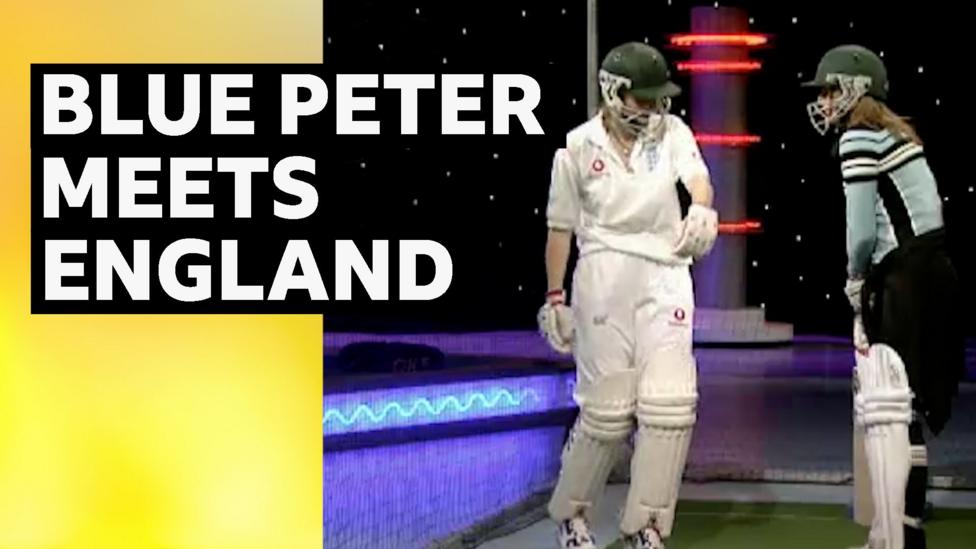
From Blue Peter Prodigy to England Boss: Charlotte Edwards' Full Circle
Charlotte Edwards went from a Blue Peter rising star in 1997 to England's T20 World Cup head coach this summer.