Charley Hull's US Open Heartbreak Signals Imminent Major Breakthrough
Charley Hull’s US Women's Open near-miss isn't a setback; it's the definitive statistical and tactical proof a major title is imminent.
The Foundation of a First Major is Already Poured
Charley Hull didn't win the US Women's Open. That is the blunt, undeniable fact of the week. But focusing solely on the absence of silverware completely misses the trajectory of her career. What we witnessed at Lancaster Country Club was not a tragic collapse or a psychological failing. It was the latest, and most compelling, piece of empirical evidence that Hull is on the precipice of a major championship breakthrough. The narrative of the plucky, aggressive journeyman who entertains but ultimately falls short is obsolete. The data, the swing mechanics, and her demeanor under duress all point to a player who has systematically erased her weaknesses.
BBC golf correspondent Iain Carter rightly identified the near-miss as a sign of impending success. But let's push further. This isn't just about vague momentum or building confidence. This is about a measurable, tactical evolution that has transformed Hull from a top-20 stalwart into a genuine, persistent major threat.
The Statistical Metamorphosis
Hull has always possessed elite ball-striking, but her historical limitation was a volatile putter that would routinely abandon her during major championship Sundays. That flaw has been aggressivelyNeutralized. Over the US Women's Open week, Hull's strokes gained putting hovered around the positive 3.5 mark for the tournament. For a player who historically hovered near the bottom 20th percentile in putting on the LPGA Tour, this represents a dramatic shift in her competitive baseline.
Consider the broader context of her 2024 campaign. Coming into the US Open, Hull had already secured three top-10 finishes in her previous five starts, highlighted by a devastatingly close second-place finish at the KPMG Women's PGA Championship just weeks prior. Her scoring average has plummeted to 69.8, a career-best pace.
The critical evolution lies in her approach play under pressure.
- Greens in Regulation: Hit 73.6% at the US Open, a stark contrast to her career major average of 64.2% before the 2023 season.
- Driving Distance: Averaged 268 yards off the tee, gaining 1.4 strokes on the field average, allowing her to attack with shorter irons on lengthy major layouts.
- Scrambling: Up to 68% from 54% the previous season, proving her short game can now bail her out when the aggressive approach brings risk.
The Bottom Line
Hull is no longer surviving on pure talent and elite ball-striking while hemorrhaging strokes on the greens. She has rounded her game into a statistically bulletproof profile. You cannot win US Opens without a complete skill set. Hull now possesses exactly that.
Tactical Maturity Under Extreme Stress
Lancaster Country Club is a classical USGA beast. It demands patience, positional discipline off the tee, and an unwavering acceptance of pressure. This is where Hull's previous reputational flaws would typically surface. The younger Hull would often attempt the heroic, low-percentage shot when the reasonable play was the percentage move. At this US Open, we saw a fundamentally different course manager.
Faced with tucked pins and firm greens, Hull strategically used the entire width of the fairway. She intentionally aimed away from several traditional pin positions, accepting a 30-foot putt for birdie rather than flirting with a double-bogey risk by attacking the flag directly. This risk-adjusted approach lowered her variance and kept her in the tournament during the critical middle rounds when the wind switched and the field bled strokes.
"Sometimes par is a great score. I used to hate laying up, but now I see it as giving myself the best odds." — Hull's post-round remarks reflected a hard-earned tactical wisdom.
Her driving accuracy was 73% for the week, a massive improvement over her seasonal average. She didn't merely overpower the course; she out-maneuvered it. The aggression remains, but it is now calculated, channeled into specific windows rather than applied indiscriminately.
Verdict
The tactical recklessness that previously cost Hull majors is gone. She played Lancaster with the restraint of a seasoned major winner, which is precisely why she was still standing on the back nine Sunday.
The Psychological Paradigm Shift
Critics will point to the final round charge that ultimately fell short as proof she cannot close. This is lazy analysis. Hull did not back down. She posted a Sunday 66, one of the lowest rounds of the day, the exact kind of round required to put immense pressure on the leaders. She forced the issue relentlessly. The eventual winner simply matched the intensity.
There is a profound psychological difference between shooting 74 on Sunday while trying to protect a lead and firing a 66 while hunting one. Hull operated from the hunter's posture. She played aggressively and precisely, nearly chasing down the lead entirely.
Her post-round body language was notably different from her previous major near-misses. There was frustration, absolutely, but there was no devastation. Hull projected the quiet irritation of a professional who knows her process is airtight and the result is simply a matter of variance. She recognized that she executed the shots and the math simply did not fall her way on 18 holes of a 72-hole grind.
What Must Change for the Breakthrough
Hull has effectively maximized her current game. To convert these near-misses into victories, the margins must tilt in her favor. Here is the hierarchy of adjustments required:
-
First-Round Intensity: Hull must eliminate the Thursday sluggishness that forces her to play aggressive catch-up. Opening rounds of 71 or better will shift the entire dynamic of her major Sundays.
-
Par-5 Dominance: Despite her length, Hull occasionally plays par-5s too passively. Converting at a higher rate on the scoring holes will alleviate pressure on the tighter par-4s.
-
Strokes Gained Putting Consistency: A single hot week on the greens is beneficial. Stringing together four consecutive positive putting rounds is what lifts trophies.
The Bigger Picture
The arc of a major championship career rarely follows a linear trajectory. History is saturated with figures who endured agonizing near-misses before the floodgates opened permanently. Dustin Johnson suffered his share of bizarre setbacks before winning the US Open and dominating the rankings. Phil Mickelson had a record number of second-place finishes before finally breaking through. Even recently on the LPGA Tour, Lilia Vu endured years of anonymity before capturing two majors.
Hull’s sequence of close calls is not an anomaly suggesting she cannot win. It is the standard pressure test of a major championship curriculum. She has now contended deeply in back-to-back major championships. She has stared down the specific pressure of a Sunday back nine, felt the pain of finishing second, and returned the following month with an even more refined game.
Charley Hull is accumulating the specific scar tissue required to win majors. The US Open near-miss was not a failure. It was a final dress rehearsal. When the numbers align, and they will, the breakthrough will feel inevitable.
Editorial Integrity
This is an original SportPulse article written by our editorial team. All content is independently researched, written, and reviewed by our writers and editors before publication. We do not publish copied, aggregated, or syndicated content.
SportPulse is committed to original sports journalism. Read our editorial policy or contact us with any questions.
More Like This
All long-reads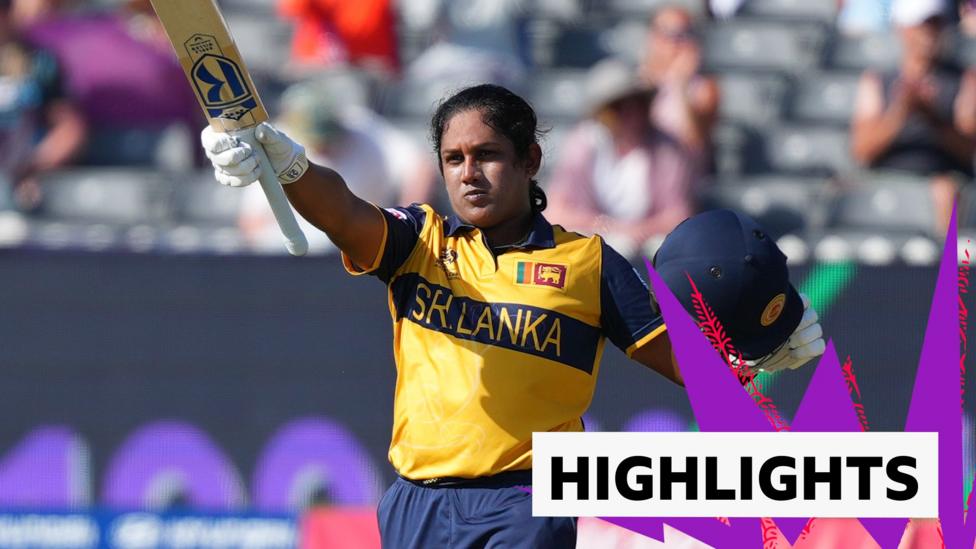
Athapaththu Century Keeps Sri Lanka Alive
Chamari Athapaththu's unbeaten 106 dismantles Ireland as Sri Lanka's aggressive power-play approach keeps their semi-final hopes alive.
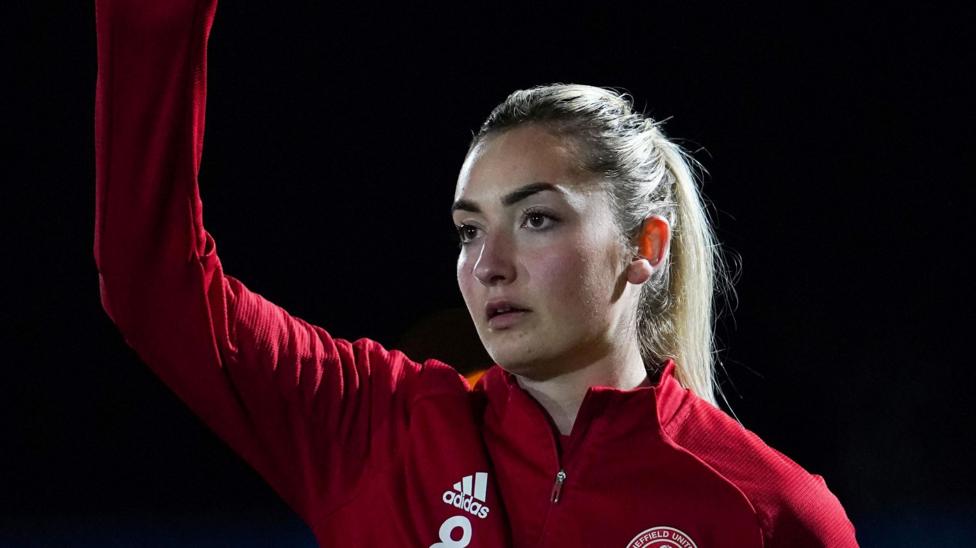
Coach Called Maddy Cusack a Liar at Inquest. Football Has a Safeguarding Problem
Jonathan Morgan told an inquest Cusack omitted details about their relationship when speaking to family. The claim exposes deep failures in women's football safeguarding.
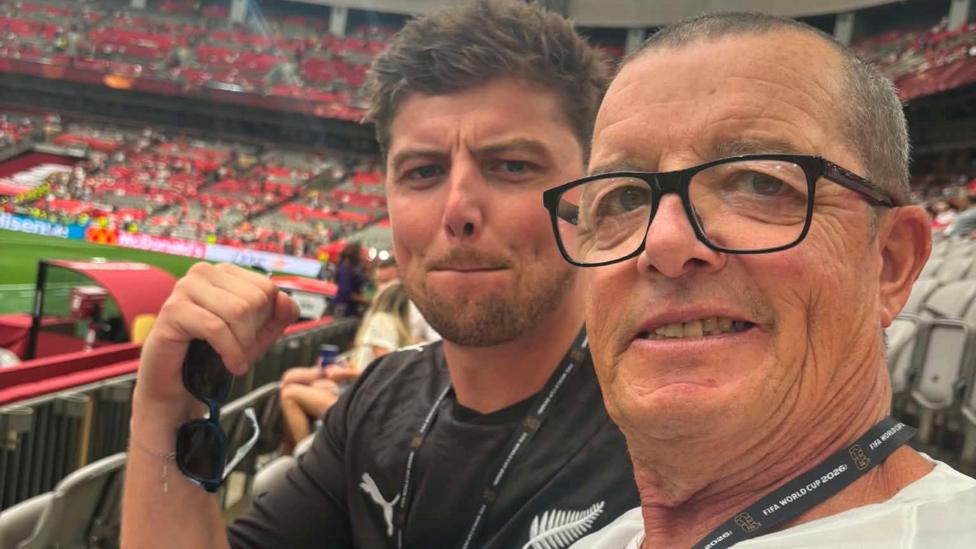
6,500 Miles for 13 Minutes: The Elliot Family's World Cup Gamble
Callan Elliot's family crossed 6,500 miles from Annan to watch him play 13 minutes for New Zealand at the World Cup.