Connolly's New Chapter: Derry City Bet on Structure Over Stardom
Derry City appoint Mark Connolly as director of football, signaling a long-term structural vision for the Brandywell.
A Structural Appointment That Speaks Volumes
When a player hangs up his boots and walks straight into a boardroom seat, the temptation is to treat the move as a ceremonial handoff, a club rewarding loyalty with a desk and a title. Derry City's decision to install Mark Connolly as their new director of football is anything but that. It is a deliberate, calculated step in the professionalization of a club that has spent years trying to marry its deep-rooted community identity with the demands of modern football infrastructure.
Connolly's retirement from playing and immediate elevation into this newly defined role signals that Derry's hierarchy views organizational architecture, not just the next transfer window, as the pathway to sustained competitiveness in the League of Ireland Premier Division.
The Defender Who Became a Director
Connolly's playing career gives him a unique vantage point for this role. A center-back by trade, he spent significant time in the League of Ireland, most notably with Dundalk FC, where he was part of a squad that dominated the domestic landscape during one of the club's most successful modern eras. He also gained valuable experience in Scottish football, including a spell at Kilmarnock in the Scottish Premiership, exposing him to the rhythms and demands of the British professional game.
That dual experience, thriving in the relentless physicality of Scottish football while understanding the tactical nuance and financial constraints of Irish domestic football, makes Connolly a more interesting appointment than his playing profile alone might suggest. Defenders, particularly center-backs, tend to see the game in systems. They read spatial relationships, anticipate opposition movement, and communicate structure in real time. Those are precisely the cognitive skills a director of football needs when evaluating talent, aligning recruitment with coaching philosophy, and building a squad that functions as more than the sum of its parts.
What Does a Director of Football Actually Do at This Level?
The concept of a director of football, or sporting director, is well established across Europe's top leagues. Clubs from the Bundesliga to La Liga have long operated with a clear separation between the tactical work of the head coach and the strategic work of a sporting figure who oversees recruitment, contract management, academy development, and long-term squad planning.
In the League of Ireland, however, this model is still gaining traction. Clubs in Ireland's top flight typically operate on tight budgets, with small backroom teams where the manager often wears multiple hats: tactician, recruiter, negotiator, and sometimes even kit washer. The appointment of a dedicated director of football at a club like Derry City represents a philosophical shift, an acknowledgment that sustainable success requires institutional structure that outlasts any single managerial appointment.
For Derry, this is particularly significant. The club has historically been vulnerable to the cycle of managerial turnover that plagues many League of Ireland sides. A coach arrives, implements a system, recruits players suited to that system, then departs, and the next manager inherits a squad built for a different tactical identity. Connolly's role, at its core, is to provide continuity across those transitions.
The Brandywell Blueprint
Derry City's home, the Ryan McBride Brandywell Stadium, has undergone redevelopment in recent years, a physical manifestation of the club's ambition to modernize. But infrastructure alone does not build a football club. The missing piece has been a coherent footballing philosophy that extends from the first team down through the academy and into the recruitment pipeline.
Connolly is expected to be the architect of that philosophy. His responsibilities will likely include:
- Overseeing recruitment strategy, ensuring that incoming players fit a defined tactical profile rather than being signed on reputation or short-term need
- Aligning the academy pathway with first-team expectations so that young players develop within the same system they will eventually be asked to operate in
- Serving as a bridge between the coaching staff and the boardroom, translating footballing needs into business decisions and vice versa
- Establishing a data-driven approach to scouting and performance analysis, areas where League of Ireland clubs have historically lagged behind their counterparts in Scandinavia and the Netherlands
The last point deserves emphasis. Clubs like FC Midtjylland in Denmark and AZ Alkmaar in the Netherlands have demonstrated that smart use of data can level the playing field against richer rivals. Derry City, operating in a league where the financial gap between the top and bottom is narrower than in most European divisions, are well positioned to exploit a similar competitive advantage. Connolly's role will be to build the infrastructure that makes that possible.
Tactical Identity in the Making
One of the most intriguing questions surrounding this appointment is how it will affect Derry City's tactical direction on the pitch. A director of football does not pick the team or set the formation, but he does shape the pool of players from which the head coach draws. If Connolly favors a particular style, and his background suggests a preference for organized defensive structures and disciplined positional play, the recruitment will inevitably reflect that.
In the League of Ireland, where many matches are decided by fine margins and individual moments of quality, having a squad assembled around a coherent tactical idea can be the difference between mid-table mediocrity and a genuine title challenge. Shamrock Rovers, who have dominated the league in recent seasons, owe much of their success to precisely this kind of structural alignment between recruitment and coaching.
Derry will hope Connolly can replicate a version of that model at the Brandywell. The club has the fanbase, the infrastructure, and the geographical identity to be a genuine power in Irish football. What it has lacked is the organizational sophistication to convert potential into sustained performance.
The Broader Trend in Irish Football
Connolly's appointment fits into a wider movement across the League of Ireland. Clubs are increasingly recognizing that the manager-centric model, where everything rises and falls with one individual, is both fragile and outdated. Bohemian FC and St Patrick's Athletic have both taken steps toward more structured football departments in recent years, and the results are beginning to show on the pitch.
The Football Association of Ireland has also signaled its intent to support this kind of professionalization, with licensing requirements and development standards pushing clubs toward more robust organizational structures. In that context, Derry's decision to create and fill this role is not just a club-level move, it is a response to the evolving demands of the league itself.
Looking Ahead
The immediate question is how Connolly's presence will shape Derry City's approach to the upcoming transfer windows and the next league campaign. Will he bring in players from his network in Scottish football? Will he prioritize homegrown talent from the northwest? How will the existing coaching staff adapt to having a new layer of footballing authority above them?
These are not questions that will be answered overnight. Director of football appointments are judged over years, not weeks. But the intent behind this move is clear. Derry City are no longer content to operate as a club that reacts to circumstances. They want to be a club that shapes them.
Connolly's playing career was defined by discipline, organization, and an ability to read the game before it unfolded. If he brings those same qualities to the boardroom, the Brandywell faithful may look back on this appointment as the moment their club finally built the foundations for something lasting.
Editorial Integrity
This is an original SportPulse article written by our editorial team. All content is independently researched, written, and reviewed by our writers and editors before publication. We do not publish copied, aggregated, or syndicated content.
SportPulse is committed to original sports journalism. Read our editorial policy or contact us with any questions.
More Like This
All football
From a Connecticut lake to lifting the World Cup: Rodri's 16-year arc
Rodrigo Hernández watched Spain's 2010 World Cup alone on a mini-laptop. Sixteen years later, he lifted the trophy himself.

Pochettino's American Dream: Audacity Meets Reality for 2026
Pochettino believes nobody sees the USA as World Cup contenders. His job is changing that narrative by 2026.
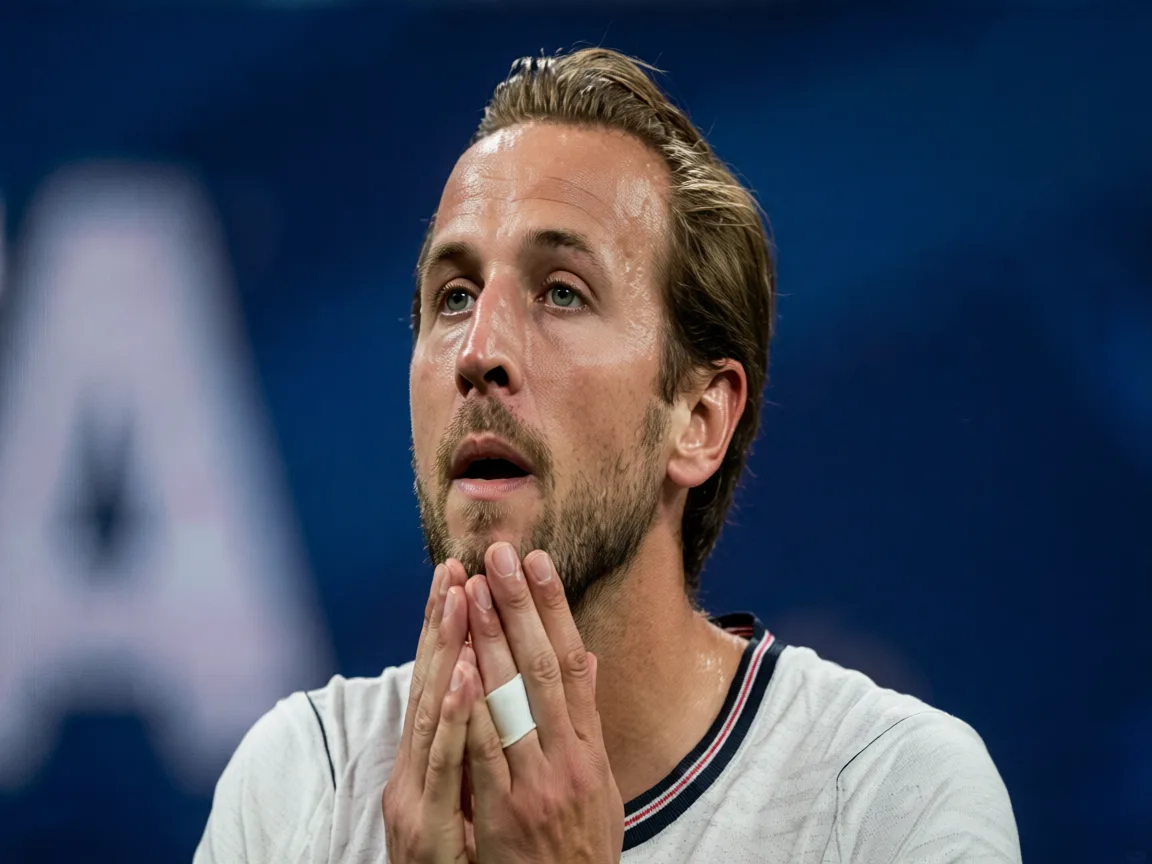
Kane's Jigsaw Confession: England's Missing Piece Revealed
Harry Kane admits England are missing the final jigsaw piece after Argentina defeat, fueling debate over whether Southgate's era has peaked.