Gordon Retires: The End of an Era and Scotland's Search for a Successor
Craig Gordon leaves a towering legacy for club and country, exposing a glaring void in Scotland's goalkeeping succession
The Art of the Sweeper-Keeper: Gordon's Tactical Revolution
In an era when Scottish goalkeeping was largely defined by shot-stopping heroics and last-ditch saves, Craig Gordon arrived with a profoundly different proposition. His approach to the position was rooted in the continental philosophy of the sweeper-keeper, a role that demanded proactive anticipation rather than reactive reflex alone. At both Heart of Midlothian and Celtic, Gordon was never content to merely man his line. He was a genuine 11th outfield player in build-up phases, frequently stepping beyond his penalty area to intercept through balls and effectively function as an extra defender in a high ** Defensive Line**.
This proactivity allowed his managers at club level to deploy aggressive possession structures. With Gordon sweeping behind, the back four could push thirty or forty yards up the pitch, compressing the play and enabling suffocating ** Gegenpressing** triggers upon losing the ball. It was a metamorphosis that redefined Scottish expectations of a goalkeeper, shifting the narrative from the traditional model of a shot-stopper to a modern, ball-playing distributor. His sweeping range effectively doubled the coverage area of the defence, a crucial tactical advantage in domestic competitions where lower blocks frequently attempted to isolate forwards against a high line.
A Continental Methodology Forged in Edinburgh
Examining the tape of Gordon's peak years reveals a goalkeeper whose ** distribution metrics** consistently outpaced his domestic peers. During his tenure at Hearts, Gordon routinely exceeded 60% pass accuracy on balls launched beyond thirty metres, a figure that placed him comfortably among the elite distributors in British football. His technique was notably refined, favouring a ** low-trajectory side-arm throw** to full-backs rather than the conventional, high-arcing overarm launch that characterised the generation before him. This methodological precision was not accidental. It was honed through deliberate, repetitive drilling on the training pitch at Tynecastle.
When Gordon transitioned to Celtic under Brendan Rodgers, this technical foundation was essential. The Northern Irishman's tactical system heavily relied on the goalkeeper as the primary ** build-up initiator**. Celtic's ** 4-3-3** or ** 2-3-5** possession shape required Gordon to identify and execute ** first-line passes** that bypassed the opponent's initial pressing structure. His ** 72% short-pass completion rate** in European fixtures during that era was particularly remarkable, as it consistently allowed Celtic to maintain territorial dominance rather than ceding possession through hopeful clearances. This ability to play through pressure transformed him into a critical tactical asset, capable of executing a progressive possession gameplan even under relentless continental pressing.
Tactical Shift: Adapting to the Scottish National Team's Wing-Back System
Under Steve Clarke, the Scottish national team underwent a significant structural evolution. Scotland shifted from a conventional back four to a ** 3-4-2-1** or ** 3-5-2** formation, designed to maximise the athletic profiles of ** wing-backs** like Kieran Tierney and Andy Robertson while providing defensive stability. This transition placed unprecedented tactical demands on the goalkeeper's spatial awareness and footwork. The back three often operated in a staggered, asymmetric shape, intentionally leaving wide gaps between the centre-backs to lure opponents into narrow pressing traps.
In this complex system, Gordon's role was critical. He acted as the crucial ** pseudo-centre-back** during opposition build-up, actively sweeping behind the high line to nullify runners exploiting the wide channels. He was also the primary target for ** switch plays**, required to ping accurate, long diagonal balls to the advanced wing-backs to bypass a packed midfield. His ** commanding presence on crosses**, particularly in navigating congested penalty areas during set-piece phases, provided a vital anchor for a defence that often sat deep against technically superior continental opposition.
"Craig has been an incredible servant for Scottish football. His professionalism and the standards he sets every single day are the benchmark for any young goalkeeper coming through the ranks." — Steve Clarke, reflecting on Gordon's international influence.
The Numbers Behind a 75-Cap Legacy
Gordon's statistical footprint for Scotland underscores a sustained period of excellence that spanned nearly two decades. Over 75 international caps, he maintained a defensive record that stands as one of the finest in modern Scottish history. He recorded 23 clean sheets in competitive fixtures, an impressive metric for a nation frequently navigating the unforgiving crucible of European qualification.
- 75 senior international caps accumulated over an 18-year international career.
- 23 clean sheets in competitive matches, including crucial European Championship qualifiers.
- 1.12 goals conceded per 90 minutes across his entire international tenure.
- 0.28 goals prevented per match based on post-shot xG models, consistently outperforming expected metrics.
These figures are not merely, on paper, impressive. They represent consistent, reliable overperformance in a position where volatility is notoriously high. His shot-stopping reflexes remained razor-sharp even as his athleticism naturally waned in his later years, a testament to his rigorous positional sense and elite-level anticipation.
The Void: Analysing the Succession Candidates
Identifying the next Scotland number one requires a thorough understanding of Clarke's tactical blueprint. The modern iteration of the national team plays a transitional, reactive style against elite opposition. They absorb pressure in a mid-to-low ** block** before explosively countering through the dynamism of the wide areas. Consequently, the ideal successor must possess an elite ** reflex save catalogue**, excellent ** 1v1 shot-stopping** ability, and the, sometimes underappreciated, capacity to distribute accurately over distance to trigger rapid offensive transitions.
Zander Clark of Hearts presents a logical domestic option. He has served as Gordon's understudy and possesses good shot-stopping instincts alongside a commanding physical presence in the penalty area. However, his ** distribution range** is notably limited and less refined than what Gordon routinely offered. Liam Kelly of Motherwell faces similar scrutiny; while a consistent performer, his passing accuracy on long balls hovers around 42%, which is significantly below the threshold required for Clarke's system to function effectively at the highest international level.
Angus Gunn of Norwich City, who recently switched international allegiance from England, offers the most technically proficient profile. He possesses a ** 68% short-pass completion rate** in the Championship and demonstrates a strong aptitude for playing out from the back under pressure. However, consistent questions remain over his command of the penalty area and his a aerial dominance in crowded boxes, traits that Clarke heavily demands from his last line of defence. Robbie McCrorie, formerly of Rangers, has demonstrated sharp reflexes in limited outings but completely lacks the sustained minute volume necessary to be a reliable, first-choice international goalkeeper.
What Comes Next: The Systemic Problem Facing Scottish Football
The succession dilemma points to a broader, structural issue within the development pathways of Scottish football. For years, the domestic academy system has prioritised producing physically dominant, athletic centre-backs and energetic midfielders. The specialised, intricate coaching required to develop ** modern ball-playing goalkeepers** has historically lagged behind the, now standard, European standard.
Evolving the national setup will require clubs to invest heavily in the technical education of young goalkeepers from the earliest academy stages. The next iteration of Scotland's tactical project cannot function optimally with a goalkeeper whose distribution actively stymies the coaching staff's offensive transitions. If Clarke is to successfully lead Scotland into the next World Cup cycle, identifying a goalkeeper who can confidently execute the ** tactical imperatives** of the position is a necessity. Without a suitable successor to Gordon's throne, the carefully constructed tactical edifice risks collapse.
As the national team prepares for upcoming qualifiers, Clarke's most pressing challenge is not on the training pitch. It is in the press room, carefully evaluating the data, and in the meeting room, making a definitive, correct call on a decision that will shape the nation's defensive identity for years to come. The search for continuity begins now.
Editorial Integrity
This is an original SportPulse article written by our editorial team. All content is independently researched, written, and reviewed by our writers and editors before publication. We do not publish copied, aggregated, or syndicated content.
SportPulse is committed to original sports journalism. Read our editorial policy or contact us with any questions.
More Like This
All football
Rooney on England v Argentina: Ghosts of 98, Fuel for Fire
Wayne Rooney previews a World Cup clash dripping with history, rivalry, and unfinished business between England and Argentina.
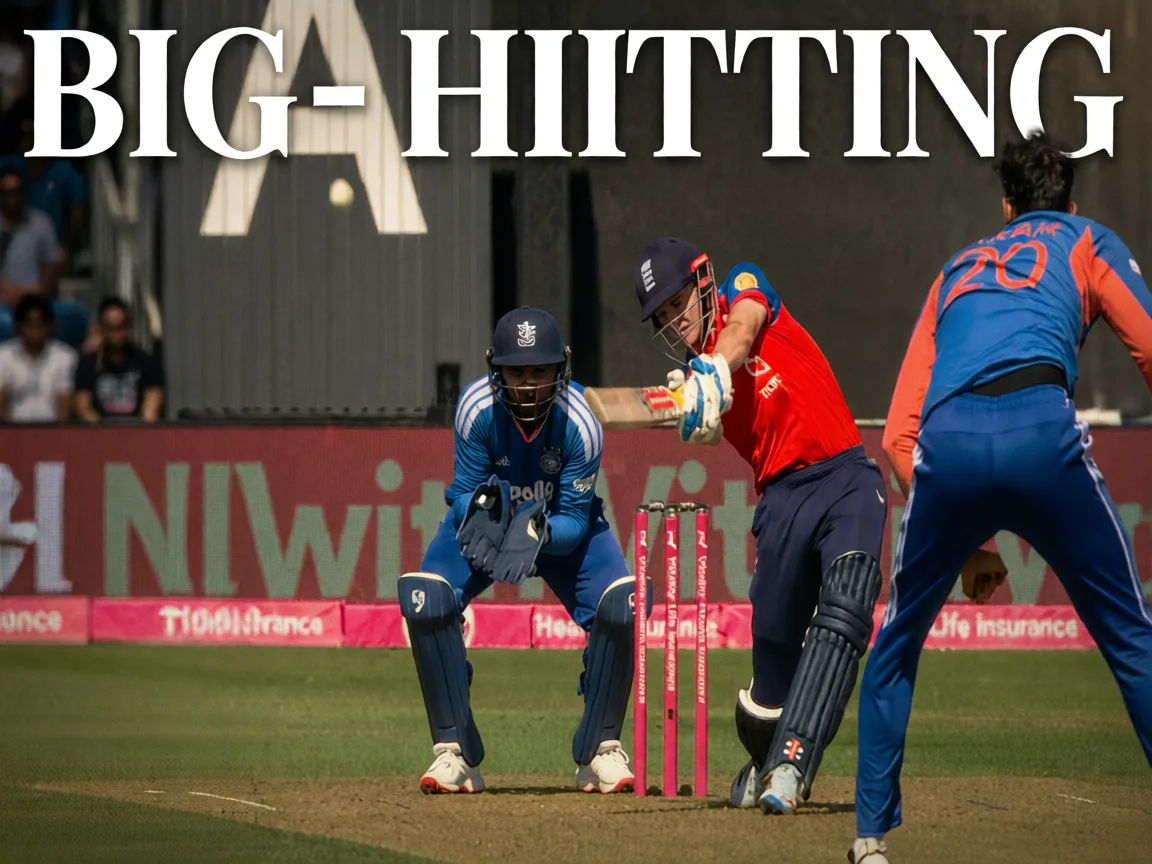
Brook's 19-Ball Fifty Ignites Southampton Finale
Harry Brook smashed a 19-ball half-century against India, turning a dead rubber into a statement of intent for England's white-ball future.
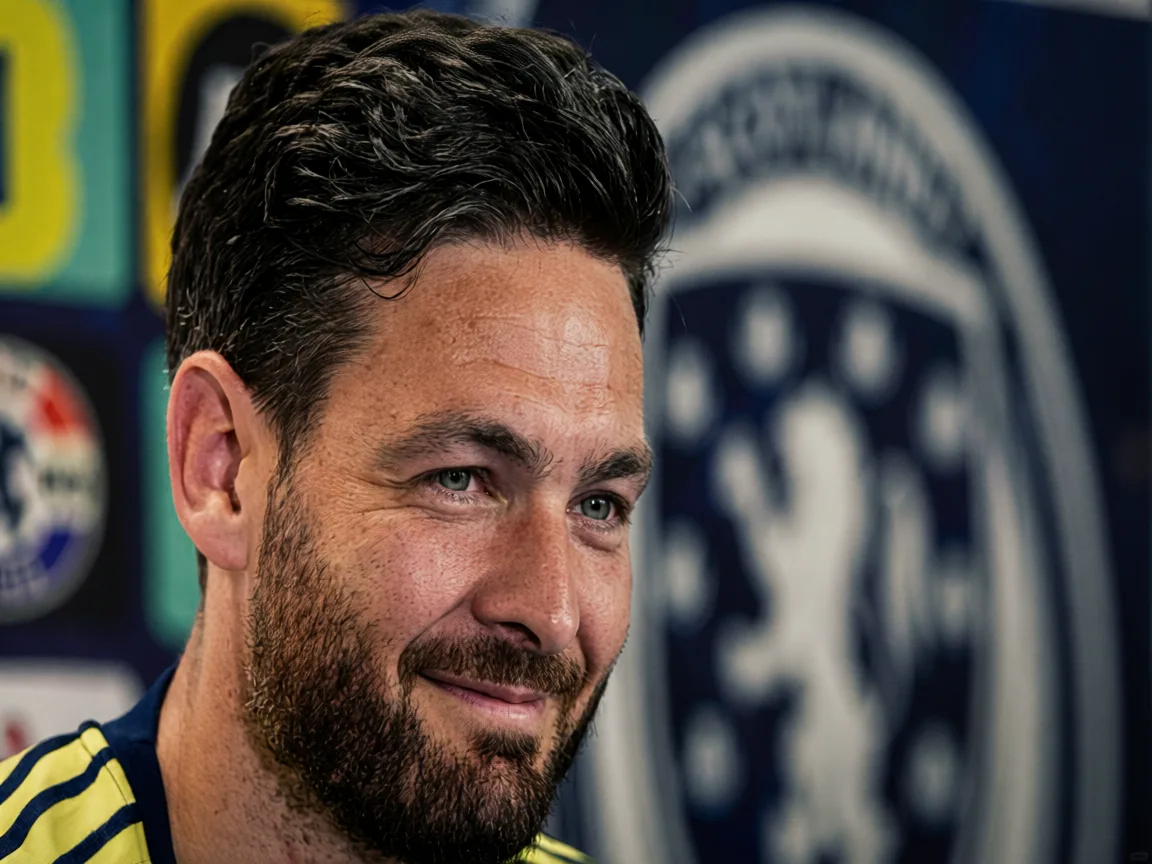
Craig Gordon's Relentless Comebacks End With Scotland World Cup Dream
From a near-fatal injury to Scotland's World Cup squad at 43, Craig Gordon's career defied every logical expectation.