How Cruyff's Spanish Blueprint Conquered World Football
Johan Cruyff built an ideology at Barcelona that Guardiola and Emery weaponized into a global tactical empire.
The Root of the Empire
Johan Cruyff arrived at Barcelona in 1988 carrying a tactical manifesto that would rewrite football history. He installed the 4-3-3 formation and an ideology rooted in possession, positional play, and relentless pressing. That single decision seeded a coaching tree so vast that its branches now shadow virtually every elite league on the planet.
The Dutch master did not just coach a team. He rewired an entire club's DNA, from the first team down to the youngest children entering La Masia. His principles demanded that every age group play the same way, creating a unified football language. This meant a six-year-old and a first-team starter operated within identical tactical frameworks.
Cruyff's core idea was radical simplicity: the ball is both weapon and shield. If you control it, you control the game. If your opponent cannot win it back, they cannot score. This philosophy required technically gifted players comfortable in tight spaces, unafraid of pressure, and conditioned to receive the ball under any circumstance.
The Refiners: Guardiola and Emery
Pep Guardiola and Unai Emery represent two distinct branches of the Cruyffian tree, each accelerating Spain's global influence. Guardiola took the Barcelona job in 2008 and turned Cruyff's ideology into the most dominant club machine modern football has seen. His Barcelona side won 14 trophies in four years, including three La Liga titles and two Champions League crowns.
Guardiola's genius lay in extremity. He pushed every Cruyff principle to its maximum: higher pressing, deeper possession, narrower positioning, and more aggressive full-backs. His teams did not merely play the ball. They suffocated opponents with it, turning possession into a defensive weapon. Opponents averaged less than 35% of the ball against peak Barcelona, a statistic that quietly redefined what football excellence looked like.
Emery took a different path but inherited the same cultural foundation. He shaped Valencia, Sevilla, and later Villarreal with tactical discipline, meticulous preparation, and an obsession with structural organization. His Sevilla side won three consecutive Europa League titles between 2014 and 2016, a feat that showcased Spanish coaching depth beyond the Catalan epicenter. Emery proved the philosophy was not a Barcelona parlor trick but a portable system adaptable to any squad willing to commit.
The coaching tree does not stop there. Luis Enrique emerged from the same roots, winning a treble at Barcelona in 2015. Ernesto Valverde, Quique Setien, and Xavi Hernandez all spent time at Camp Coleman either refining or attempting to resurrect the principles Cruyff planted decades earlier.
A National Identity
Spain's national team did not merely benefit from this coaching culture. It became the ultimate expression of it. La Roja won the 2010 World Cup and consecutive European Championships in 2008 and 2012, playing a style so identifiably Spanish that opposing nations spent years trying to decode it. The team that dominated the globe featured seven Barcelona players in its regular starting XI during the 2008 Euro final against Germany.
The tactical blueprint flowed through every level of Spanish football. Every youth academy in the country adopted possession-based principles. Every coach entering the system absorbed the same ideological curriculum. This uniformity produced something unprecedented: a national team that functioned as an extension of a single club's philosophy, regardless of who managed it. Luis Aragones and then Vicente del Bosque simply inherited the scaffolding and added international trophies.
The Spanish model proved that a small nation could achieve global dominance by treating football as a system rather than relying on raw individual inspiration. Where Brazil leaned on street improvisation and Germany on institutional resilience, Spain built an ideological pipeline that manufactured coaches as deliberately as it produced players. The result was a generation of midfielders, full-backs, and center-backs who all spoke the same tactical language with their feet.
The South American Counterpoint
Argentina emerged as the parallel cultural force, one that took a radically different approach to shaping players and teams. The Argentine model relied on fragmented, almost chaotic street environments that develop individual resilience, flair, and improvisation. Where Spain built an ideology in laboratories, Argentina forged its identity on river plate pitches and crowded urban spaces that rewarded creativity born from necessity.
This distinct Argentine identity radiates across South America like Spain's model radiates across Europe. The Albiceleste's tactical DNA combines European tactical structure with South American individual expression. Prime examples include Lionel Messi, a product of Argentine street culture refined by Barcelona's academy, and Lionel Scaloni, the coach who merged Spanish discipline with Argentine passion to win the 2022 World Cup.
The beauty of a Spain versus Argentina World Cup final represents a clash between football's two most powerful cultural exporters. One side represents the ideology, the system, and the collective machine that years of structured investment produced. The other represents the street, the instinct, and the individual genius that thrives outside any tactical manual.
Cross-Border Reach
Spanish coaching influence stretches far beyond the Iberian Peninsula. Mikel Arteta brought the Cruyffian framework to Arsenal, having learned under Guardiola at Manchester City. Xabi Alonso, a product of Spanish football culture, has become one of Europe's most sought-after coaches after implementing possession-dominant football at Bayer Leverkusen.
Luis Enrique took the Barcelona philosophy to Paris Saint-Germain, attempting to impose organizational structure on a squad long accused of tactical indiscipline. Julian Nagelsmann, though German, has frequently cited the Spanish model as an influence on his pressing systems at Bayern Munich. The Spanish virus, as Cruyff once called his philosophy, continues to spread.
Even Roberto De Zerbi, an Italian coach, built his Brighton system on foundations noticeably inspired by La Masia methodology. The specifics differ from coach to coach, but the ideological throughline remains constant: possession as control, positional organization over improvisation, and collective movement as a nonnegotiable baseline.
In the postmatch corridors of Europe's biggest stadiums, the atmosphere reveals the depth of this cultural conquest. Visiting coaches from Germany, England, and Italy regularly speak of facing Spanish-coached teams with a mix of admiration and frustration. The coaches' rooms after Spanish-coached victories carry a quiet confidence, not the wild celebration of an upset but the calm satisfaction of a system working as designed.
The chalkboards in those rooms rarely show panicked tactical pivots. Instead, they feature precise positional notes and reminders of first principles: ball-oriented defending, defined spacing, and collective pressing triggers. Walk past a dressing room after a Guardiola or Emery side secures three points and you hear calm tactical debriefs, not euphoric shouting. The system is the star, and when it functions properly, there is little to celebrate beyond confirmation that the blueprint still works.
The contrast with Argentine coaching rooms is stark. Argentine managers celebrate with raw emotion, their postmatch speeches leaning on passion, resilience, and the street-fighter mentality that defines their football culture. The two approaches coexist in global football's ecosystem, each generating its own success through different methods.
The Numbers Behind the Culture
The statistical evidence of Spain's tactical dominance tells its own story.
- Spanish coaches have won 4 of the last 15 Champions League titles
- La Liga clubs have claimed 7 of the last 15 Europa League trophies
- Spain's national team held an average possession rate of 62% during their golden era between 2008 and 2012
- Barcelona under Guardiola completed over 700 passes per match in their peak seasons, a figure unrivaled at the time
- In 2023, coaches trained in the Spanish system managed clubs in 11 different top-flight European leagues
- The Spanish national team has lost just 3 competitive matches in major tournaments since adopting the Cruyff-influenced style in 2006
What It Means
The Spanish coaching model proves something most football institutions still resist: the most valuable product a nation can export is not a player but a system. Players age, decline, and retire. Ideologies, when properly maintained, compound in value generation after generation. Every coach who emerges from Spanish football extends Cruyff's reach into new leagues and new federations.
Argentina's parallel rise confirms that multiple dominant football cultures can coexist without canceling each other out. The 2022 World Cup final between Argentina and France proved the South American model's enduring viability. A potential Spain versus Argentina final would represent the ultimate clash of footballing civilizations: the ideologues against the improvisers, the system against the street, and the collective machine against the individual genius.
The deeper implication for global football is that coaching culture has replaced player production as the most decisive factor in sustained success. Nations that invest in coaching education, unified tactical language, and structural continuity produce teams that punch above their weight for decades. Those that rely on uncoordinated talent harvesting rise and fall with each generation of players.
The World Cup continues to serve as the ultimate laboratory where these cultural models collide. Spain's system influences match outcomes in every tournament bracket through the coaches who studied the Cruyff method. Argentina's street culture produces the individual brilliance that destabilizes the most carefully constructed tactical systems. The next decade will determine which model dominates the global game, but the evidence suggests both will remain vital forces shaping how football is played, taught, and understood worldwide.
Editorial Integrity
This is an original SportPulse article written by our editorial team. All content is independently researched, written, and reviewed by our writers and editors before publication. We do not publish copied, aggregated, or syndicated content.
SportPulse is committed to original sports journalism. Read our editorial policy or contact us with any questions.
More Like This
All football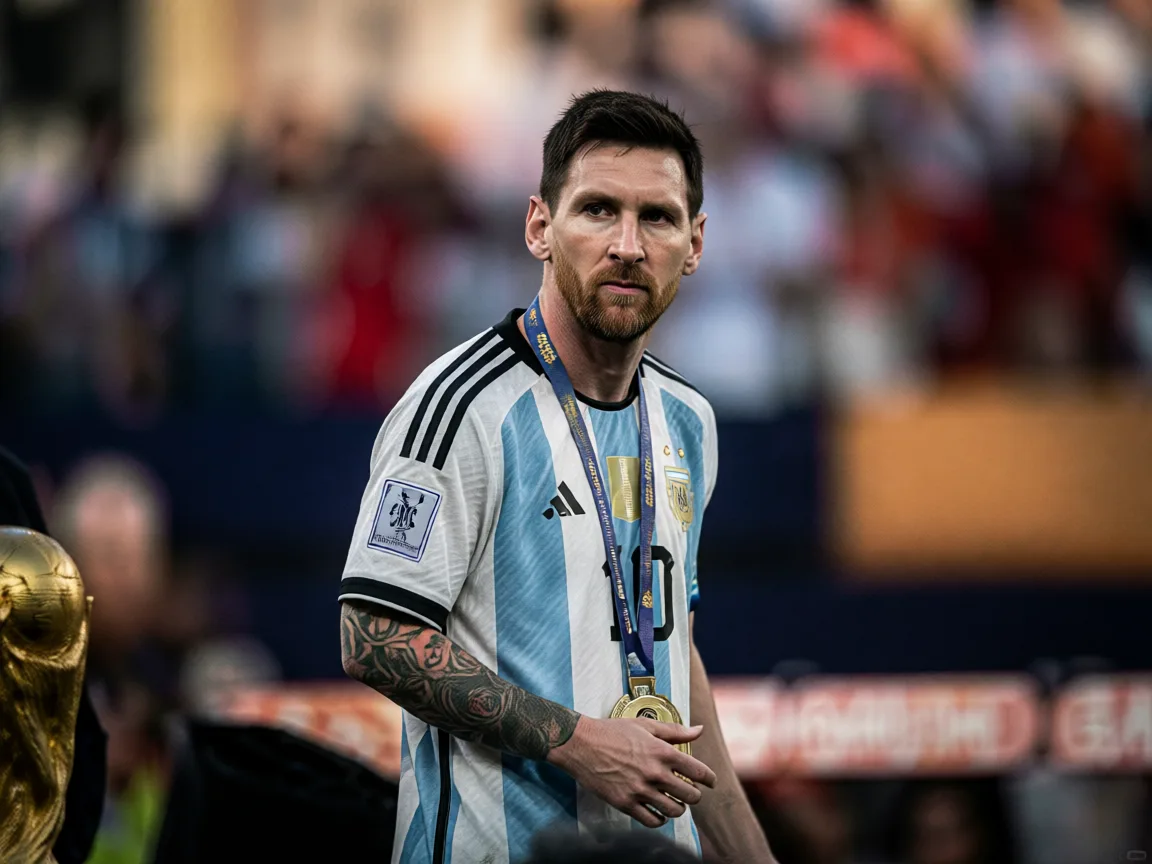
The Last Dance Ends in Silence: Spain Break Argentina's Heart
Lionel Messi's final World Cup appearance ends in a 1-0 defeat to Spain as Argentina's worst instincts surface on the biggest stage.

Can Simoball Survive the Premiership? St Johnstone's High-Stakes Gamble
Saints are back, but can Simo Valakari's bold philosophy and a rebuilt squad keep St Johnstone in the Scottish Premiership?
Rashford, O'Reilly and Tuchel's Selection Puzzle Against Panama
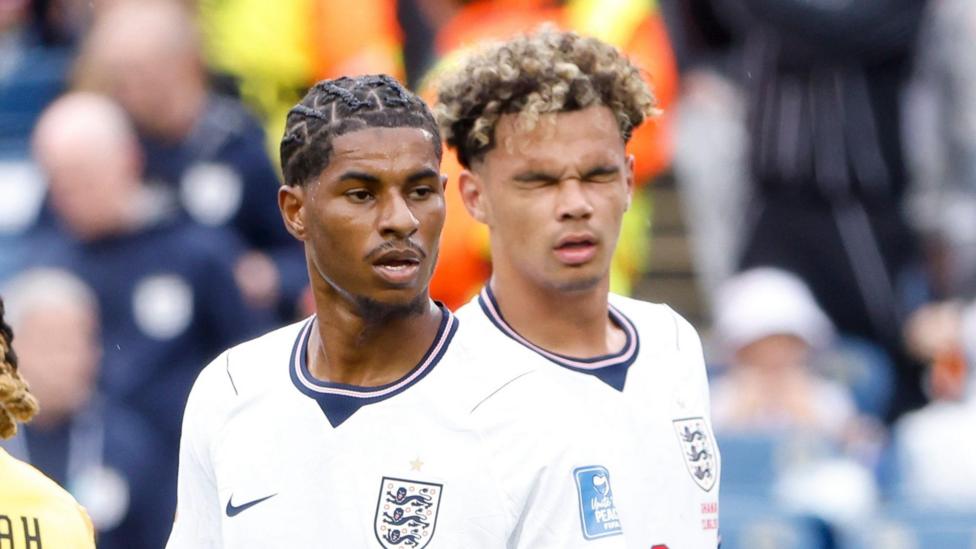
Thomas Tuchel faces defining lineup decisions as England close their World Cup group campaign against Panama.