The Hewitt Name Carries Weight, and Cruz Felt Every Ounce
A two-hour final on No. 1 Court ended in heartbreak for Cruz Hewitt, but theweight of a famous name may yet forge something stronger.
There is a particular kind of silence that swallows No. 1 Court when a teenager realises the trophy is slipping through his fingers. It is a silence built from anticipation and then sharpened by its absence. For Cruz Hewitt, a 17-year-old from Sydney, that silence descended somewhere between 4-2 in the final set and the cruel arithmetic of a match that refused to bend to his will.
Two hours. One final. A lifetime of meaning compressed into a scoreboard that read 4-6, 6-4, 7-5 in favour of the American Jordan Lee. And almost certainly, the end of a junior career that never quite delivered the fairy tale the tennis world had been quietly rehearsing.
The Weight of a Famous Name
To carry the surname Hewitt onto a Wimbledon court is to carry history itself. Twenty-four years ago, Lleyton Hewitt won the gentlemen's singles title at the All England Club, a brazen 21-year-old who played tennis like a man stubbing out cigarettes on his opponent's dreams. The elder Hewitt was all fist pumps and headband fury, a player who turned combativeness into an art form and made the baseline his personal barricade.
Now here was his son, a teenager who inherited the name and the spotlight but who carries himself with a different bearing. Cruz is leaner, quieter, less combustible. Where his father waged war on every point, the son plays with something closer to contemplation. The comparison is inevitable and, in many ways, unfair. Yet there was no escaping it on Sunday, with Lleyton stationed in the players' box, cajoling, urging, living and dying with every forehand.
The eyes of the tennis world draw their own lines between generations. A father's triumph becomes a son's burden, whether either of them asks for it or not.
A Final That Swung on Margins
The boys' final unfolded as a two-hour examination of nerve, and for long stretches it was Hewitt who appeared to be passing every test. He dropped the first set 4-6, a setback that might have buckled a lesser mentality, and then responded by claiming the second 6-4. The decider was where the match found its theatre, and where it found its cruelty.
Hewitt led 4-2 in the third. He was two games from the championship. Two games from emulating his father on the most famous tennis stage in the world, a quarter-century later. But junior tennis is a precarious arena where momentum shifts with the speed of a teenager's mood, and Lee refused to accept the script.
No junior final is ever truly about one player. It is a collision of stories, and Lee had his own to tell.
The American, a player of genuine pedigree and poise, clawed back. Game by game, he eroded Hewitt's lead and, more critically, Hewitt's conviction. The final set turned 7-5, and with it the championship belonged to someone else. Hewitt stood on the court where his father once stood tallest, and tasted a defeat that will linger not because it was unexpected but because it was so painfully close.
The Junior Game's Fleeting Nature
What makes junior defeats so uniquely affecting is their timing. They arrive at an age when players are simultaneously children and professionals, oscillating between identities that have not yet learned to coexist. At 17, Cruz Hewitt is standing at the threshold of his senior career, and this Wimbledon junior final will likely be his last appearance in the junior ranks.
That fact carries a specific weight. There is no return match next year to settle the score. No opportunity to learn from the loss and apply it immediately in the same arena against the same opponent. Junior tennis is a fleeting province, a waystation rather than a destination, and players exit it whether they are ready or not.
For Hewitt, the departure comes wrapped in a particular poignancy. He reached the final of the tournament he most wanted to win, on the court his father conquered, with his father watching, and lost. The symmetry is almost too neat, the way family narratives sometimes arrange themselves into shapes that fiction would reject as heavy-handed.
The Promise of Return
Yet there was something in the aftermath that spoke less of devastation than of determination. Hewitt vowed to return to Wimbledon and to bloom again on grass, a surface that rewards persistence and продаже and the kind of incremental improvement that compounds over years rather than weeks.
The promise of a teenager should always be handled gently. The road from junior finalist to senior contender is littered with players who shone at 17 and vanished by 21. The physical demands intensify. The psychological pressures deepen. The game grows faster, stronger, more unforgiving with every step up the ladder.
But Hewitt has resources that most juniors do not. He has a father who navigated this exact transition, who understands the particular geometry of expectation and performance, who knows where the traps are laid and how to avoid them. He has experience of Centre Court atmospheres that most players only encounter in their mid-twenties. And he has now felt the specific sting of falling short at the top of the junior game, which can either sharpen or shatter a young player's resolve.
Jordan Lee's Deserving Triumph
Lost in the Hewitt narrative is the simple fact that Jordan Lee played an exceptional match. The American did not win because Hewitt lost. He won because he played the critical points with greater clarity, because he retrieved a deficit in the final set with the kind of fearlessness that defines champions at any level.
Lee's comeback from 2-4 down in the decider was a study in competitive resilience. He refused to concede the narrative. He recognised that a junior final is not a coronation but a contest, and he contested every game as though the trophy were already his to claim.
What Comes Next
For Hewitt, the path forward leads away from juniors and toward the unforgiving arena of men's professional tennis. The transition is rarely smooth. The ATP Tour is a different beast, populated by men who hit harder, move sharper, and think deeper. The weeks following a junior grand slam final defeat can be disorienting, a player caught between what they almost achieved and what they must now build from scratch.
But the seeds planted on No. 1 Court do not simply vanish. They take root in ways that are not always visible. Hewitt now knows what it feels like to walk onto that court, to feel the weight of a famous name, to come within two games of a championship, and to lose. He knows the silence that follows. And he has promised himself that he will hear it again, but next time from the other side.
Tennis is a sport of returns, of second serves and second chances, of players who lose at 17 and win at 27. The story of Cruz Hewitt is not finished. It has simply changed surfaces.
Editorial Integrity
This is an original SportPulse article written by our editorial team. All content is independently researched, written, and reviewed by our writers and editors before publication. We do not publish copied, aggregated, or syndicated content.
SportPulse is committed to original sports journalism. Read our editorial policy or contact us with any questions.
More Like This
All tennis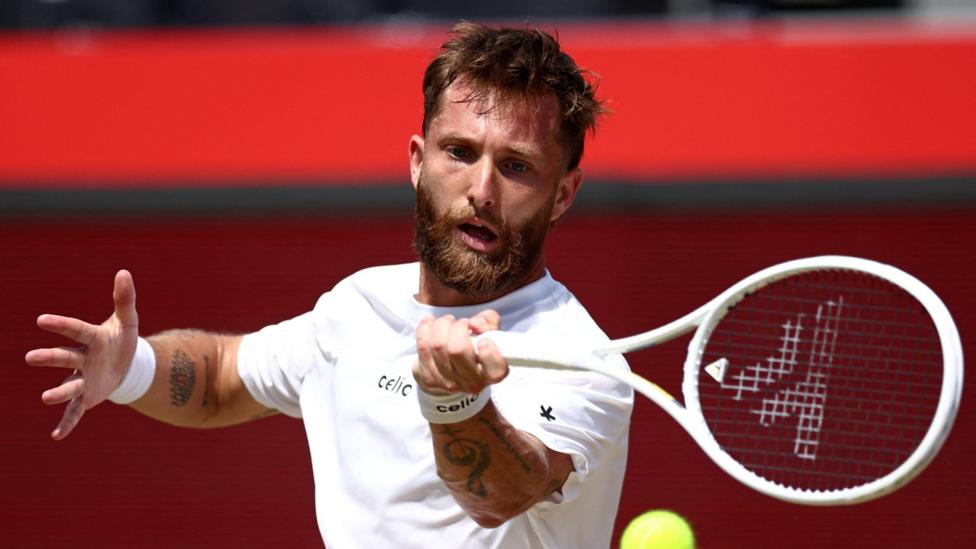
Moutet's Queen's Payday Wiped Out by $40,000 BBC Swearing Fine
Corentin Moutet fences away almost his entire Queen's prize money after a $40,000 fine for seven live BBC expletives.

Noskova's Wimbledon Run: Superstition, Sisterhood, and a Lifetime Dream
Linda Noskova battles into the Wimbledon final, embracing superstition and facing close friend Karolina Muchova for the title.
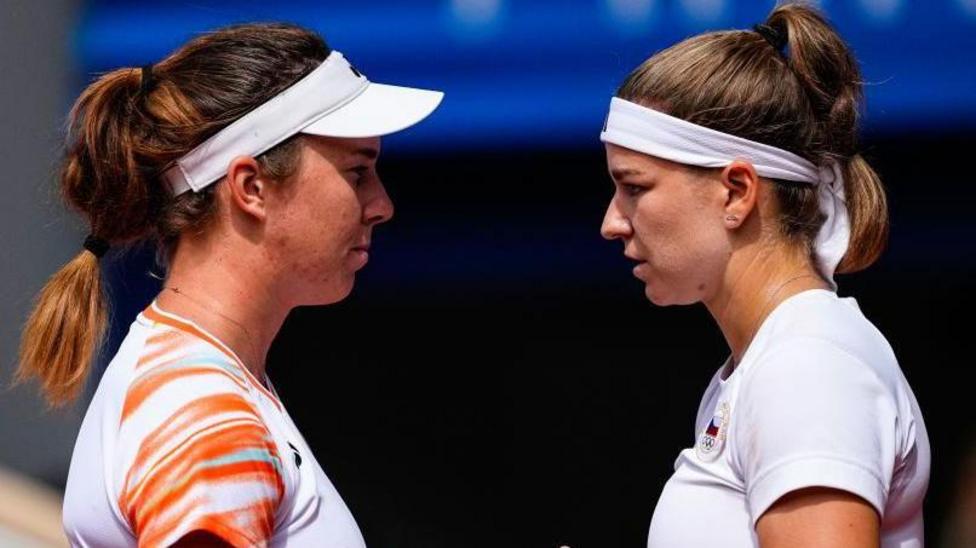
Czech Wimbledon Dominance Is No Accident
An all-Czech Wimbledon final exposes a system the tennis world still refuses to study seriously.