Czech Wimbledon Dominance Is No Accident
An all-Czech Wimbledon final exposes a system the tennis world still refuses to study seriously.
The Wimbledon women's singles final will feature two Czechs. Karolina Muchova and Linda Noskova will contest the championship match, guaranteeing the trophy returns to a nation of roughly 10.8 million people. Yet the tennis world continues to treat this as charming coincidence rather than the architectural inevitability it clearly is.
This is not luck. This is not, as one antiquated joke about Czech sports once suggested, something in the beer. This is the output of a system so consistently productive that its results have become mundane within the sport's inner circles even as they remain inexplicable to the broader public.
A Statistical Case That Defies Logic
To understand the scale of Czech women's tennis, you have to confront numbers that should not exist for a nation this size. The Czech Republic has produced multiple Grand Slam singles champions in the past two decades. It has won the Billie Jean King Cup 11 times since the competition's current format was established, a record that borders on statistical absurdity given the country's population ranking.
Currently, Czech women occupy prominent positions across WTA rankings. At various points, the nation has had three or more players inside the WTA top 50 simultaneously. For context, that is comparable to what the United States, a nation with roughly 30 times the population, routinely produces.
The Czech tennis system operates with a ruthless efficiency that larger federations could learn from but seem reluctant to study. The reasons are structural, cultural, and deeply embedded in Cold War-era investment.
What the Numbers Say
- 11 Billie Jean King Cup titles under the modern format, the most of any nation
- Multiple Grand Slam singles champions produced in the past 15 years alone
- 10.8 million total population, roughly the size of Belgium or Sweden
- Consistent presence of 3+ players in the WTA top 50 across recent seasons
The Infrastructure Nobody Copied
The Czech tennis pipeline begins at an age most federations consider too early for serious specialization. Children are identified, channeled into club structures, and given access to coaching that is both technically rigorous and psychologically demanding. The clubs, many of which predate the fall of the Iron Curtain, were built during a time when Eastern Bloc nations treated sport as a proxy for geopolitical legitimacy.
When the Soviet system collapsed, much of that sporting infrastructure survived through privatization. Clubs that once operated under state direction transitioned into member-owned enterprises. The coaching knowledge survived because the coaches themselves simply continued working, shifting from state employees to private instructors without losing the methodological sophistication they had developed over decades.
"We don't wait for the perfect moment. We build the shape that creates the moment."
That philosophy, echoed across Czech tennis academies, captures why the system works. The clubs subscribe to a deeply held cultural conviction that talent must be manufactured, not merely discovered. The coaching methodology emphasizes technical precision from the earliest ages, focusing on footwork, racket preparation, and shot selection with a granularity that would be dismissed as obsessive in more laissez-faire sporting cultures.
Muchova's Tactical Intelligence
Karolina Muchova represents one of the most refined products of this system. Her game is an exercise in tactical variety that feels almost subversive in an era defined by baseline power. Muchova does not simply hit the ball harder than opponents. She dismantles their rhythm through intelligent shot selection, varying pace and trajectory with a precision that reflects years of technical sculpting.
Her path to this Wimbledon final required navigating draws that punished one-dimensional play. Grass rewards the variety Muchova manufactures naturally. Her slice backhand stays low, her serve placement is intelligent, and her willingness to approach the net exploits the surface's inherent bias toward aggressive court positioning.
What distinguishes Muchova from many of her contemporaries is her court awareness. She reads the geometry of a rally in real time, recognizing when to change direction and when to absorb pace. This is not instinct in the romantic sense. It is the product of drilling so repetitious that decision-making becomes embedded in muscle memory.
Noskova's Raw Power and the Next Generation
Linda Noskova represents the newest iteration of Czech tennis. Her game is built on raw aggressive baseline power that reflects the modern WTA's tactical evolution. Noskova hits with a depth and weight that forces opponents behind the baseline, creating the court position from which she can dictate.
Her route to the final showcased a different kind of Czech tennis. Where Muchova dissects, Noskova overwhelms. The fact that both approaches emerged from the same national system speaks to a programmatic flexibility that many federations lack.
The Czech system does not produce one type of player. It produces players capable of executing their chosen style at the highest level. Noskova's power game required different technical scaffolding than Muchova's all-court craft, yet both were built within structures that prioritized technical mastery from the outset.
Where the Final Will Be Won
The tactical battle in this final centers on who controls the terms of engagement. Muchova will seek to inject variety into every rally, using her slice and willingness to approach the net to prevent Noskova from settling into the baseline rhythm she prefers. The longer Muchova can keep points morphing through different patterns, the more she neutralizes Noskova's raw ball-striking advantage.
Noskova's path to victory runs through the first three shots of each point. Her serve must establish enough aggression to prevent Muchova from immediately changing direction. Her return must be deep enough to prevent Muchova from moving forward. If Noskova can keep rallies in the zero-to-four shot range, her power advantage becomes decisive.
The serve statistics will tell the story early. If Muchova's first serve percentage exceeds 65%, her ability to mix placements will force Noskova into reactive positions. If Noskova's first serve wins more than 70% of points, she will not need extended rallies to take control.
Key Tactical Matchups
- First strike quality: Noskova needs dominant serving to prevent extended rallies where Muchova's variety becomes decisive
- Net approaches: Muchova's willingness to come forward versus Noskova's passing shot accuracy under pressure
- Return depth: Noskova must land returns deep enough to neutralize Muchova's mid-court improvisation
- Mental composure: Both players enter their first Wimbledon final, meaning early-set nerves will shape the match's emotional trajectory
The player who loses the first set faces a critical psychological test: respond with tactical clarity or collapse under the weight of the moment.
The System Behind the Story
The broader story this Wimbledon final tells is about sporting infrastructure that works. The Czech model succeeds because it combines technical drilling with competitive exposure that intensifies as players mature. Young Czech players compete constantly against each other in domestic circuits that provide genuine match pressure before international travel becomes necessary.
The United States, France, and Britain have all invested heavily in player development, yet none have matched the Czech Republic's per-capita production of elite women's tennis players. The reasons are cultural as much as financial. Anglophone tennis cultures tend to treat talent identification as a sorting mechanism that channels naturally athletic children toward the sport. Czech tennis treats every child with reasonable coordination as a potential investment.
What This Final Changes
An all-Czech Wimbledon final guarantees the narrative will shift toward broader questions about the state of the women's game. The WTA's competitive depth has been its defining characteristic for years, with titles distributed across a remarkable range of players. What a Czech final demonstrates is that depth and dominance are not mutually exclusive when a single system produces multiple elite players with complementary skill sets.
For Muchova, a Wimbledon title would cement her as the most tactically complete player of her generation. For Noskova, it would announce the arrival of a player capable of carrying the Czech flag for the next decade.
The tennis world should stop being surprised. The Czechs have been doing this long enough that the surprise itself has become the only unreasonable part of the equation.
Editorial Integrity
This is an original SportPulse article written by our editorial team. All content is independently researched, written, and reviewed by our writers and editors before publication. We do not publish copied, aggregated, or syndicated content.
SportPulse is committed to original sports journalism. Read our editorial policy or contact us with any questions.
More Like This
All tennis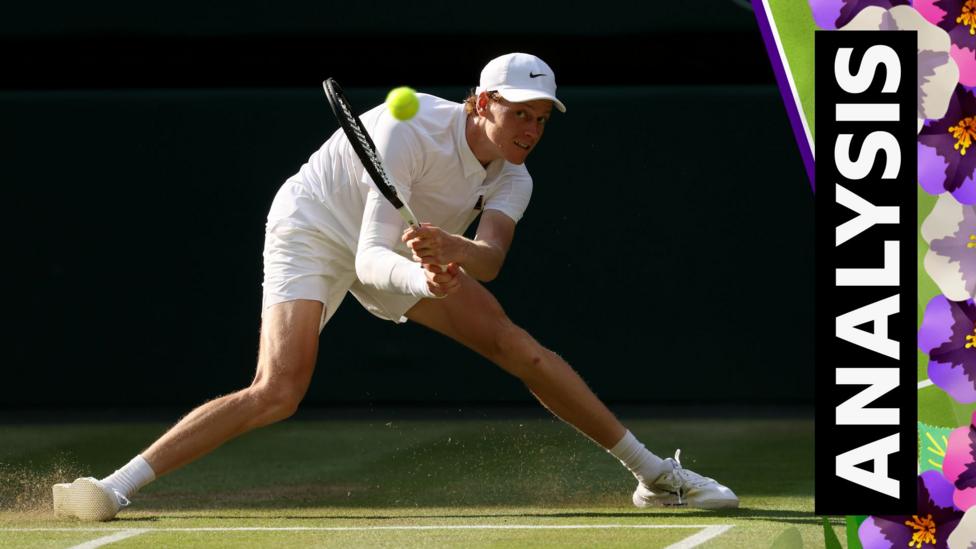
Sinner Crowned King of Centre Court in Wimbledon Thriller
Jannik Sinner dismantled Alexander Zverev on grass's grandest stage, delivering a tactical masterclass under the Centre Court roof.
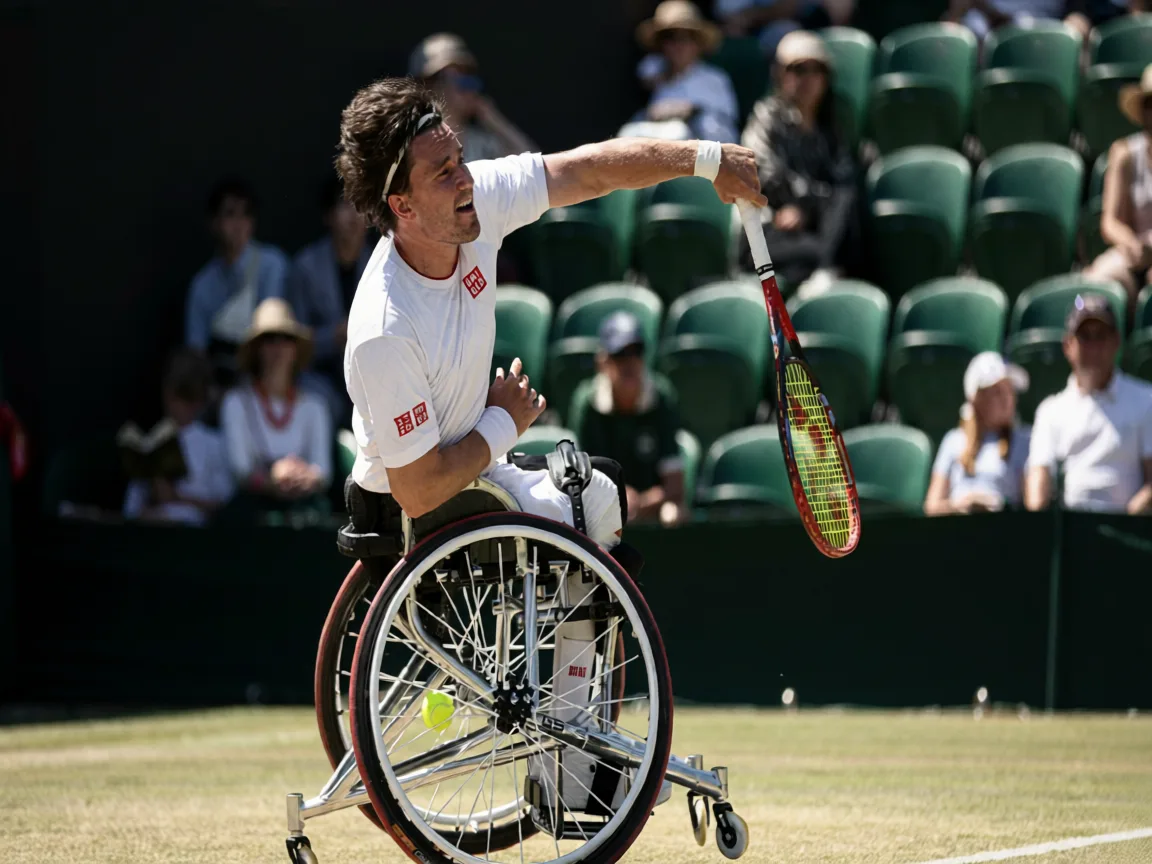
Two Games, One Court: Decoding Quad and Wheelchair Tennis
Quad and wheelchair tennis share a court but split on rules, equipment, and athleticism. Here is what separates them.
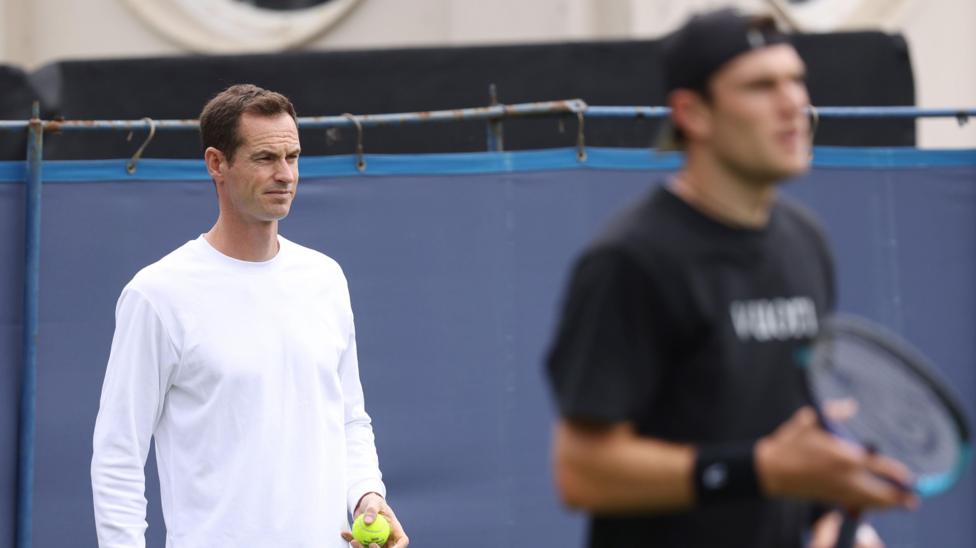
Murdy Tempted Back: Coaching Draper and the Shadow of a Serena Return
Andy Murray opens up on coaching Jack Draper, the void of retirement, and whether a Serena-style comeback could ever tempt him back on court.